1The worldview
Why does the script replay? Early relationships reach today through internalising, expecting and pulling
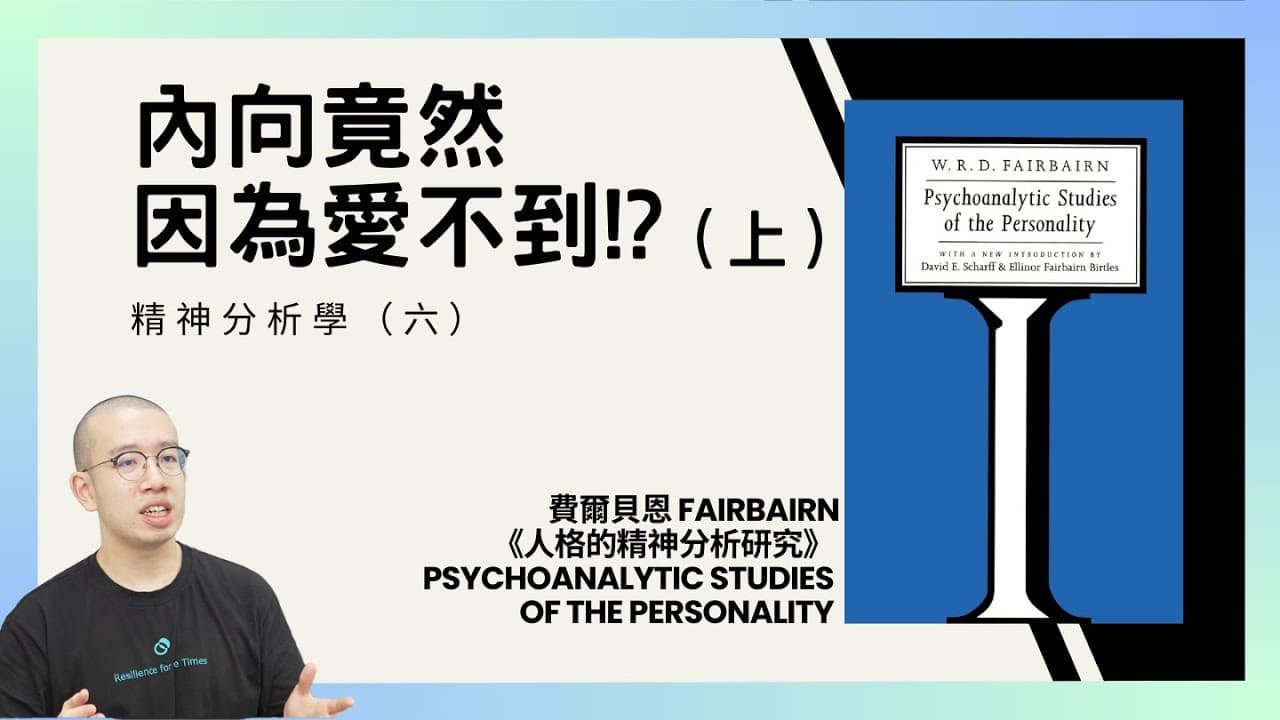
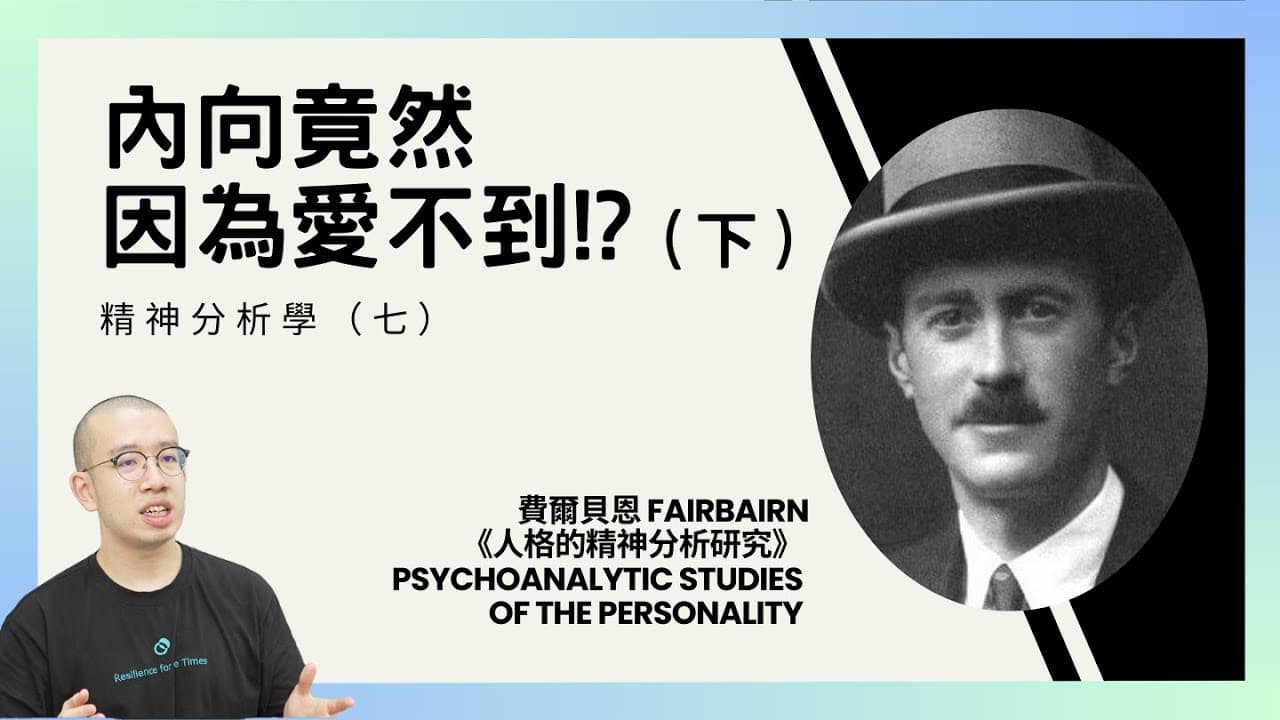
Object relations' answer to that opening scene is that the way you look at your friend didn't begin that evening. Object relations theory (in Chinese also 對象關係理論) is a school of psychoanalysis. It holds that our deepest motive is not discharging pressure from instinct but forming relationships. An "object" is whatever we love, hate and need: in adults, almost always a person; at first, a caregiver. It isn't simply called a "person" because in an infant's world the object may not yet be a whole person but a lap, a breast, a voice. Britain's W. R. D. Fairbairn put the turn most plainly: libido seeks objects, not pleasure. The textbook summary is that these theorists held that "the individual is motivated by the need for relationships", with drives such as sexuality and aggression operating within relationships rather than within the person.[1,2,29]
The key step is internalisation: the experience of early life with caregivers doesn't fade but is taken in, becoming an "inner world" that holds inner figures and also a self-in-relation to them. A child who was cared for reliably and gently has someone inside who can soothe them; a child who was often overlooked or criticised may carry a cold or harsh figure, and a self that feels unwanted. Fairbairn also noticed that children tend to prefer "it's me who is bad" to "the people who look after me can't be relied on", because the first leaves room for putting things right and the second leaves the world with nothing to lean on. It is one reason many adults stay loyal to relationships that hurt them.[1,4]
These inner relationships become the template for the people in front of us: we expect others to treat us a certain way, and without meaning to treat them in a way that often draws exactly that response. So the most important material in therapy is the relationship happening right now. An object relations therapist doesn't only analyse from the side but becomes a real person in the client's life, offering a reliable relationship and noticing together how the old pattern shows up here. Compared with the classical psychodynamic line, which centres conflict and defence, this branch cares more about how a self is made out of relationships, and about what the therapy relationship itself does.[3,29]
The opening scene is one early relationship reaching into the present in roughly three steps. First it is internalised: early experience is taken in as inner figures and a self in relation to them. Then comes expectation: those inner relationships make us expect, at a glance, how others will see and treat us. Finally we pull: acting on the expectation, we steer the other person without meaning to into the matching response, and the expectation seems proved. Take a woman whose caregiver was warm one day and cold the next, with no warning. She internalised "someone who loves me can turn at any moment"; when a friend cancels at the last minute she expects "she doesn't care about me" and becomes wary; she presses, tests, or goes cold, the friend feels accused and pulls back, and so "she really doesn't care". Neither is to blame; an old pattern is looking for new actors, which is why a new face still brings a familiar ending.