At a dim sum lunch, a colleague takes the last har gow. You smile and say "No problem, you have it", but a flash of resentment crosses your mind, and you promptly tell yourself off for being petty. At home that evening, you're still thinking about it. Why does something so small leave such a wake? And who, behind that "no problem", was the one feeling resentful?
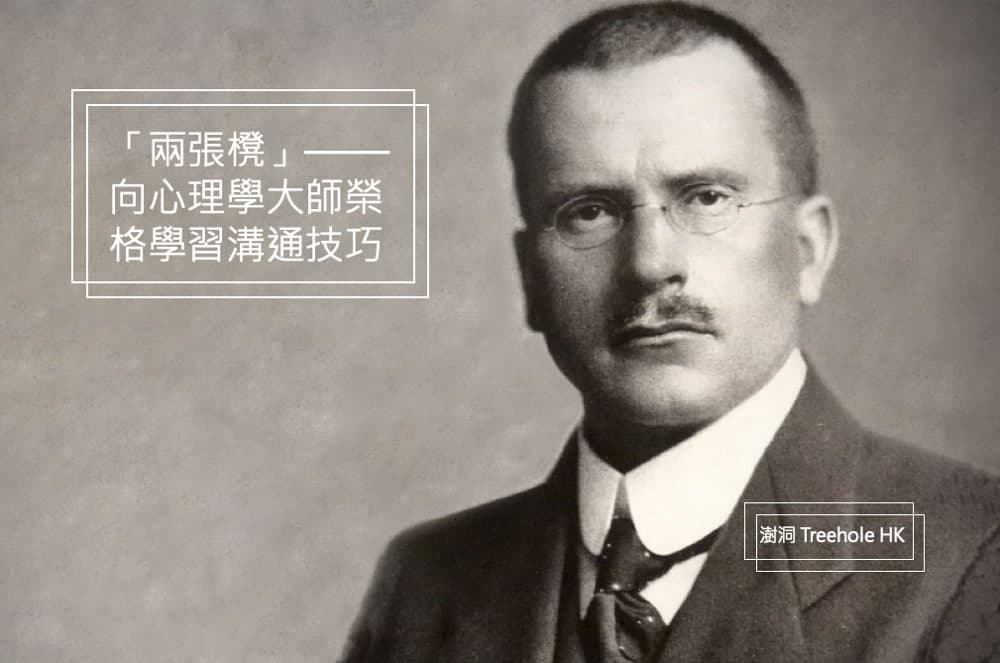
Carl Gustav Jung (1875–1961) was a Swiss psychiatrist and, for a time, Freud's closest collaborator. After their break in 1912–13 he developed his own "analytical psychology". Like Freud, he believed the unconscious drives us; unlike Freud, he saw it not only as a warehouse of repressed wishes but also as a source of constructive forces that move a person towards wholeness.[1,2]
Jung's best-known idea is the collective unconscious: beneath personal experience, a layer of the psyche that all humans share. A child who has never seen a war still understands, watching a war film, who the hero is and who the villain is. Jung called figures like the hero, the mother, the wise old man and the trickster archetypes. Life, in this view, draws out possibilities that were already there.[1,3]
Jung's is a psychology of integrating opposites, and two terms carry it. The ego is the centre of consciousness, which lets us understand and adapt to reality; the Self is the whole psyche, including every possibility not yet lived. To fit in, we push some sides of ourselves away as we grow; the task of a life, which Jung called individuation, is to take them back, gradually, so that ego and Self come closer.[11]
Later Jungians called the link between ego and Self the ego–Self axis, and leaning to either end has a cost: lean too hard on reason and you cut yourself off from imagination and from others; sink into a sense of fate and do nothing, and you lose the ability to act in the real world.[9]
Where did the flash of resentment go? Three layers of the psyche: conscious, personal unconscious, collective unconscious
So Jung would say of the opening scene: the resentment didn't vanish, it was pushed somewhere you can't see. To take back the sides we pushed away, we first need to know where they are. Jung pictured the psyche in layers, shallow to deep: the further down, the less we notice it, and the less it belongs to us alone. Back at the har gow, see what each layer does with it:[1,3,6]
The Self sits in no single layer: it is the whole psyche, conscious and unconscious, of which the ego is only a part. Whether archetypes are really inborn is still hotly disputed; more on that under "limits" below.
1
The ego is the centre of consciousness, which reads reality and chooses what to do; the persona is the side we show the world, shaped to what others expect.
"No problem, you have it."
2
Complexes, emotionally charged knots of personal experience that clash with our usual attitude; and the traits pushed out of the ego and the persona, which Jung called the shadow.
A flash of resentment: "Why does he always get it?"
3
Beneath personal experience, Jung proposed patterns shared by all humans: the hero, the mother, the wise old man, the villain, as well as the anima, the animus and the Self, the archetype of the whole.
The har gow has nothing to do with this layer; this layer is about something else: no one taught us, yet we all recognise the hero and the villain in a story.
2The skills
Inviting the pushed-away side out: three directions, six ways of working
Jungian work has no fixed list of techniques; it is more an attitude of taking seriously whatever the psyche throws up. The ways of working share one aim: to bring the "unconscious counterpart" of step two above (the resentment behind the har gow) into view, so the ego has something to respond to on the way to the third position. These are the six most common in therapy, grouped by where they point.
Tell "how I'm seen" from "who I am", and take back what we've projected onto others.
The persona is a compromise between the individual and society: without it we couldn't work, cooperate or get along. The trouble starts when we identify with it, like the strict teacher or the nice guy who can't take the mask off at home. Jung went as far as calling over-identification with a social role a fertile source of neurosis. Therapy helps you tell "how I'm seen" from "who I am", so the mask becomes something you can put on and take off again. The opening "No problem, you have it" is the mask speaking. The tighter the mask, the more gets pushed outside it: that is the shadow, next.[5,13]
The shadow holds the traits we won't admit to and have pushed out of the ego and the mask. Denying them doesn't make them go away; they tend to turn up projected onto other people, and an outsized reaction to a certain kind of person is often the clue. The work asks: what exactly can't I stand about them? Is there a trace of it in me? The point isn't to excuse the other person but to take back what is yours, then choose a fitting way to express it. And the shadow isn't only dark: buried talent and confidence live there too. Back to the opening: that flash of resentment is one colour of the shadow.[4,12]
+Hear it in a session
- Therapist
You've mentioned your colleague Kelvin a few times now, and your voice changes when you do. Could we look at that feeling a bit more?
- Client
Sure. Every meeting he talks up his part, loudly, as if he did the whole project himself.
- Therapist
When he does that, what do you feel?
- Client
Furious. I do as much as he does, but I'd never talk like that.
- Therapist
How furious?
- Client
Very. I'm still going over it at home in the evening.
- Therapist
When something stays with us all evening, sometimes it's touched something in us as well as being annoying in itself. Can I ask you something? You can always say no. What exactly is it about him that you can't stand?
- Client
…He's not the least bit afraid of people knowing what he's done.
- Therapist
"Not afraid of people knowing." Is there any trace of that in you? Even a small one.
- Client
I'm nothing like that. …(Pause) Though sometimes I really want people to know that report was mine. It's just that at home I was always told to keep my head down; grabbing credit is ugly.
- Therapist
So the part of you that wants to be seen has been put away.
- Client
I suppose so. It's a bit embarrassing to say.
- Therapist
That doesn't make what Kelvin does right, and your anger is real. We're just noticing that what he does touches a part of you that's been put away. If that part could show up in a way that feels right to you, what would it look like?
- Client
Maybe… next time I send the minutes, I say clearly which part I did. Without making a big noise.
- Therapist
That sounds like your own way of doing it. Try it this week, notice how it feels, and we'll talk next time.
- Client
OK. I still don't much like him, though.
- Therapist
That's fine too.
Notice: This dialogue shows taking back a shadow, in an office instead of at lunch, with the same shape as the har gow: a modest event, an outsized reaction. The therapist notices how strong the feeling is and asks permission before raising anything about projection, and says plainly that both the colleague's behaviour and the client's anger are real. The client recognises the shadow themselves and links it to how they were raised. The change is small: not becoming like the colleague, but finding a fitting way for that side to show. The dislike is still there.
Method based on[4,12]
Treat dreams and spontaneous images as messages from the depths, and talk with them rather than rushing to explain them.
For Jung, a dream "does not conceal, it teaches": it often compensates for a one-sided conscious attitude, bringing in the side consciousness has overlooked, which makes dreams a main place where the unconscious counterpart turns up. There is no universal dream dictionary. You start with the dreamer's own associations and what was going on in their life, look at a series of dreams rather than one, then try the subjective level, where the dream's figures may be sides of the dreamer; only when useful do you widen it with parallels from myth and story (amplification). Analyst and client work it out together, and the meaning stays open.[6,7,15]
+Hear it in a session
- Therapist
You said you wanted to talk about last week's dream. Could you tell it from the beginning?
- Client
I'm in the flat I grew up in, but there's a staircase going down that was never there. At the bottom there's a locked door, and someone's knocking behind it, faster and faster. I'm terrified, and I wake up.
- Therapist
What was the strongest feeling when you woke?
- Client
Fear. But also a bit of… curiosity.
- Therapist
When you think of that old flat, what comes to mind?
- Client
It's where we lived when I was at primary school. I loved drawing then. I drew all the time.
- Therapist
Do you still draw?
- Client
Not for years. Work's too busy, and drawing doesn't seem much use.
- Therapist
What was going on in your life in the days before the dream?
- Client
I'd just been promoted to team lead. Everyone said congratulations, and I felt I ought to be happy.
- Therapist
Jung often asked what a dream adds to what consciousness has missed. Can I try an idea? Tell me straight if it doesn't fit. If the flat and the door could be parts of you, which part of you might be down those stairs, knocking?
- Client
…Maybe the me who loved drawing? I don't know, it seems too neat.
- Therapist
Maybe, maybe not; a dream rarely has just one answer. Lots of folk tales have a door you mustn't open, and it's often where the story starts to turn. You don't have to open it today.
- Client
Honestly I don't really want to. I'm afraid there's something difficult in there.
- Therapist
That fear deserves respect too. If something similar turns up in a dream this week, or the door comes to mind in the daytime, would you be willing to jot it in a dream journal?
- Client
OK. And maybe… I'll dig out my old paints and have a look.
Notice: This dialogue shows working with a dream. What a dream adds is often what the daytime "no problem" left unsaid: this client is promoted and says they "ought to be happy", while in the dream someone knocks urgently behind a door. The therapist asks about the feeling first, then the client's associations to the dream image and what was happening in their life, and only then offers a subjective-level reading, making clear it can be rejected. Amplification is touched on lightly, and the dream isn't given a verdict. The client is half-convinced and still afraid, and agrees only to note dreams down and dig out their old paints.
Method based on[6,7,15]
A dream is a message that arrives in sleep; active imagination works while you are awake. You let an image from a dream or a mood unfold on its own and engage with it by writing, drawing or dialogue. The key is the next step: the ego responds to it seriously rather than being carried off by it, which is the bearing and answering that the third step of the transcendent function needs. Jung developed the method between 1913 and 1916, in the crisis that followed his break with Freud. It needs a reasonably steady ego, because strong feelings and images can overwhelm; it is usually done with a trained analyst, and is not something to try alone in a crisis or with a vulnerability to psychosis.[6,10,16,17]
Find the self you haven't lived yet in romantic projections and in your least-used psychological function.
The anima and animus are what Jung called the inner image of the "other sex", a bridge between the ego and the depths of the unconscious. The logic of projection is the same as with the shadow, except that what gets projected is the side of ourselves not yet lived. When we fall for someone at first sight, or feel they "complete" us, we are often projecting that image onto them; the disappointment when the projection fades is a chance to meet the real person, and to take back that side of ourselves. Many Jungians today no longer read it as fixed "masculine" or "feminine" traits, but as the side consciousness hasn't yet lived.[4,14]
In Psychological Types (1921) Jung described two attitudes, introversion and extraversion, and four functions: thinking, feeling, sensation and intuition. The point isn't to sort people into boxes but to notice your least-used, least-developed "inferior function" (for someone who habitually works things out by thinking, feeling is often the least-used side): it is often where growth gets stuck, and part of what individuation takes back. The popular Myers-Briggs Type Indicator (MBTI) grew out of this book, but research found that about half of people retested after five weeks changed at least one letter.[8,23]
The dialogues are illustrative composites, not real clients; skills that stir strong emotion or touch on trauma should be done with a trained therapist.