

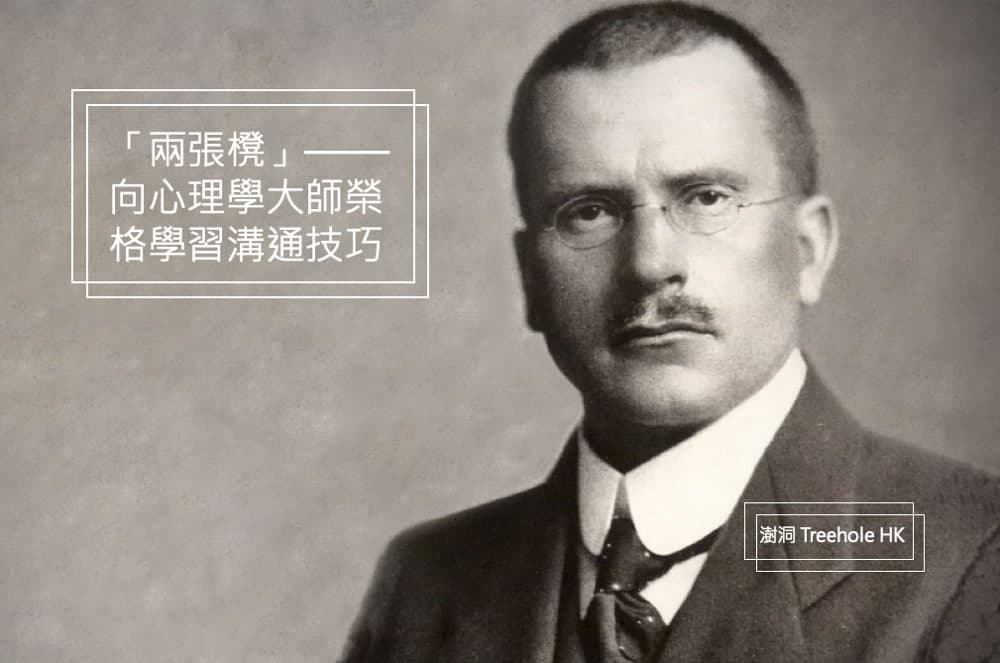
When we sit down with a counsellor today, we usually find ourselves facing one another across two chairs. One side opens up; the other listens to you with respect and acceptance — almost like a friend.
That arrangement feels so natural that we take it for granted. But back when psychotherapy first emerged, most approaches looked nothing like this. In the tradition of Sigmund Freud's psychoanalysis, for instance, the "patient" would lie on a couch while the psychotherapist sat behind them, out of the patient's line of sight. The therapist would typically adopt a rather elevated posture towards their "patient", coolly analysing the causes of the problem, and very rarely sharing anything of themselves with the patient (self-disclosure).
Jung and Freud
So why does the psychotherapy in our minds today look so different? To understand the reason for that shift, we cannot avoid mentioning Carl Jung, who was both rival and friend to Freud. In the early part of his career, much of Jung's work followed the then-authoritative Freud. It was only later that he developed his own approach, one that has had a profound influence on psychotherapy as it is practised today. Jung believed that psychotherapy is a kind of social relationship, and that the person receiving therapy is not merely a passive recipient of the therapist's instructions. It is more like an alliance (with much in common with what we now call the therapeutic alliance): the two parties negotiate and work together on a single problem. So he did away with the couch, and instead pulled up two chairs to sit face to face with the person in therapy. Doing it this way rests on a foundational philosophy — that the one who speaks and the one who listens stand on the same ground of "we are all human beings". As Jung himself put it:
"A person's psychological problems are something added on. At heart, that person should be seen as a normal human being, and we should relate to them just as we would to anyone else."
Jung's Philosophy of Psychotherapy
Jung's attitude towards people in need is well worth learning from. Many of those who underwent therapy with Jung described him as a sincere, courteous and gentle man — and, most importantly, as someone who never put on a superior air. As he himself said: "Only the wounded physician heals." When a patient with a psychiatric condition told him something that, on the surface, sounded utterly absurd, Jung would not say at once, "What you're saying makes no sense." Instead, he would listen with great patience, trying to work out what led them to hold such a belief. By the time he had heard the whole story, the once-"absurd" belief would no longer seem absurd, but in fact quite reasonable within that person's own world.
Every one of us has our own worldview and beliefs, and it is hard to avoid clashing with others over them. So when we listen, it is worth learning from Jung's non-judgemental attitude — even when what we hear strikes us as unreasonable or out of step with our own values, we can still try to understand and make sense of it with an open heart. Then, once the other person has finished speaking, we can raise our own questions honestly. Do this, and you will find that both you and the other person grow a great deal in the space of attentive listening.
Reference: Jung: A very short introduction, Chapter 6: Therapy



Comments
No comments yet — share your thoughts.