


In short: mindfulness (in English: Mindfulness) is a tool for training the mind, one that has gained a great deal of support from modern psychological research.
The basic approach of mindfulness is to cultivate an awareness of one's own thoughts and emotions, so that the mind can think more clearly and manage stress and emotions more skilfully.
One ordinary afternoon, I was riding the East Rail Line out to the Chinese University for work. I imagine no Hongkonger is a stranger to the scene on the East Rail Line — the carriages are crowded, that goes without saying, and on top of that it is a cultural melting pot, holding the cultures of Hong Kong and elsewhere all at once. When the carriage is too packed and you happen to have something on your mind, it can indeed be an agitating environment.
I have a habit of practising mindfulness on public transport. I treat it as a good way to settle the mind and prepare for the mental work ahead. That day, as usual, I closed my eyes, straightened my back a little, and practised mindfulness on the train heading towards Lo Wu. Sometimes mindfulness leaves you feeling deeply comfortable and focused; sometimes it does not. But this particular MTR session fell into the former camp. I soon settled my attention, resting my mind on the rhythm of my breath and on the swaying of the train. Come to think of it, the MTR is a bit like a commuter's cradle.
Suddenly, I felt something rubbing against my right foot. It turned out the passenger beside me was jiggling both legs, and his ankle kept tapping against my shoe. Once I realised what was going on, I felt rather displeased and irritated, wondering why he could not observe the basic courtesy expected on a train. Telling him to stop would have ended my mindfulness practice — but even if I carried on, hadn't he already shattered my calm?
Then a thought struck me out of the blue: since mindfulness training is about placing your attention on the breath, could the same principle apply to the sensation of my shoe being rubbed? So I shifted my focus to my right foot and observed the sensation there closely. Doing so, I found that it actually felt nowhere near as bad as I had imagined — at the very least his rhythm was brisk and regular, and not so rough that it hurt. As I rested my awareness on that simple physical sensation, the urge to curse him simply melted away. This went on for several minutes, until I got off at University station, and in the end his discourteous behaviour never became a nuisance to me. On the contrary, it let me experience the power of mindfulness to settle the mind.
This episode has since become a standard teaching example in my mindfulness classes, and I am sure many TreeholeHK students have heard it. Every time I bring it up, there is a ripple of delighted, curious laughter, which gives me a good opening to explain the concept of mindfulness and the principles behind it.
Why practise mindfulness?
Mindfulness (Mindfulness Meditation) has grown popular in recent years, but why should an ordinary person care about it? I think the example above offers a solid reason: mindfulness can change the way a person views things, so that what might otherwise be a source of distress no longer distresses them. The leg-jiggling had originally bothered me, but once I looked through the lens of "mindfulness" at the feelings the behaviour stirred up in me, it stopped being a bother — and instead became a much-loved teaching example.
I hope this clumsy example doesn't lead you to mistake mindfulness for a passive, grin-and-bear-it attitude. I could easily have asked that passenger to stop jiggling his leg, and ordinarily I certainly would. It's just that I was practising mindfulness at the time and didn't want my practice interrupted by the surroundings, so I chose to handle the situation this way.
Even though this example is easy to misread, I still choose to mention it, because it shows several of mindfulness's core qualities: Concentration, Awareness, and Perspective Shift. I'll use the MTR episode to introduce these qualities briefly, but throughout this article you'll notice them coming up again and again.
1) Concentration
Mindfulness is the training of placing your attention on the present moment. In the process of mindfulness, we notice the sensations of the present — touch, sound, thoughts, feelings, and so on. On the train, for example, the focus of my mindfulness was first my breath, then my right foot's reaction to being stepped on, and finally the physical sensation in my right foot. As we practise, we notice the various qualities of these sensations, such as their extent and their rhythm.
And most importantly, we notice the present situation non-judgementally (Non-judgmentally), meaning we make no attempt to change what is happening; we simply observe, and in doing so train ourselves to attend to one thing with full concentration.
2) Awareness
Once we are used to observing things closely, we can apply this ability to observe the unfolding of our own thoughts and shifts in emotion. To give an example, many emotions are in fact accompanied by a series of bodily reactions — when people are angry, for instance, their heart usually races and their muscles tense up. If we are in the habit of noticing the state of our own body, we gradually become able to read its signals and notice emotions as they arise and fade.
So when we concentrate our attention on psychological phenomena, we gain a more penetrating understanding of our own thought processes (Inner Workings) and of the nature of our emotions. You'll notice, for example, that above I was able to describe in detail how the event unfolded and how my own feelings changed. This is why mindfulness can foster self-understanding.
3) Perspective Shift
When we understand the nature of a psychological phenomenon, freedom follows. Take the event of my right foot being stepped on: I can choose to place my attention on different aspects of it. I can understand it from a social angle — having my right foot trodden on symbolises an intrusion into my personal space, and so I feel anger. But I can also approach it purely from the angle of physical sensation, in which case there is nothing distressing about it at all. Mindfulness gives us this capacity for a shift in perspective.
Mindfulness vs mindfulness practice (also known as Meditation)
When it comes to topics like this, you'll often see the two terms mindfulness (Mindfulness) and mindfulness practice (Meditation) . Sometimes they seem to be used interchangeably and sometimes not, but in fact they refer to different things:
Mindfulness
Mindfulness is a mental state — a state of complete awareness of the present moment. In a state of mindfulness, we learn to accept the present: whatever thoughts arise in the mind, whether joyful or sorrowful, whether positive or negative, we can meet them all with equanimity.
For many city dwellers, this state is quite unfamiliar. When society blindly champions "positive thinking," for example, every twinge of sadness or regret is treated like a mortal enemy, something we long to kill off as quickly as possible. In the end, what leaves us battered and bruised all over is not the emotion itself, but our reaction to it.
Mindfulness practice (Meditation)
So, to cultivate mindfulness, we need mindfulness practice — a form of training whose main purpose is to develop mindfulness. Mindfulness practice takes many forms. It usually centres on sitting still, but it is not confined to static activities; everyday activities such as walking and eating can also be mindfulness practice, and you'll experience these firsthand in the second part. In short, if mindfulness is physical health, then mindfulness practice is like exercise. It's worth noting, of course, that besides the mindfulness practice described above (Mindfulness Meditation), there are other forms of meditation, such as Christian Meditation and Transcendental Meditation, and these practices differ from mindfulness practice in both their aims and their methods. From the perspective of contemporary psychology, the research done on mindfulness practice far outstrips that on other practice methods. Of course, I have no intention of disparaging other practice traditions; other traditions may have their own distinctive potential (and dangers). After all, before the West introduced mindfulness practice, it too lacked scientific evidence behind it. It's simply that, as a science-communication group, TreeholeHK has a responsibility to introduce the public to methods of mental training that are evidence-based, safe, and reliable.
The history of mindfulness practice
When people working in psychology are asked where mindfulness comes from, they often reply that it originated in the "non-religious" stress-reduction techniques developed by the American Professor Jon Kabat-Zinn in the 1980s. While this is not untrue, it is a long way from the full picture of mindfulness.
In fact, training similar to mindfulness (under no such name as "mindfulness," nor the word Mindfulness, at the time) has long had deep roots in Indian religion. As far back as before Buddhism (Buddhism) emerged, the Upanishads — the classic scriptures of Hinduism (Hinduism, also known as "Brahmanism") — already recorded methods of spiritual practice that placed attention on the breath and on different parts of the body[1], methods quite close to today's mindfulness. And since the Buddha (Buddha) was born into an age in which Hinduism was the mainstream, and was himself influenced by Hindu thought, the Buddhism that traces back to him bears a strong Hindu imprint in its methods of practice.
Over the millennia that followed, Buddhism developed a method of cultivating the mind known as "right mindfulness" (Right Mindfulness), which has much in common with contemporary mindfulness. The term "right mindfulness" derives from the "Noble Eightfold Path" of Buddhist teaching[2], the eight forms of practice that lead to "Nirvana" (Nirvana), the state of release from all worldly suffering. Right mindfulness is one of these; it is not a standalone stress-reduction method, but must be combined with the other seven paths to reach enlightenment. Although the "mindfulness" or "right mindfulness" of modern psychology was inspired by the Buddhist "right mindfulness," their differing aims mean their methods of practice are also worlds apart. The journey from Buddhist right mindfulness to psychology's mindfulness is owed to Jon Kabat-Zinn and several of his teachers. In his youth, Jon Kabat-Zinn studied under several Buddhist figures, including Philip Kapleau, Seung Sahn, and Thich Nhat Hanh. Then, in 1979, Jon Kabat-Zinn set out to extract from Buddhist right mindfulness certain awareness practices that did not depend on a Buddhist worldview and were universally applicable — that is, what we now call mindfulness. Mindfulness was initially used with the clients of Jon Kabat-Zinn's stress-reduction clinic. These practices were later organised and researched, and developed into today's standardised Mindfulness-Based Stress Reduction programme (Mindfulness Based Stress Reduction; MBSR). These programmes passed the test of psychological research, which found their stress-reducing effects to be clearly significant. As a result, psychological research into the benefits of mindfulness proliferated, and by 2017 around seven hundred studies on mindfulness were being published in scientific journals each year.
The scientific research on modern mindfulness
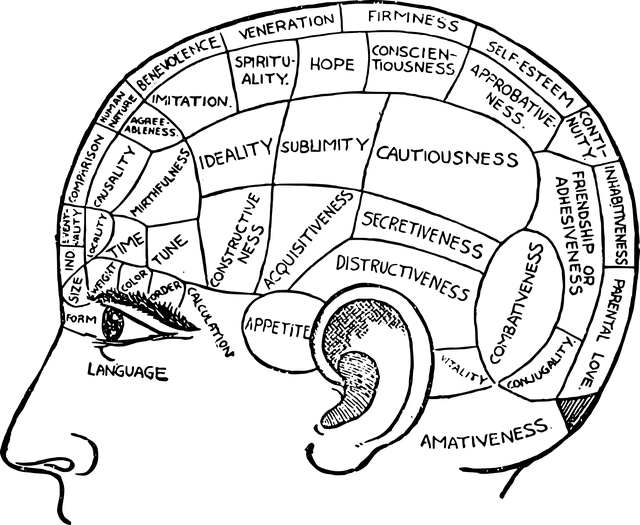
Mindfulness is like a workout for the mind, and the analogy is genuinely apt. Like going to the gym, mindfulness requires persistence; it can sometimes feel hard going, but it genuinely improves your psychological wellbeing, and looking back you'll feel a real sense of achievement. But here's the question: working out builds muscle — so where do the "psychological muscles" you build through mindfulness grow? Can they even be seen? As technology has advanced by leaps and bounds, the growth of these "psychological muscles" can indeed now be seen. Modern neuropsychology has discovered a phenomenon called neuroplasticity (Neuroplasticity). This phenomenon shows that our brains have all sorts of neural pathways (Neuro Pathways), each with its own job. For example, if someone reaches for crisps the moment they feel bored, and if we could magnify their brain to look, we'd find that the brain regions responsible for "boredom" and "eating crisps" are tightly linked — the brain cells in the two areas, the neurons (Neurons), would have a great many synapse (Synapse) connections, so that every time they feel bored they automatically think of eating crisps. And every time they give in to that feeling of boredom and eat crisps, the neurons in the two areas grow still more synaptic connections to each other — this is what is meant by neuroplasticity. Of course, neuroplasticity can also work in reverse: if on one occasion they feel bored but, for whatever reason, firmly refuse to eat crisps, the synapses running from the "boredom brain" to the "crisps brain" will weaken. In short, you can imagine the brain has an intelligent government that automatically builds motorways between districts with heavy traffic — and if two districts no longer communicate as often as before, those motorways are naturally removed. In the light of modern neuroscience, it seems the famous saying of the ancient Greek philosopher Aristotle rings true: "We are what we repeatedly do. Excellence, then, is not an act but a habit."
Scientific research has found that practising mindfulness with persistence really can change the structure of the brain. Seen through the lens of neuroplasticity, mindfulness can be described as a different way of using the brain, so that the longer and more often you are mindful, the more readily you can hold a mindful state in everyday life.
Practice of this kind offers definite benefits for mental health. On the one hand, it can reduce stress and ease anxiety; on the other, research shows that worrying and deliberately monitoring one's own symptoms makes us more prone to mental illness, and mindfulness can help us worry less and pay less attention to those symptoms in ourselves(cited from this article).
So it is hardly without reason that mindfulness has become such a hot topic in psychological research in recent years.
How do you actually practise mindfulness?

How do you practise mindfulness? In one sense, mindfulness is about becoming a wholly impartial observer. While practising mindfulness, you can concentrate your attention on a single thing. For beginners, one common exercise is to place your attention on your own breath, simply noticing your breathing.
During this process of concentration, something interesting happens. We find that a great many thoughts come bubbling up; our minds seem to wander off to other things of their own accord, or get carried away by them, pulling our attention along.
What can we do at such a moment? In mindfulness, the most basic approach is to "watch" these thoughts, to simply watch them. You don't grip them tightly, nor do you let them grip you; you just watch them, and then slowly draw your attention back to the breath.
Ordinarily we are barely aware of thoughts surfacing in the mind, yet we act on them all the same; in mindfulness we become aware of thoughts as they arise — isn't this the first step towards awareness of the mind? We don't merely become distracted; we also become aware that we are distracted — this is a crucial ability, and an important foundation of mindfulness training. Whenever a stray thought appears, we can notice what it was that distracted us, and then slowly redirect our attention back to the sensation of breathing.
In this way we come to know that, although we cannot control what arises, we are free in how we respond to what does arise. Take, for instance, doing tedious but important work: it's hard to avoid being drawn off by all manner of stray thoughts. "What shall I eat tonight?" "Will the boss take a shine to me and give me a promotion?" Through mindfulness, we can simply observe these thoughts and then redirect our attention back to the work, just as we do in mindfulness practice. After practising mindfulness for a while, this ability to notice when we're distracted and refocus on the task at hand gradually begins to show up in other kinds of work too.
The object of mindfulness
Any act of mindfulness must have an object to be mindful of (object to be mindful of). In practice, we try to observe the object's qualities purely as they are. Almost all mindfulness courses begin with mindfulness of breathing, which takes the sensation of the breath as the object of mindfulness. In the process, we place our attention on the breath and observe its sensations closely. Or to put it another way: we allocate our attention to the breath.
About stray thoughts
When you observe the breath for a while, you'll find that all sorts of thoughts arise. This is not only entirely normal, it actually shows you are beginning to get the hang of mindfulness. Ordinarily we are barely aware of thoughts surfacing in the mind, yet we act on them all the same; in mindfulness we become aware of thoughts as they arise — isn't this the first step towards awareness of the mind? In fact, becoming aware that stray thoughts are distracting us means we are using metacognition: we don't merely become distracted; we also become aware that we are distracted — this is a crucial ability, and an important foundation of mindfulness training. Whenever a stray thought appears, we can notice what it was that distracted us, and then slowly redirect our attention back to the sensation of breathing. As noted above, what thoughts and feelings arise is, to some degree, beyond our control. So through this simple, repeated process of noticing stray thoughts as they arise and then steering our attention, we cultivate autonomy within those limits: we cannot control what arises, but we are free in how we respond to what does arise. Take, for instance, doing tedious but important work: it's hard to avoid being drawn off by all manner of stray thoughts. "What shall I eat tonight?" "Will the boss take a shine to me and give me a promotion?" Through mindfulness, we can simply observe these thoughts and then redirect our attention back to the work, just as we do in mindfulness practice. After practising mindfulness for a while, this ability to notice when we're distracted and refocus on the task at hand gradually begins to show up in other kinds of work too.
So being distracted during mindfulness is not a problem at all. The key to mindfulness isn't to think of nothing, but to be aware of what you are thinking. Every distraction is an opportunity to train awareness.
The steps of mindfulness
Although the star of mindfulness-of-breathing is awareness of your own breath, it's rather like a dinner party: the drinks, the starters, and the dessert all set the stage for the main course, and they too are indispensable parts of the meal. Mindfulness is the same — a few tips and steps can make the whole process run more smoothly. Of course, the suggestions below are not gospel; as your mindfulness experience grows richer, most people end up adjusting these steps to suit their own circumstances. If this is your first encounter with mindfulness, do feel free to use the suggestions below as a template.
The process of mindfulness can be broadly divided into three parts. We first 1) settle our own body and mind, slowly gathering our concentration; 2) focus on a particular object, such as the sensation of the breath, and observe it closely and non-judgementally; and finally we might 3) relax our concentration again, letting the mindful state flow into daily life.
There's no need to memorise the steps of mindfulness either, because when you first take up mindfulness you'll usually use guided recordings, so all you have to do as you practise is relax and follow the recording's instructions. As a first step in learning mindfulness, why not try mindfulness of breathing now.
How can you learn mindfulness systematically?
Practising mindfulness really isn't difficult at all. What's harder is building a systematic plan of practice, understanding the full background of mindfulness, and keeping at it with persistence. This isn't something you can achieve simply by reading one article or doing one exercise.
If you're a beginner, why not first try our [Mindfulness Test] to understand your own mindfulness tendencies and access related resources.
On top of that, if you want to learn mindfulness seriously, I generally suggest two approaches: first, find a good introductory book to read; and second, follow a group that practises mindfulness.
An introductory mindfulness book: Mental Training — An Evidence-Based Method for Mastering Your Mind Through Mindfulness

All right, this book is actually one I wrote myself. Authors are never objective about their own books, but I can talk about the thinking behind my writing: this is an introductory book on mindfulness. What makes a good introductory book? In my view, its arguments must be well grounded and backed by solid scientific research; it must be systematic and complete, clear and easy to follow, so readers grasp the essence of mindfulness; and it must be genuinely practicable, with instructions readers can follow to practise for themselves. In the writing, I worked very hard to make Mental Training — An Evidence-Based Method for Mastering Your Mind Through Mindfulness meet these conditions.
Using mindfulness as mental training has earned a great deal of scientific validation over the decades, and it is of real help in managing emotions such as anxiety. I hope this book doesn't overpromise, and that it holds to a certain academic standard, reflecting what psychology has found in its research on mindfulness. Of course, being down-to-earth and engaging matters too, and that is the greatest value of reading a mindfulness book published in Hong Kong: as a Hongkonger, I know the struggles Hongkongers face, and I try to explore these themes in the book. Most importantly, the book includes a small six-week mindfulness course, complete with accompanying practice recordings and everyday exercises. I strongly recommend that readers work through one session a week and practise as the book sets out. Six weeks on, you'll have grasped the basics of mindfulness and come to appreciate the benefits it brings.
Mindfulness courses / activity groups
To be honest, I'm inevitably a little biased on this point — because TreeholeHK is itself a group that promotes mindfulness. The thrust of our activities leans towards intellectual inquiry, so in learning mindfulness we often touch on psychology and philosophy, learning mindfulness from a non-religious angle. TreeholeHK regularly runs introductory workshops and a Mindfulness Foundation Course (MFC), designed precisely for friends who want to learn mindfulness.
That said, we are by no means the only option for a mindfulness group. In Hong Kong there are other traditions promoting mindfulness — psychologists, for example, run therapy groups that use mindfulness to treat various mental conditions. There are also organisations with a Buddhist background, such as Dharma Drum Mountain and Plum Village, which teach mindfulness from a Buddhist perspective.
Whether it's TreeholeHK, psychologists, or Buddhist groups promoting mindfulness, each has its own distinctive aims and teaching methods. It's worth getting to know several of them, and then choosing the activity or course that suits your own needs.
Mindfulness practice
Finally, mindfulness is not something that lives purely on the level of intellectual understanding. It's a bit like learning to swim — you have to practise it yourself. TreeholeHK has specially prepared guided mindfulness practice recordings for everyone to use. You're welcome to try our recordings and begin your own journey of learning mindfulness.
What is mindfulness?
Mindfulness is a tool for training the mind, one that has gained a great deal of support from modern psychological research. By cultivating an awareness of one's own thoughts and emotions, it lets the mind think more clearly and manage stress and emotions more skilfully.
How can you learn mindfulness systematically?
If you're a beginner, why not first try our [Mindfulness Test] to understand your own mindfulness tendencies and access related resources.
You could also find a good introductory book to read, or join a MindForest mindfulness group /mindfulness course.
[1]Deshmukh, V. D. (2006). Neuroscience of meditation. The Scientific World Journal, 6, 2239-2253.
[2]The Hong Kong Buddhist Association. (n.d.). The Noble Eightfold Path. Retrieved March 10, 2019, from http://www.hkbuddhist.org/zh/top_page.php?p=knowledge_detail&kid=71&cid=12&id=43
The applications of mindfulness have long gone beyond the individual — companies such as Google and SAP have woven mindfulness into their management training and team culture. TreeholeHK's corporate training offers mindfulness-based leadership and stress-management workshops. Want your whole team to experience it together? Our team-building activities weave in mindfulness too, rebuilding team rapport out in nature.



Comments
No comments yet — share your thoughts.