The Marshmallow Challenge: Why Kindergarteners Out-Build CEOs
A while ago we came across a wonderfully entertaining exercise called the Marshmallow Challenge. It is simple and great fun — yet it may well change how you think about building a team.



A while ago we came across a wonderfully entertaining exercise called the Marshmallow Challenge. It is simple and great fun — yet it may well change how you think about building a team.
A while ago we came across a wonderfully entertaining exercise called the Marshmallow Challenge. It is not only thought-provoking but light-hearted and fun, and although it is simple, it may well change how you think about building a team and team building. Let us first take a look at how the Marshmallow Challenge works:
Materials (per group)
Steps
Before we begin our analysis, let us look at how different groups of people fared:
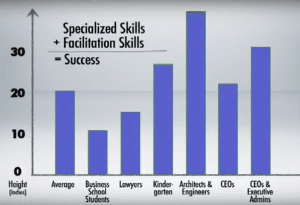
There is something fascinating in the results. When CEOs were paired with Executive Admins in a single group, they performed exceptionally well — outdoing the teams made up entirely of CEOs, and coming second only to the engineers and architects who, unsurprisingly, won. A CEO is the leader of an entire company and should, in theory, be the most capable. So why did the all-CEO teams fall short of the teams made up of CEOs and Executive Admins?
According to Tom Wujec, who devised this exercise, a successful team needs more than people who can execute and think strategically like a CEO — it also needs the harmonising touch of Executive Admins and the art of communication. Conflict is unavoidable in teamwork, and the key to success lies in setting aside personal positions to keep the best of everyone's ideas, and drawing on everyone's strengths.
One of the most overlooked parts of communication is listening. The business world tends to place more value on the manner and content of what is said, but is less likely to remember that communication takes ears as well as a mouth. Seen from the perspective of stillness, mindful listening (Mindful Listening) is a practice that can cultivate the ability to listen; put simply, when the other person is speaking, we can give our full attention to their voice and their words. There is no need to dwell on how we will reply — we simply offer them our presence in that moment.
Another astonishing phenomenon is that teams of kindergarten children placed third, doing better than the all-CEO teams, the lawyers and the business-school students. The reason behind this is that once kindergarten children get their hands on the materials, they set to work building a tower straight away, rather than spending a long round talking it through the way adult groups do. The advantage of this approach is that they very quickly discover whatever problems exist in their plan and can fix them on the spot. And if there is no problem, they can make good use of the remaining time to keep improving the model. This becomes especially important under the exercise's tight time limit.
By contrast, adult groups usually spend half their time discussing the "best plan", and if it does not turn out quite as expected, even a small slip can be hard to recover from. There is a philosophical saying behind stillness: "The map is not the landscape." Indeed, modern people often think in concepts, and concepts can certainly help us organise and understand reality — but it is a mistake to confuse concept with reality. Because the complexity of reality is often unexpected, and hidden assumptions frequently catch us off guard, the best method comes down to a single word: try.
The passage above mentions hidden assumptions, so in the Marshmallow Challenge, what is the most dangerous assumption? It is this: "The marshmallow is light, so build the tower first and adding the marshmallow on top later won't make it fall." Many teams build the tall tower they are so proud of, then try to place the marshmallow on top — only for the platform to be unable to bear the marshmallow's weight at all, so the whole tower comes crashing down, all that effort wasted. Because kindergarten children put the marshmallow on top right from the start, they never run into this problem.
Human thinking has its limits; even with work that looks as simple as this, there are many details we cannot anticipate, let alone in real work. This example shows once again that we should not take anything for granted — we must run the test before we can know the real answer.



Comments
No comments yet — share your thoughts.