AI or a Human Counsellor — Who Helps More?
It's 3am and you can't sleep, so you open an AI chat app and type "I feel exhausted." Seconds later, a gentle reply lights up the screen. But is this really counselling, and would a human counsellor …

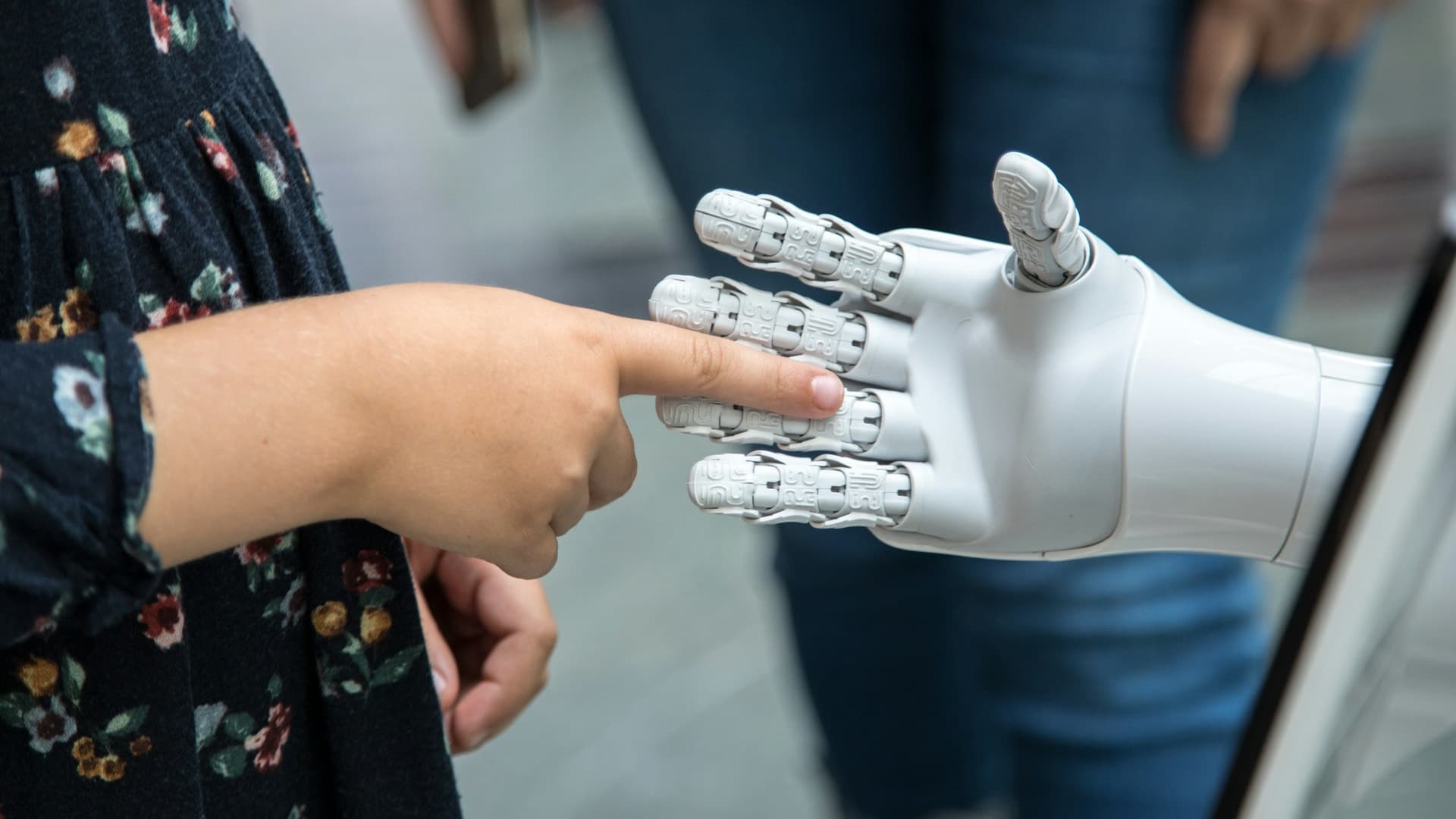
It's 3am and you can't sleep, so you open an AI chat app and type "I feel exhausted." Seconds later, a gentle reply lights up the screen. But is this really counselling, and would a human counsellor …

It's 3am and you can't sleep. Your mind keeps replaying what happened during the day, and there's a tight, anxious knot in your chest. You pick up your phone, open an AI chat app, and type a single line: "I feel exhausted."
A few seconds later, a gentle reply lights up the screen.
You let out a breath — at least there's "someone" listening. But a thought soon surfaces: does this count as counselling? And if I went to a real counsellor instead, would it be any different?
For that question, there's now some research data to draw on. The answer is more nuanced than you might think — AI and humans each have their strengths, but each also has obvious blind spots.
In 2025, Dartmouth College published the world's first randomised controlled trial of a generative-AI mental-health chatbot (Heinz et al., 2025). After screening, 210 participants with clinical-level symptoms of depression, anxiety or eating disorders were randomly split into two groups — one used the AI chatbot Therabot, the other served as a control.
The results surprised quite a few people:
These weren't the tiny "I feel a bit better" shifts you see on a questionnaire — the research team noted that, compared with figures from earlier literature, the improvement in depressive symptoms was "comparable to the reported data for traditional face-to-face therapy" — though this was not a direct head-to-head comparison within the same study. What's more, users frequently started conversations with the AI without any prompting — including late at night, at their most vulnerable. It's worth noting that around 75% of the Therabot group were not receiving any other medication or psychotherapy at the start of the study. On average, each participant spent about six hours talking to the AI over the course of the study — roughly the equivalent of about eight sessions of in-person therapy.
A separate meta-analysis pooling 15 randomised controlled trials reached a similar conclusion: AI conversational tools had an effect size of Hedge's g = 0.64 for easing depressive symptoms, which is moderate-to-high (Li et al., 2023). For comparison, the average effect size of antidepressants is around 0.31 — meaning that, in this body of research, the figures for AI chat tools were even slightly higher than for medication. That said, these two sets of numbers come from different studies, different participants and different comparison conditions, so they can't simply be placed side by side — all we can say is that AI's effect is not small.
It all sounds rather wonderful. But the story doesn't end here.
Before we cheer AI on, a few important details deserve attention.
First, a critical review by the American Psychoanalytic analysis association noted that CBT-based chatbots (such as Woebot and Wysa) showed markedly lower effect sizes in another body of research — an effect size of only g = 0.25–0.33 for depression, and just g = 0.19 for anxiety (Zhong et al., 2024, cited in Campbell, 2025). And according to a classic meta-analysis (Smith et al., 1980), the effect size of traditional in-person psychotherapy is around 0.85 — and although later research suggests that figure is on the high side, even on a more conservative estimate the effect of human therapy is still clearly greater than that of chatbots.
Second, these improvements don't seem to last. One meta-analysis found that the therapeutic effect was no longer significant at the three-month follow-up (Zhong et al., 2024). In other words, the period of using AI does genuinely help, but once you stop, the effect may slowly fade — unlike human therapy, which brings about more lasting change through deeper psychological shifts.
Third, as impressive as the Dartmouth study was, around 75% of participants were not receiving any other therapy at the same time. This means it's hard to know whether AI is equally effective for "people already in therapy", or whether it mainly helped those who had previously been "doing nothing at all".
Let's start with a key concept: in psychotherapy research, the "therapeutic alliance" — that is, the trust and connection between you and your counsellor — is one of the most consistent predictors of how well therapy works. Whatever the therapeutic approach, when the relationship is good, the outcome is good.
An AI chatbot can imitate the language of empathy, but it doesn't truly "feel" your pain. When a human counsellor sits in front of you, notices that your voice trembles slightly as you say a particular sentence, and then gently pauses to ask, "When you mentioned that just now, what did you feel in your body?" — that kind of moment is something an algorithm cannot replicate.
Researchers from a psychodynamic tradition put it more directly: what truly produces change in therapy is often not technique or information, but the experience of "being seen" that arises between two people (Frontiers in Psychiatry, 2025). When the inner worlds of two people meet and influence each other — this "intersubjective" field is where therapy actually happens. AI can respond to your words, but it cannot enter that space.
And what a human counsellor can do goes far beyond "listening":
Handling a crisis. When thoughts of self-harm or suicide arise, a counsellor can assess the risk in real time, work with you to draw up a safety plan, and reach out to emergency support when needed. AI can only detect keywords and then pop up a helpline — which, in certain situations, is not just inadequate but can leave you feeling brushed off. Michael Heinz, lead author of the Dartmouth study, said as much: "No generative AI is ready to operate fully autonomously in mental health — because the range of high-risk situations it might encounter is simply too broad."
Reading between the lines. You say "I'm fine", but your tone and expression tell the counsellor you're not. You keep changing the subject, and the counsellor senses you're avoiding something. These non-verbal, bodily, relational cues barely exist in a text conversation.
Challenging your blind spots. A good counsellor will "nudge" you at the right moment — pointing out the patterns you avoid, the contradictions you haven't noticed, the behaviours you keep rationalising. AI tends to go along with whatever you say, because it's designed to make you feel comfortable. But sometimes what you need isn't to be comforted — it's to be gently interrupted.
Working with complex relational dynamics. The relationship between you and your counsellor is itself a mirror. The ways you interact with people in your life — depending, avoiding, people-pleasing, controlling — naturally surface within the counselling relationship, becoming material the two of you can explore together. This is called "transference", and it's one of the most powerful mechanisms of change in psychotherapy. AI has no "self", so it can't generate this kind of dynamic.
Having covered AI's shortcomings, it's only fair to say this too: in certain situations, AI really can do things a human counsellor can't.
Available any time. A low mood won't wait until your 3pm Tuesday appointment to show up. Two in the morning, Sunday morning, mid-way through a business trip — AI is right there in your pocket. The Dartmouth study found that users most often started conversations late at night and during moments when they felt unwell. In those moments, with no support at all, emotions can spiral downwards.
No pressure of being judged. Many people feel ashamed to voice their struggles to a real person — especially worries involving sex, addiction, or things they feel aren't "serious enough". Some research shows that users' therapeutic-alliance ratings for AI chatbots are comparable to those for traditional methods (Farzan et al., 2025). This may suggest that "not being afraid of judgement" is itself a therapeutic factor.
Lowering the barrier to seeking help. In Hong Kong, a single counselling session costs roughly $800–$2,000. For many people, that's no small expense — especially when you're not yet sure whether you "really need it". AI tools are usually free or low-cost, letting you try things out first, get a sense of your own state, and then decide on the next step.
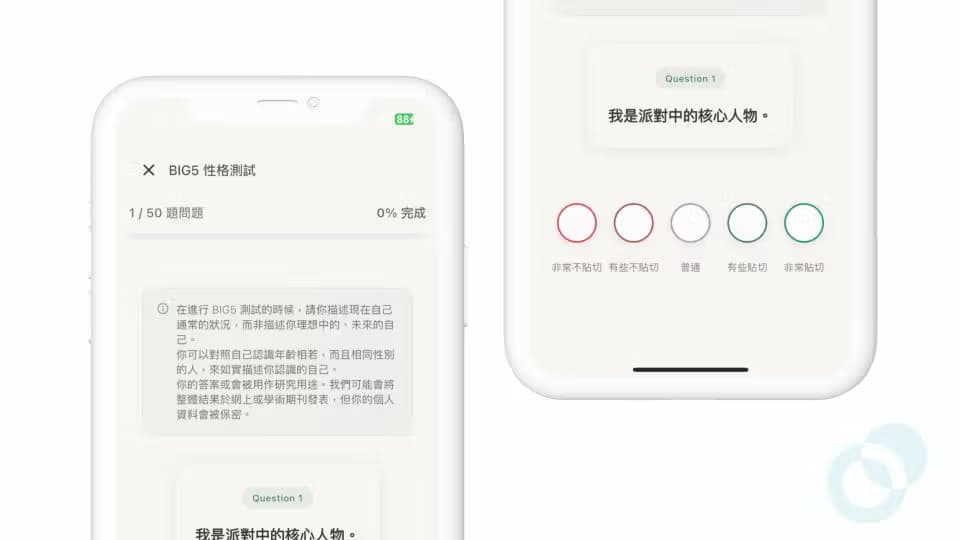
A first self-assessment. Some AI tools have built-in standardised psychological assessment scales — for example the PHQ-9 (a depression screen) or the BIG5 personality test — giving you a preliminary understanding of your own mental state without making an appointment. This isn't a diagnosis, but it can help you judge whether "I should seriously talk to someone".
In 2025, the MIT Media Lab published a large-scale study tracking 981 people who used ChatGPT over four weeks, exchanging more than 300,000 messages in total (Fang et al., 2025).
The results revealed an unsettling pattern: the more people used it, the lonelier they became.
Specifically, the longer the daily usage time:
The study also found that people with a higher sense of trust in AI and a stronger pull towards it socially showed markedly higher emotional dependence and problematic use afterwards. And among people with higher anxiety about being abandoned, the increase in loneliness was greater.
The research team acknowledged that this isn't necessarily a causal relationship — it may be that already-lonely people are simply more inclined to use AI frequently. But whichever way the arrow points, the data sketches out a troubling picture: AI companionship may become a kind of "emotional substitute" — you think you've gained connection, but in fact the distance between you and real people grows wider.
This is probably the risk in AI counselling that most needs to be taken seriously. It isn't as obvious as a side effect — you won't notice it the moment you start. It's more like a slow drift: each day you spend a few more minutes chatting with AI, make one fewer phone call to a friend, and bit by bit, your world grows smaller.
In fact, more and more researchers and clinicians are exploring a "hybrid model" — letting AI and human counsellors each do what they do best.
The idea isn't to let AI do the therapy, but to let it handle the things a counsellor has no way (or no need) to do personally:
This isn't a fantasy — the Dartmouth research team is developing a system that lets Therabot work alongside clinicians, so that therapists can supervise the AI's conversations and step in when necessary.
The answer depends on your current state and needs. The following isn't a definitive answer, but it can serve as a guide:
Situations where it makes sense to start with AI:
Situations where you should see a human counsellor:
The ideal approach may not be either/or, but letting each do its own job: AI takes care of the everyday noticing and organising, and a human counsellor takes care of the deeper therapy and change.
Perhaps the most honest conclusion is this: AI is not your counsellor, but it can be a safe space for you before — or after — you see one.
What's truly worrying isn't that AI is so good it replaces real people; it's that some people, now that they have AI, feel they no longer need real people at all. The MIT data is a reminder: a warm reply on a screen is not the same as a genuine connection.
Having a tool that can catch you at your most vulnerable is a good thing. But don't let the tool become your only support.
If you're weighing up whether to talk to someone but aren't sure where to start — you can begin by sorting through your own state.
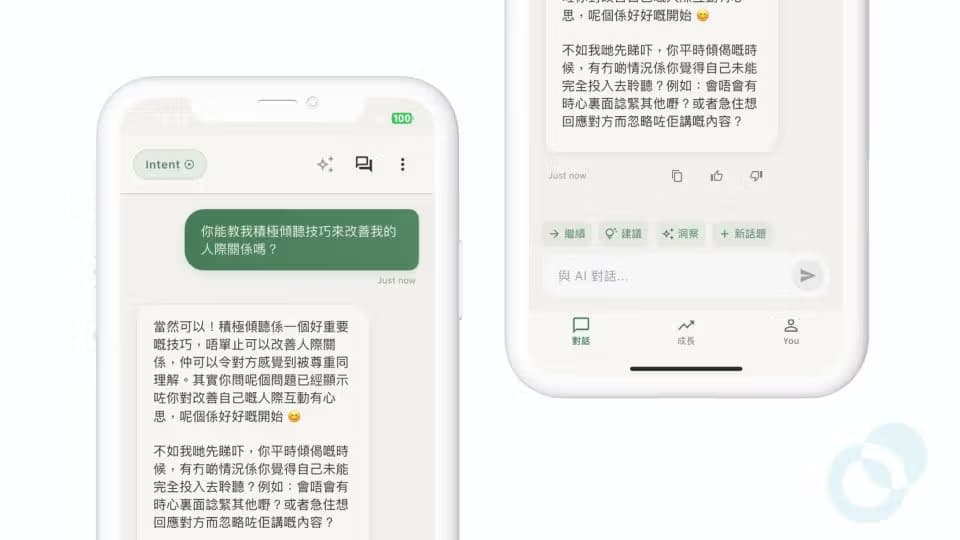
MindForest is an AI app designed around psychological principles, letting you talk through your emotions at any time, take the PHQ-9 depression screen or the BIG5 personality test, and get clearer about your own needs. It isn't a counsellor, but it can help you think things through: what is it that I actually need right now?
And when you find that what you need isn't just to organise your thoughts, but a real person to listen to you with genuine care —
TreeholeHK's counselling team is made up of counselling psychologists, clinical psychologists and trained counsellors, providing evidence-based psychotherapy services. Whether you're facing emotional difficulties, relationship problems, or uncertainty about life's direction, there's a real person here, waiting for you.
Campbell, C. (2025). Are therapy chatbots effective for depression and anxiety? A critical comparative review. American Psychoanalytic Association. https://apsa.org/are-therapy-chatbots-effective-for-depression-and-anxiety/
Fang, C. M., Liu, A. R., Danry, V., et al. (2025). How AI and human behaviors shape psychosocial effects of extended chatbot use: A longitudinal controlled study. arXiv preprint. https://arxiv.org/abs/2503.17473
Farzan, M., Ebrahimi, H., Pourali, M., & Sabeti, F. (2025). Artificial intelligence-powered cognitive behavioral therapy chatbots: A systematic review. Iranian Journal of Psychiatry, 20(1). https://doi.org/10.18502/ijps.v20i1.17395
Frontiers in Psychiatry. (2025). Beyond the black box: Why algorithms cannot replace the unconscious or the psychodynamic therapist. https://doi.org/10.3389/fpsyt.2025.1614125
Heinz, M. V., et al. (2025). Randomized trial of a generative AI chatbot for mental health treatment. NEJM AI. https://doi.org/10.1056/AIoa2400802
Li, H., Zhang, R., Lee, Y-C., Kraut, R. E., & Mohr, D. C. (2023). Systematic review and meta-analysis of AI-based conversational agents for promoting mental health and well-being. npj Digital Medicine, 6, 236. https://doi.org/10.1038/s41746-023-00979-5
Zhong, N., et al. (2024). [Meta-analysis, cited in Campbell, 2025].
Keep reading
Psychology
Psychology
Personal Growth


Comments
No comments yet — share your thoughts.