You're Not Overthinking — It Might Be Anxiety
It's 3am and you're awake again, your mind churning over tomorrow's meeting and next month's bills. If that worry has gone on for months and you can't switch it off, it isn't a flaw in your character…


It's 3am and you're awake again, your mind churning over tomorrow's meeting and next month's bills. If that worry has gone on for months and you can't switch it off, it isn't a flaw in your character…
It's 3am, and you're awake again. Your mind is running over tomorrow's meeting, that one thing you said wrong last week, next month's credit-card bill. You tell yourself to "just calm down," but your body won't listen — your heart races, your muscles clench, your stomach feels like it's being squeezed.
You may have heard the people around you say, "You worry too much." But if this weight has been with you for months, every single day, beyond anything you can control — this isn't a personality flaw. This may be an anxiety disorder.
Anxiety disorders are the most common mental-health problem in the world. According to the US National Comorbidity Survey (Kessler et al., 2005), close to three in ten people will experience some form of anxiety disorder in their lifetime. In Hong Kong the picture is much the same: the 2010–2013 Hong Kong Mental Morbidity Survey found that among adults aged 16 to 75, 13.3% met the criteria for a common mental disorder in the past week — of whom 6.9% had a mixed anxiety-and-depression disorder and 4.2% had generalised anxiety disorder (Lam et al., 2015).
What's more troubling is that, of these people, only 26% had used a mental-health service in the past year.
This article isn't here to diagnose you. It's here to help you see clearly: what anxiety actually is, where it comes from, when you should seek help, and which treatments genuinely work today.
Everyone worries. The tension before an exam, sweaty palms before an interview, the restlessness of waiting for a medical report — these are all normal anxiety responses. Normal anxiety has an object, has a time limit, and usually fades once the situation is resolved.
An anxiety disorder is different. Its hallmarks are: the worry has no clear object, or its object keeps shifting; it persists even when there's no concrete threat; you know your worry is out of proportion, but you just can't stop.
According to the Diagnostic and Statistical Manual of Mental Disorders, Fifth Edition (DSM-5), the core diagnostic criteria for generalised anxiety disorder (GAD) include:
Six months sounds like a long time, but many people, looking back, realise they have actually been living this way for years — they had simply always assumed "everyone is like this."
It's worth noting that generalised anxiety disorder is only one type. Social anxiety disorder makes a person afraid of being watched or judged by others; panic disorder brings sudden, intense bursts of fear and physical symptoms; specific phobias involve a disproportionate fear of particular things (such as flying or enclosed spaces). All of these fall within the family of anxiety disorders, with their own diagnostic criteria — but the underlying mechanisms share a fair amount in common.
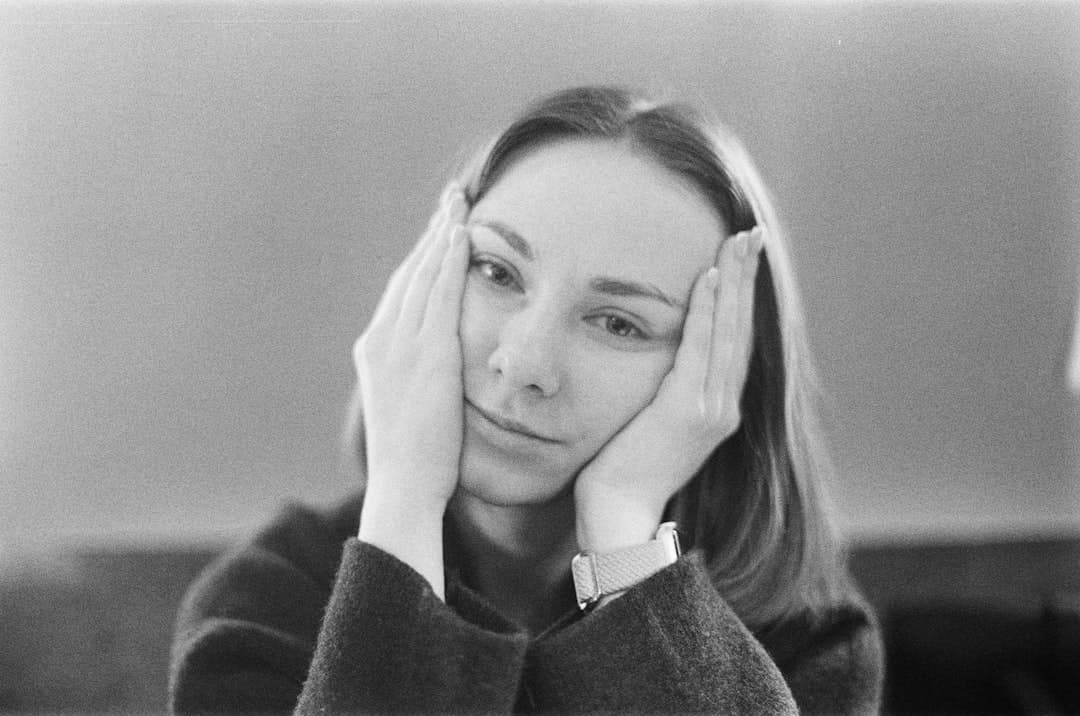
Many people assume anxiety comes down to "being psychologically weak" or "not being tough enough." But the research tells a very different story: anxiety disorders have multiple causes, involving the interplay of genes, brain structure, formative experiences, and life stress.
Genes matter more than you might think. Twin studies show that the heritability of anxiety disorders sits at roughly 30% to 50%. If a first-degree relative (a parent or sibling) has an anxiety disorder, your risk of developing the same problem is roughly four to six times that of the general population (Shimada-Sugimoto et al., 2015). This doesn't mean anxiety is "predestined," but it does mean some people are simply more easily triggered from birth.
The brain's "alarm system" may be overly sensitive. In the brain of someone with an anxiety disorder, the amygdala — the region responsible for detecting threats — tends to be more active than in the general population. It's like a smoke alarm with its sensitivity turned up too high: it goes off loudly even when someone is just cooking. At the same time, the prefrontal cortex — the region responsible for rational judgement and regulating emotion — may not be able to "put the brakes on" the amygdala effectively.
Your upbringing shapes your tendency towards anxiety. Research has found that parental overprotection, emotional coldness, or rejection all increase a child's later risk of developing an anxiety disorder. The effects of childhood adversity (such as losing a parent or experiencing abuse) run especially deep, because they alter the stress-response circuits that develop in the brain. Studies broadly agree that the impact of childhood trauma on anxiety tends to be more lasting than that of similar experiences in adulthood.
Stress is the trigger. Genes and brain structure determine how stable your "foundations" are; life stress is the earthquake. Work stress, relationship problems, financial hardship, even a global pandemic — a 2020 survey found that during the pandemic, around 14% of Hong Kong respondents showed clinical-level anxiety symptoms (GAD-7 ≥ 10) (Choi et al., 2020).
These factors don't operate in isolation. Genes influence your brain structure, your brain structure influences how you react to your environment, and environmental experiences can even change how your genes operate — your experiences affect which genes get "switched on" or "switched off." This is a complex system, and no single factor can "explain everything."
But that's also good news: because the causes are multiple, the points of intervention are multiple too. You don't need to change your genes to change the way your brain responds — therapy can do that.
Anxiety isn't just "worrying in your head." It shows up in your body, your thoughts, and your behaviour in all sorts of ways — some of which you may never have connected to anxiety at all.
In the body: a racing heart, shallow rapid breathing, muscle tension (especially in the neck, shoulders, and jaw), stomach discomfort, headaches, sweaty palms, feeling easily tired yet sleeping poorly. Some people repeatedly experience unexplained physical symptoms and visit doctor after doctor without anything being found — and this is one of the common presentations of an anxiety disorder.
In your thoughts: repeatedly imagining the worst-case scenario ("What if I get fired?" "What if something happens to my child?"), finding it hard to make decisions (because every choice might be the wrong one), difficulty concentrating, a mind that keeps "spinning without stopping."
In your behaviour: avoiding the situations that make you anxious (skipping social occasions, putting off decisions, not daring to make a phone call), repeatedly seeking reassurance (constantly asking family "do you think it'll be okay?"), over-preparing and over-checking.
There's a key distinction here: avoidance makes you feel better in the short term, but in the long run it makes the anxiety stronger. Because you never get the chance to discover that the things you worry about often don't happen — and even when they do, you have the capacity to cope.
There's no precise "cut-off score" for this question, but a few signs are worth noting:
If any of the above is a "yes" for you, that's already a signal worth taking seriously. Seeking professional help doesn't mean there's "something wrong with you" — it means you're making a mature, self-aware decision.

Yes. And the results are backed by a large body of research.
The most evidence-based treatments today fall mainly into two categories: psychotherapy and medication. Some research suggests that combining the two can sometimes bring added benefit, though not for all anxiety disorders — the best approach depends on the individual.
CBT is currently the psychotherapy with the most research support for treating anxiety disorders. Its core idea is this: anxiety isn't just a feeling — behind it lies a specific set of thinking habits and behavioural responses, and these can be identified, challenged, and changed.
Hofmann and Smits (2008) conducted a meta-analysis of 27 randomised controlled trials covering 1,496 patients. The results showed that CBT had a clear effect in reducing anxiety compared with placebo (effect size Hedges' g = 0.73). More specifically, responses differed across diagnoses: obsessive-compulsive disorder and acute stress disorder had the largest effect sizes (g = 1.37 and 1.31 respectively), social anxiety disorder and post-traumatic stress disorder had effect sizes of 0.62, and generalised anxiety disorder 0.51 (though the latter was based on only two studies, so the result needs cautious interpretation). (Note: this study was based on the DSM-IV classification, under which obsessive-compulsive disorder, post-traumatic stress disorder, and acute stress disorder were still categorised as anxiety disorders; DSM-5 has since placed them in separate diagnostic categories.)
CBT usually includes several core elements: psychoeducation (understanding the mechanics of anxiety), cognitive restructuring (learning to identify and adjust catastrophic thinking), and graded exposure (systematically facing the situations being avoided). A standard course is usually 12 to 20 sessions, once a week.
For moderate to severe anxiety disorders, medication can be an effective option — especially when anxiety is severe enough to affect your ability to take part in psychotherapy.
Bandelow et al. (2015) conducted a large-scale meta-analysis of 234 randomised controlled trials covering 37,333 patients. The results showed that serotonin-norepinephrine reuptake inhibitors (SNRIs) had the largest effect size (d = 2.25), followed by benzodiazepines (d = 2.15) and selective serotonin reuptake inhibitors (SSRIs) (d = 2.09). However, taking safety and dependence risk into account, clinical guidelines (Bandelow et al., 2017) list SSRIs and SNRIs as first-line drug choices, with commonly used medications including escitalopram, sertraline, venlafaxine, and duloxetine.
It's worth noting that these medications usually take two to four weeks to start working, and some cases may need up to six weeks. And once symptoms have eased, it is recommended to continue taking the medication for six to twelve months to prevent relapse (Bandelow et al., 2017). Sedatives (benzodiazepines), although they act quickly, are not recommended for routine use — they carry a risk of dependence, and should only be used short-term in special circumstances.
Mindfulness (mindfulness) has also built up a fair amount of evidence in recent years. A meta-analysis by Goyal et al. (2014) found that mindfulness practice had a small-to-moderate effect in reducing anxiety (effect size d = 0.38). It isn't about asking you to "think of nothing" — it's about practising observing your present thoughts and feelings with a non-judgemental attitude, rather than being carried away by them.
The benefits of exercise for anxiety are well supported by evidence. Rebar et al. (2015) carried out a meta-meta-analysis covering 10,755 participants and found that regular exercise had a small but stable improving effect on anxiety (effect size SMD = -0.38). It doesn't require high-intensity training — a meta-analysis of prospective studies covering nearly 300,000 people found that regular exercise was associated with a lower risk of anxiety disorders, with the greatest reduction in risk corresponding to roughly an hour of brisk walking a day (Li et al., 2025).
That depends on the severity of your anxiety, your personal preferences, and your practical circumstances. Mild anxiety may improve through mindfulness practice and regular exercise alone; moderate to severe cases usually call for psychotherapy, sometimes with medication as support. Bandelow et al. (2017) recommend that the choice of treatment plan should take into account "efficacy, side effects, drug interactions, cost, and the patient's own wishes."
Whichever approach you choose, what matters most is this: starting. There's no such thing as a perfect treatment plan, but almost any evidence-based method is far better than bearing it alone.
An anxiety disorder is not a character defect, nor is it proof that you aren't trying hard enough. It is a health problem involving genes, the nervous system, and life experience — fundamentally no different from high blood pressure or diabetes.
But here's the irony: one of the things anxiety disorders do best is make you feel that seeking help is itself something to be anxious about. "What if the therapist thinks my problem is too small?" "What if taking medication means I really am 'ill'?" — these very thoughts are precisely the anxiety talking.
Perhaps the most meaningful step you can take right now isn't to "defeat anxiety," but to stop pretending it doesn't exist.
If you're considering seeking professional help but aren't sure where to start — that's a hesitation many people share. Choosing the right clinical psychologist or psychotherapist is the first step towards change.
Professional psychotherapy can help you: understand where your anxiety comes from, learn concrete ways to cope with it, and gradually expand the space of your life, rather than continuing to let anxiety decide what you can and can't do.
Learn about our psychotherapy service
Ordinary tension has a clear cause (such as an exam or an interview) and fades once the situation is over. The worry of an anxiety disorder, by contrast, is persistent — it often has no concrete object, or its object keeps shifting, it lasts for at least six months, and you find it hard to control. According to the DSM-5 diagnostic criteria, an anxiety disorder also involves accompanying physical symptoms (such as insomnia or muscle tension) and significantly affects daily functioning.
A small number of mild anxiety symptoms may improve as the source of stress is removed, but clinical research shows that untreated anxiety disorders usually take a chronic course. Kessler et al. (2005) found that anxiety disorders typically begin in childhood or adolescence, and long-term follow-up studies show that the course of the illness tends to be chronic and recurrent (Bruce et al., 2005). Regular exercise and mindfulness practice can help ease symptoms, but anxiety disorders that are moderate or worse generally need professional treatment.
The most evidence-based treatments today are cognitive behavioural therapy (CBT) and medication. The meta-analysis by Hofmann and Smits (2008) showed that CBT has a clear effect compared with placebo (effect size g = 0.73), while SSRIs and SNRIs, owing to their balance of efficacy and safety, are listed as first-line drug choices. Bandelow et al. (2017) recommend choosing a treatment plan based on the severity of symptoms, personal preferences, and practical circumstances, with combined treatment bringing added benefit in some cases.
Research shows the heritability of anxiety disorders is between 30% and 50%. If a first-degree relative has an anxiety disorder, your risk is roughly four to six times that of the general population (Shimada-Sugimoto et al., 2015). That said, heredity is only one factor — upbringing, life stress, and personal experience matter just as much, and these acquired factors can be addressed through treatment.
According to the 2010–2013 Hong Kong Mental Morbidity Survey (Lam et al., 2015), 13.3% of adults aged 16 to 75 were affected by a common mental disorder, of whom 4.2% had generalised anxiety disorder. It's worth noting that, of those affected, only about a quarter had ever used a mental-health service.
An anxiety disorder is not "overthinking" — it is a health problem with clear diagnostic criteria, known causes, and effective treatments. If your worry has lasted more than a few months, is hard to control, and has begun to affect your life, that's a signal worth taking seriously. The good news is that, whether psychotherapy or medication, the available treatments are all backed by a large body of research evidence — on one condition: that you're willing to take the step of seeking help.
Bandelow, B., Reitt, M., Röver, C., Michaelis, S., Görlich, Y., & Wedekind, D. (2015). Efficacy of treatments for anxiety disorders: A meta-analysis. International Clinical Psychopharmacology, 30(4), 183–192. https://doi.org/10.1097/YIC.0000000000000078
Bandelow, B., Michaelis, S., & Wedekind, D. (2017). Treatment of anxiety disorders. Dialogues in Clinical Neuroscience, 19(2), 93–107. https://doi.org/10.31887/DCNS.2017.19.2/bbandelow
Bruce, S. E., Yonkers, K. A., Otto, M. W., et al. (2005). Influence of psychiatric comorbidity on recovery and recurrence in generalized anxiety disorder, social phobia, and panic disorder: A 12-year prospective study. American Journal of Psychiatry, 162(6), 1179–1187. https://doi.org/10.1176/appi.ajp.162.6.1179
Choi, E. P. H., Hui, B. P. H., & Wan, E. Y. F. (2020). Depression and anxiety in Hong Kong during COVID-19. International Journal of Environmental Research and Public Health, 17(10), 3740. https://doi.org/10.3390/ijerph17103740
Goyal, M., Singh, S., Sibinga, E. M. S., et al. (2014). Meditation programs for psychological stress and well-being: A systematic review and meta-analysis. JAMA Internal Medicine, 174(3), 357–368. https://doi.org/10.1001/jamainternmed.2013.13018
Hofmann, S. G., & Smits, J. A. J. (2008). Cognitive-behavioral therapy for adult anxiety disorders: A meta-analysis of randomized placebo-controlled trials. Journal of Clinical Psychiatry, 69(4), 621–632. https://doi.org/10.4088/JCP.v69n0415
Kessler, R. C., Berglund, P., Demler, O., Jin, R., Merikangas, K. R., & Walters, E. E. (2005). Lifetime prevalence and age-of-onset distributions of DSM-IV disorders in the National Comorbidity Survey Replication. Archives of General Psychiatry, 62(6), 593–602. https://doi.org/10.1001/archpsyc.62.6.593
Lam, L. C. W., Wong, C. S. M., Wang, M. J., et al. (2015). Prevalence, psychosocial correlates and service utilization of depressive and anxiety disorders in Hong Kong: The Hong Kong Mental Morbidity Survey (HKMMS). Social Psychiatry and Psychiatric Epidemiology, 50(9), 1379–1388. https://doi.org/10.1007/s00127-015-1014-5
Li, S., et al. (2025). Association between physical activity and risk of anxiety: A dose-response meta-analysis of 11 international cohorts. eClinicalMedicine, 84, 103285. https://doi.org/10.1016/j.eclinm.2025.103285
Rebar, A. L., Stanton, R., Geard, D., Short, C., Duncan, M. J., & Vandelanotte, C. (2015). A meta-meta-analysis of the effect of physical activity on depression and anxiety in non-clinical adult populations. Health Psychology Review, 9(3), 366–378. https://doi.org/10.1080/17437199.2015.1022901
Shimada-Sugimoto, M., Otowa, T., & Hettema, J. M. (2015). Genetics of anxiety disorders: Genetic epidemiological and molecular studies in humans. Psychiatry and Clinical Neurosciences, 69(7), 388–401. https://doi.org/10.1111/pcn.12291

Keep reading
Psychology
Love & Relationships
Personal Growth



Comments
No comments yet — share your thoughts.