Body Dysmorphic Disorder: When the Mirror Becomes the Enemy
Have you ever stood before the mirror, scanning your face over and over, certain that something is wrong? When concern about your appearance tips past ordinary self-checking, it may be a condition kn…
Why Do You Always Feel You Are Not Beautiful Enough? Understanding Body Dysmorphic Disorder (BDD)
Have you ever stood before the mirror, looking at your face over and over again, always feeling that something is not quite right? Perhaps your nose is not straight enough, your skin not smooth enough, or your face shape not perfect enough. This kind of excessive preoccupation with appearance may have moved beyond ordinary self-checking and become a psychological condition called “Body Dysmorphic Disorder” (Body Dysmorphic Disorder, BDD), also referred to clinically as“body dysmorphia”or“dysmorphophobia”. According to Veale (2004), the defining feature of BDD is an excessive preoccupation with an imagined or slight flaw in one’s appearance, a preoccupation that often leads to significant distress and impairment in everyday functioning.
Spending several hours a day in front of the mirror, looking left and right, as if just one more glance would confirm exactly “what is wrong”. This kind of habit gradually becomes a ritual, a ritual that ties your sense of self-worth to your appearance. Behaviour like this not only consumes a great deal of time and energy, it also takes a negative toll on the emotions. Bjornsson et al. (2010) note that people with BDD are often accompanied by high levels of anxiety and depression, and may even experience suicidal thoughts. Under the definition in the Diagnostic and Statistical Manual of Mental Disorders, Fifth Edition (DSM-5), BDD belongs to the category of obsessive-compulsive and related disorders.
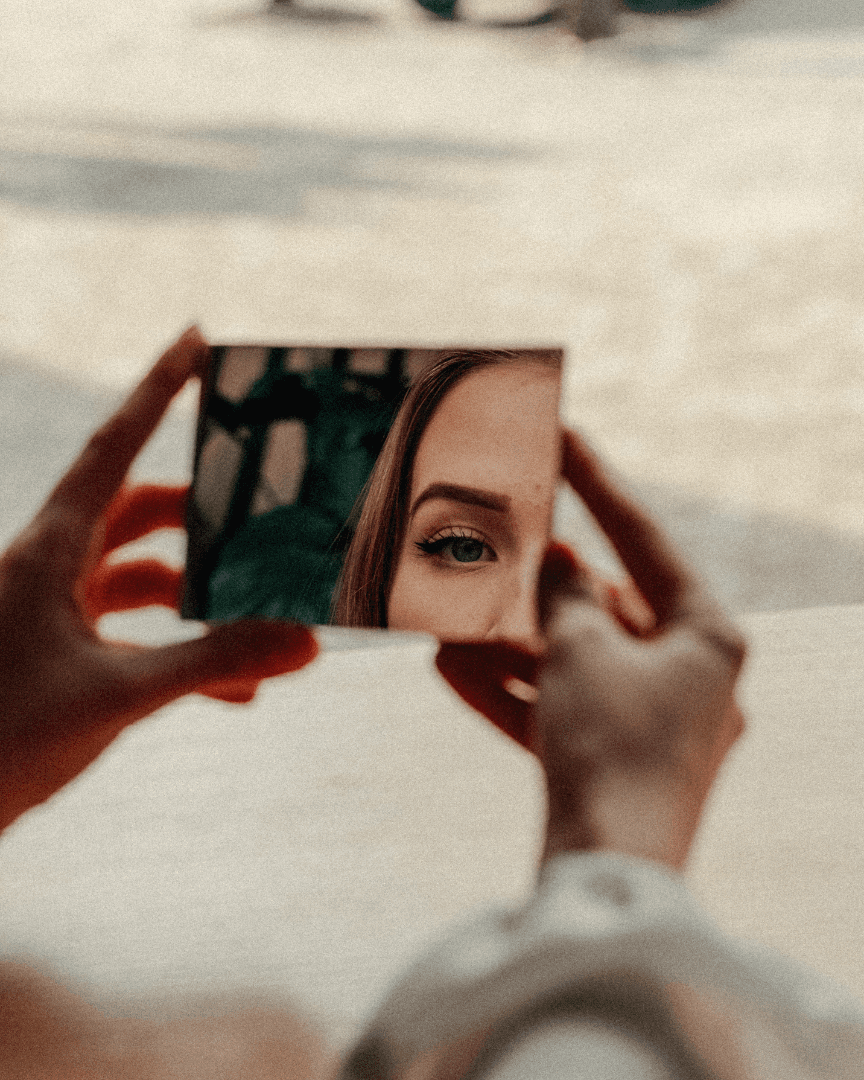
When people become excessively preoccupied with their appearance, they may fall into a state of relentless self-scrutiny and comparison — for example, spending hours repeatedly checking whether something is wrong with how they look.
The Far-Reaching Impact on Daily Life
Body dysmorphic disorder affects not only how people see themselves; it also has a far-reaching impact on relationships and daily life, quietly seeping into the cracks of everyday existence. For instance, they may avoid social activities for fear of how others might judge them, and may even be unwilling to leave the house. This kind of social avoidance gradually isolates them from the outside world, deepening feelings of loneliness and depression. Research by Fang & Wilhelm (2015) shows that people with BDD often fall into a self-enclosed state because of their excessive preoccupation with appearance, a state that seriously affects their quality of life.
In addition, body dysmorphic disorder can affect performance at work and in study. When people spend so much time and energy scrutinising and worrying about their appearance, they naturally neglect other important matters. They may, for example, be unable to concentrate on work or study because of an excessive preoccupation with how they look, leading to a drop in efficiency. Over time, this can have a negative effect on their career development and academic results.
Who Shapes Our Sense of Beauty? — The Twin Pressures of Society and the Media
In modern society, appearance has been assigned an outsized value, and the spread of social media has intensified this phenomenon all the more. You may notice that every day, when you open Instagram or Facebook, all you see are meticulously edited “perfect photos”, which make it easy to compare ourselves with others without even realising it, and so to feel “I am not good enough”. These photos not only prompt self-doubt; they also heighten anxiety about appearance.
Society’s standards of appearance are like an address that keeps changing — at times championing slim, fair skin and a high nose bridge, at other times praising the natural, unretouched look of “authenticity”. And people are like tenants living within these standards, forever bracing against the unease of having to move on. This pressure and anxiety gradually lead people to focus more and more on their appearance, and may in turn give rise to body dysmorphic disorder.
The Deeper Influence of Psychological Factors: Self-Esteem, Perfectionism and Emotion Intertwined
Beyond external social pressure, psychological factors are also an important cause of body dysmorphic disorder. Low self-esteem and a tendency towards perfectionism, for example, can lead people to set excessively high standards for their own appearance, which in turn brings anxiety and distress. Research by Veale (2004) indicates that some people with BDD have perfectionist tendencies, a disposition that makes them especially sensitive to flaws in their appearance.
In addition, psychological problems such as anxiety and depression can also aggravate the symptoms of body dysmorphic disorder. When people are in an anxious state, for example, they may become more sensitive to everything around them, including their own appearance. This sensitivity leads them to notice and magnify flaws in their appearance more readily, which then deepens the anxiety and distress.
There is also a marked link between social anxiety disorder and the symptoms of body dysmorphic disorder. Clinical research shows that people with social anxiety disorder tend to over-interpret others’ negative reactions during social interaction (Buhlmann et al., 2008), a cognitive pattern that reinforces a distorted self-evaluation of appearance flaws. It is worth noting that research by Fang and Wilhelm (2015) found that roughly 12–13% of people with BDD also meet the diagnostic criteria for social anxiety disorder, indicating a clinically significant comorbidity between the two conditions. This comorbid relationship may create a vicious cycle, leading to an even more negatively skewed system of self-perception in those affected.
How Can You Self-Screen for Appearance Anxiety? Professional Scales and Assessment Tools
If you suspect you may have body dysmorphic disorder, you can carry out some basic self-screening. You might, for instance, reflect on whether you frequently check your appearance, or whether concerns about your appearance have affected your daily life. Research by Bjornsson et al. (2010) indicates that people with BDD usually spend a great deal of time scrutinising their appearance, and this behaviour is an important indicator for self-screening.
In addition, you can assess whether you tend towards appearance anxiety by asking yourself a few simple questions. For example: Do you often feel anxious or uneasy because of concerns about your appearance? Do you avoid social activities for fear of how others will judge you? The answers to these questions can provide an initial self-assessment.
Using Professional Assessment Tools
If the results of your self-screening suggest you may have body dysmorphic disorder, it is advisable to use a professional assessment tool for further screening. The Body Dysmorphic Disorder Questionnaire (BDDQ), for example, is a commonly used assessment tool that can be used to screen for the symptoms of BDD. Research by Krebs et al. (2017) shows that the BDDQ is an effective assessment tool that can help professionals identify and diagnose BDD.
In addition, a counsellor or psychiatrist can also assess your symptoms and situation through a clinical interview. This kind of assessment not only provides a more comprehensive understanding of your situation, but can also offer effective recommendations for any subsequent treatment.
Breaking Free From the Grip of Appearance: The Possibility of Change and Recovery
Changing Your Thinking Patterns
The first step in overcoming appearance anxiety is to change your thinking patterns. You can try replacing negative self-evaluation with positive thinking. When you notice yourself judging your appearance harshly, for example, you can remind yourself: “Everyone has imperfections, and I have my own unique qualities too.” This kind of positive thinking pattern can help you gradually reduce your anxiety about your appearance.
Research by Fontenelle et al. (2013) indicates that Cognitive Behavioural Therapy (CBT) is an effective method for treating BDD. By identifying and changing negative thinking patterns, CBT can help those affected reduce their excessive preoccupation with appearance, and so lower their anxiety and distress.
Concrete Strategies for Changing Behaviour
Besides changing your thinking patterns, changing your behaviour is also an important strategy for overcoming appearance anxiety. You could, for instance, set boundaries around excessive checking. Set a fixed time to check your appearance, or limit how long you spend checking, rather than scrutinising yourself anytime and anywhere. Move yourself from “compulsive checking” towards “measured attention”. When the urge to look in the mirror, take selfies or compare photos returns, pause for a few seconds, take a deep breath, and ask yourself: “Is this behaviour driven by anxiety, or is it a genuine need?” Learning not to act immediately on the inner impulse is an important step in changing a habit.
In addition, you can take part in activities that make you feel happy and relaxed, or that feel meaningful to you. Exercise, reading and artistic creation, for example, are all good choices. These activities can not only help you relax, but can also build your confidence and self-esteem. Throwing yourself into different activities, shifting your attention away from your appearance and broadening the sources of your self-worth, is like adding more colour and depth to your life.
Separately, to reduce the appearance anxiety that comes from social media, we can make adjustments on social media or our phone apps — for example, limiting how much time we spend each day on filter apps, or even trying to delete some unnecessary beauty apps. Setting aside one or two “no social media days” each week is also a good practice, letting us step back from the glow of the screen, return to our own rhythm, and listen again to our true needs and emotions. These steps may seem small, almost insignificant, but like a small corner kept for ourselves in a crowded space, they are a gentle reminder: “That real, breathing you deserves to be treated well” — and that, too, is the first step in putting some distance between yourself and appearance anxiety.
Seeking Professional Support: Psychotherapy and Counselling Services
If you find you cannot overcome appearance anxiety through self-adjustment, you may want to consider seeking professional counselling. A counsellor can use professional methods to help you identify and change negative thinking patterns, and so reduce your anxiety about your appearance.
In addition, a counsellor can offer emotional support and guidance, helping people better cope with the distress that appearance anxiety brings. This support and guidance can not only help you ease your anxiety, but can also build your confidence and self-esteem.
If you or someone close to you is troubled by appearance anxiety, do consider seeking professional help. TreeholeHK’s psychotherapy service is provided by professional counsellors, with consultation plans designed around individual needs, so that you can cope with appearance anxiety more effectively and improve your quality of life. Book now and begin your journey to mental wellbeing!
References
Bjornsson, A. S., Didie, E. R., & Phillips, K. A. (2010). Body dysmorphic disorder. Dialogues in clinical neuroscience, 12(2), 221–232. https://doi.org/10.31887/DCNS.2010.12.2/abjornsson
Buhlmann, U., Teachman, B. A., Naumann, E., Fehlinger, T., & Rief, W. (2008). The meaning of beauty: Implicit and explicit self-esteem and attractiveness beliefs in body dysmorphic disorder. Journal of Anxiety Disorders, 23 (5), 694–702. https://doi.org/10.1016/j.janxdis.2009.02.008
Fang, A., & Wilhelm, S. (2015). Clinical features, cognitive biases, and treatment of body dysmorphic disorder. Annual Review of Clinical Psychology, 11, 187-212. https://doi.org/10.1146/annurev-clinpsy-032814-112849
Fang, A., & Wilhelm, S. (2015). Clinical features, body image, and comorbidity in body dysmorphic disorder. Psychiatric Clinics of North America, 38 (2), 287–300. https://doi.org/10.1016/j.psc.2015.02.001
Feusner, J. D., Moody, T., Hembacher, E., Townsend, J., McKinley, M., & Moller, H. (2010). Abnormalities in visual processing and frontostriatal systems in body dysmorphic disorder. Archives of General Psychiatry, 67 (2), 197–205. https://doi.org/10.1001/archgenpsychiatry.2009.164
Fontenelle, L., Nascimento, & Prazeres. (2013). Cognitive-behavioral therapy for body dysmorphic disorder: A review of its efficacy. Neuropsychiatric Disease and Treatment, 307. https://doi.org/10.2147/ndt.s41074
Veale, D. (2004). Advances in a cognitive behavioural model of body dysmorphic disorder. Body Image, 1(1), 113-125. https://doi.org/10.1016/S1740-1445(03)00009-3







Comments
No comments yet — share your thoughts.