The Slasher Life Looks Freer Than It Is
Ever envied the people who design by day, write by night and shoot photos at the weekend? That mix-and-match life is what we call being a "slasher" — and it looks freer than it really is. Here is how…



Ever envied the people who design by day, write by night and shoot photos at the weekend? That mix-and-match life is what we call being a "slasher" — and it looks freer than it really is. Here is how…
Have you ever envied the people who can be a designer, a writer and a photographer all in the same week? Or dreamed of working a day job while pouring your evenings into a side hustle you love? That way of living is exactly what we call being a "slasher". It looks free and wonderfully varied — but in reality it hides no shortage of very real challenges and trade-offs.
So is the slasher life really right for you?
This article walks you through what a slasher actually is, why more and more people want to become one, and — most importantly — how to judge whether this is a path you are suited to take.
The term "slasher" was first coined by Marci Alboher in One Person/Multiple Careers (2007) to describe people who hold two or more occupational identities at the same time (Alboher, 2007). Put simply, you no longer carry a single job title — for instance: an accountant by day, a photographer by night, and on weekends the person running their own podcast or brand community. This way of living isn't only about earning a bit extra; it is more about a deliberate career choice to build a multifaceted life.
Research has found that people take on multiple jobs not only to boost their income, but more often to explore new skills, test the possibility of changing careers, and even to build a personal brand and realise themselves (Panos et al., 2014). Among those who start a side hustle, the rate of later switching careers or starting a business also rises markedly (Panos et al., 2014) — which suggests that a slasher identity is not merely a "transition", but may well be the opening of a transformation.
Today's online platforms, social media and freelancing tools have dramatically lowered the barrier to a side hustle. All you need is a computer and an internet connection, and you can write proposals by day, take on design projects by night, and perhaps run an online course at the weekend. Advances in technology have made multiple careers both viable and flexible.
People today, especially Gen Z and younger Millennials, place greater value on meaning in their work and on self-realisation. They are unwilling to work only for a pay cheque, and would rather find passion and a sense of belonging across different areas of life (Kuron et al., 2015). For them, "doing just one job for life" has, if anything, come to feel like a limitation.
Global economic swings, the upheaval of AI, and the rapid pace of industry transformation mean that more and more people no longer put all their eggs in one basket. Instead, they choose to spread their risk, building resilience through multiple income streams. Slashing has slowly shifted from a lifestyle choice into a survival strategy for the modern career (Conen et al., 2021).
The slasher life sounds appealing, but the people who truly last on this path tend to share certain psychological traits:
Are you the kind of person who can get the work done under each of your identities without anyone reminding you? If so, you are well suited to the slasher life. The psychologists Ryan and Deci (2000) noted that people with strong intrinsic motivation are better able to draw a sense of achievement and personal growth from multiple roles, because they do things out of passion rather than obligation.
The slasher life doesn't necessarily pay steadily from the start; sometimes you take it on to try out a new opportunity, and income inevitably has its highs and lows. Research points out that people who can tolerate this kind of uncertainty are better able to find resilience and freedom in a varied career (Panos et al., 2014).
Do you feel that each shift between roles helps you understand yourself better and builds up more connections and experience? That is what we call "psychological capital". Conen et al. (2021) point out that this self-efficacy and social support, drawn from different roles, can strengthen your psychological resilience and your resistance to stress — a foundation that matters greatly for a slasher.
Is it to earn an extra income, to rediscover your passion, or to escape the burnout of your current career? Getting clear on your motive is the first step towards lasting the distance.
In the early days it is wise to keep the stability of your main job, then ease into a side hustle or other role bit by bit. There's no need to change too much at once — that way you won't pile too much pressure on yourself.
The slasher path rarely shows results overnight, and an up-and-down income is the norm. Are you ready to make peace with that unease?
If you long to break out of the traditional career framework and live a more resilient, more varied life, then slashing really is a path worth exploring. But do remember that it isn't like a sprint, where one burst of effort gets you across the line; it is more like a long-distance run that calls for patience and self-awareness.
Before you begin, it's worth pausing to ask yourself: What kind of person do I want to become? What rhythm of life do I yearn for? When you are clear about what you want to pursue — not someone else's idea of success, but a balance and an achievement that are your own — then slashing will truly become your choice, rather than just another hashtag riding the trend.
Writing proposals by day, editing videos by night, running around on freelance gigs at the weekend — you work hard to live out a rich, varied slasher life, yet you often feel drained late at night, unsure of where to head next.
MindForest App is a psychological toolkit built for slashers like you, helping you keep your emotions steady amid the busyness.
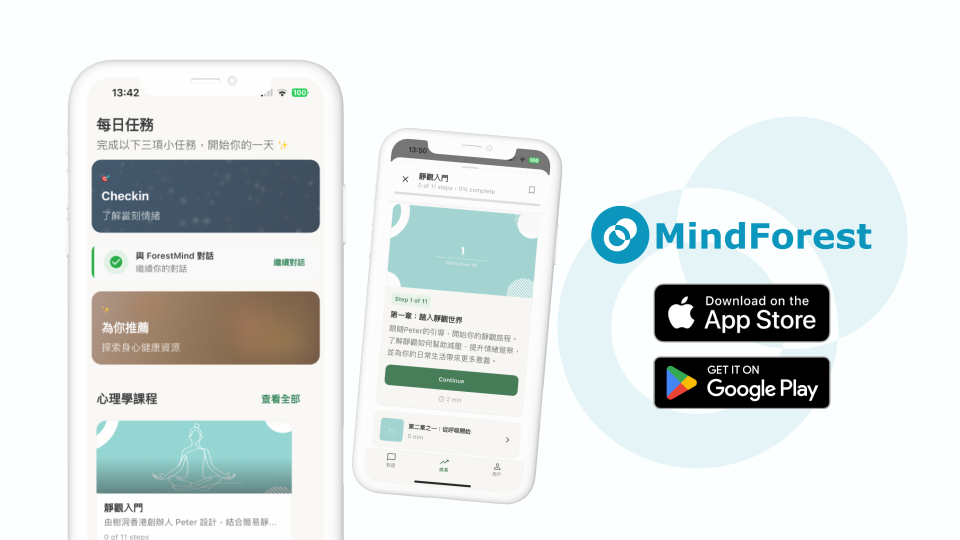
An office worker today, a creator tomorrow — constantly switching identities can easily leave you feeling lost. ForestMind AI is always there to talk things through with you, helping you untangle the sources of your stress so that, amid all the change, you can still find your psychological anchor.

A busy, multi-tasking life often leaves people overlooking their inner voice. Through the inspiration journal, you can record each day's feelings and reflections, leaving a record for every stretch of your slasher journey and appreciating your own growth.
Not everyone is suited to slashing, and not every way of slashing is right for you. Psychological assessments help you understand your personality traits and work preferences more clearly, so you can make choices that fit who you really are.
? Try the MindForest App for free right now, and start practising: across your many roles, live out a clearer, steadier and more empowered version of yourself.
References
Alboher, M. (2007). One Person/Multiple Careers: A New Model for Work/Life Success. Business Plus.
Conen, W., Stein, J., & Wieteke, C. (2021). A panel study of the consequences of multiple jobholding: enrichment and depletion effects. Journal of Career Development, Advance online publication. https://doi.org/10.1177/1024258920985417
Kuron, L. K. J., Lyons, S. T., Schweitzer, L., & Ng, E. S. W. (2015). Millennials’ work values: Differences across the school to work transition. Personnel Review, 44(6), 991–1009. https://doi.org/10.1108/PR-01-2014-0024
Panos, G. A., Pouliakas, K., & Zangelidis, A. (2014). Multiple job holding, skill diversification, and mobility. Industrial Relations: A Journal of Economy and Society, 53(2), 223–272. https://doi.org/10.1111/irel.12055
Ryan, R. M., & Deci, E. L. (2000). Self‑determination theory and the facilitation of intrinsic motivation. American Psychologist, 55(1), 68–78. https://doi.org/10.1037/0003-066X.55.1.68



Comments
No comments yet — share your thoughts.