Psychology Books That Are a Pleasure to Read
Psychology uses systematic, scientific methods to make sense of how we feel, think and behave. Here are a handful of genuinely good books that made learning it a pleasure — covering personal growth, …



Psychology uses systematic, scientific methods to make sense of how we feel, think and behave. Here are a handful of genuinely good books that made learning it a pleasure — covering personal growth, …
Psychology uses systematic, scientific methods to understand how people feel, think and behave. Studying it does more than deepen our self-understanding — it also helps us question some of the "common sense" assumptions we hold about human nature. Take a simple example: if you were opening a bakery, most people would assume that the more varieties of bread you stock, the more customers you'll attract. Research suggests the opposite may be true — a smaller, more carefully chosen range can actually increase customers' willingness to buy, because too many options make weighing one preference against another exhausting. As this shows, psychology not only helps us understand ourselves but also has practical value in fields such as business.
Although many people are keen to learn psychology, the books on the market are sadly a mixed bag, and it's all too easy for pseudoscience to be passed off as psychology. So here I'd like to share a few outstanding books I've come across over my years of studying psychology. Each is written by an expert in the field — the content is rich, the research thorough, and best of all, none of them is too daunting for a beginner, while remaining genuinely useful for everyday life.
 Mindfulnessbook-mindfulness.jpg” alt=”mindfulness-book-mindfulness” class=”wp-image-10078″/>
Author: Peter Chan @ TreeholeHK
Difficulty: ★★☆☆☆
All right — full disclosure, I wrote this one. An author can never be objective about their own book, but I can at least share the thinking behind it: this is an introduction to mindfulness. What makes a good introductory book? In my view, the argument has to be well-grounded and backed by solid scientific research; it has to be systematic, complete, clear and easy to follow, so the reader truly grasps the essence of mindfulness; and it has to be genuinely practicable, with instructions the reader can put into practice for themselves. While writing, I worked hard to make sure Mind Training — A Practical, Evidence-Based Method for Mastering Your Mind Through Mindfulness met all of these criteria.
As a form of mind training, mindfulness has earned a great deal of scientific recognition over the past few decades, and is genuinely helpful for managing emotions such as anxiety. I hoped this book would not be a flight of fancy, but would meet a certain academic standard and reflect what the field of psychology has actually discovered about mindfulness. Of course, staying close to home matters too — and that is, in fact, the greatest value of reading a book on mindfulness published in Hong Kong. As a Hongkonger, I know the struggles Hongkongers face, and I have tried to address these themes in the book too. Most importantly, the book comes with a little six-week mindfulness course, along with accompanying practice recordings and everyday exercises. I strongly recommend reading one section a week and practising as the book sets out. By the end of the six weeks, you will have mastered the foundations of mindfulness and felt the benefits it brings.
Available at all major bookshops in Hong Kong
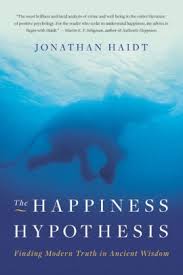
The Happiness Hypothesis
Author: Jonathan Haidt
Difficulty: ★★☆☆☆
We have recommended this book before. It uses psychology to examine ten questions that are of fundamental importance to human life, including the divine, love, adversity, morality and happiness. These are subjects every one of us has to face. The Happiness Hypothesis draws on a wealth of psychological research to analyse and explore them, offering down-to-earth advice on pressing dilemmas such as "I was born melancholy and joyless — what can I do?", "How do I persuade others?" and "Why do people always feel good about themselves?". You won't necessarily resolve all of these questions by reading a single book, but the book's perspective is genuinely fresh and thought-provoking, and the reading experience is so engaging you won't want to put it down.
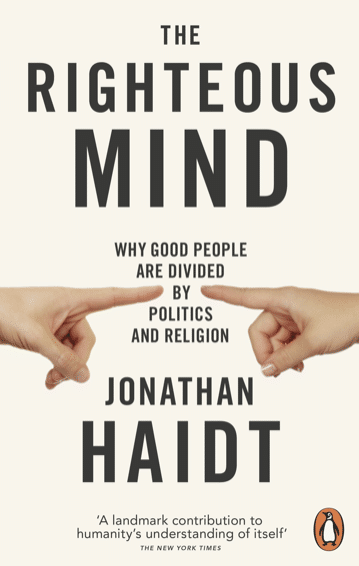
The Righteous Mind: Why Good People Are Divided by Politics and Religion
Author: Jonathan Haidt
Difficulty: ★★☆☆☆
This book is by the same author as The Happiness Hypothesis. Haidt argues that people hold sharply different political leanings because they have different "moral palates" — some place greater weight on suffering, others on loyalty — and the crux is that everyone sincerely believes they are on the side of justice: it turns out "justice" means something different to each of us. Reading this book not only opened my eyes to moral psychology, it also left me feeling more tolerant, more willing to understand the other side's point of view.
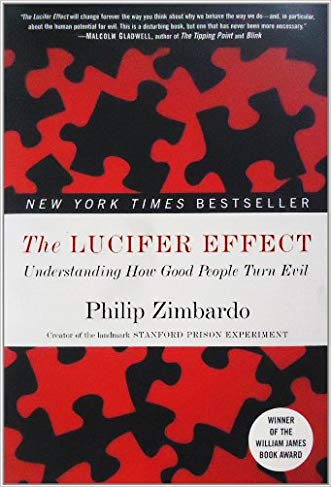
The Lucifer Effect: Understanding How Good People Turn Evil
Author: Philip Zimbardo
Difficulty: ★★☆☆☆
This book is by the professor who led the famous Stanford Prison Experiment. In that experiment, a group of psychologically normal university students was randomly split into two groups to play prisoners and guards in a simulated prison. The results were deeply alarming: within a few days the guards had transformed into frightening tyrants, bullying and humiliating the prisoners in all manner of ways. The prisoners, too, seemed to forget that they were merely participants in an experiment, and largely obeyed the guards without question. The experiment eventually spiralled out of control and had to be cut short. It demonstrated the enormous power of role and environment to make people act against their conscience. This book records the whole process in detail, along with the author's observations and analysis of moral psychology.
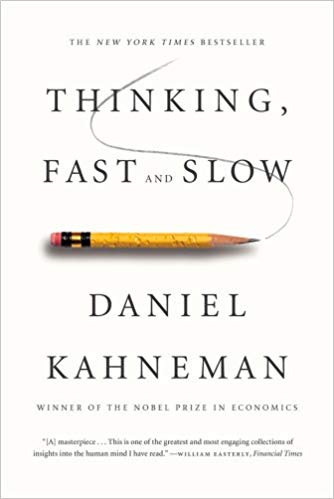
Thinking, Fast and Slow
Author: Daniel Kahneman
Difficulty: ★★★☆☆
If you want to understand how people make decisions, this is the book you can't leave out. Traditional economics assumes that people are rational creatures who, as long as nothing conflicts with other goals such as friendship or self-image, will coolly maximise their own economic interest. But the author's years of research show that the reality is otherwise: when people weigh up gains and losses, they are swayed by all sorts of cognitive biases. The author's findings have left their mark on marketing, human-resource management and pricing strategy alike, and earned him the Nobel Prize in Economic Sciences.
Book club for this title
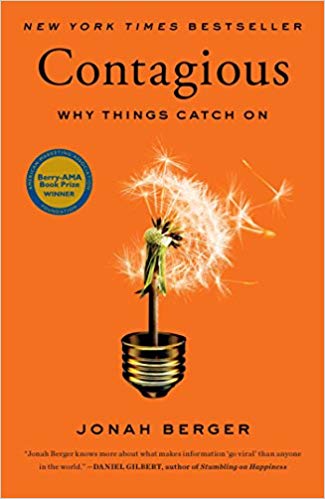
Author: Jonah Berger
Difficulty: ★★☆☆☆
Although the book's Chinese title sounds a touch overblown, the content is anything but — it's solid, substantial material. In the twenty-first century, when it comes to promoting your own product or idea, many people think first of buying online ads, throwing money at exposure. But the author argues that word of mouth is in fact the most important element in making something go viral. He sets out six factors that prompt people to talk about something, and backs his case with a wealth of research and real-world applications. If you run a business or are promoting an idea, this book is sure to offer some wisdom worth drawing on.



Comments
No comments yet — share your thoughts.