What Freud Was Really Trying to Tell Us
Sigmund Freud is the most famous name in psychology — yet his ideas about the unconscious, the Oedipus complex, and the structure of the mind are widely misunderstood. Here's a plain-language guide t…


Sigmund Freud is the most famous name in psychology — yet his ideas about the unconscious, the Oedipus complex, and the structure of the mind are widely misunderstood. Here's a plain-language guide t…

P
當你成為一個和父親相似的人,你不是就能和一個自己母親相似的女人做愛嗎?這樣慾望(想和自己的母親做愛)和現實(不能和自己的母親做愛)便得已調和,以折中、合宜的方式呈現(和一個和母親相似的女人做愛)。
我是這樣想的 不成為一個和父親相似的人 就找不到跟母親相似的人嗎
還是說成為一個和父親相似的人,跟一個相似母新的做愛 這時戀母情結就不再了
但假如今天我不成為跟父親的人卻找一個相似母親的人做愛,這時戀母情結就還在
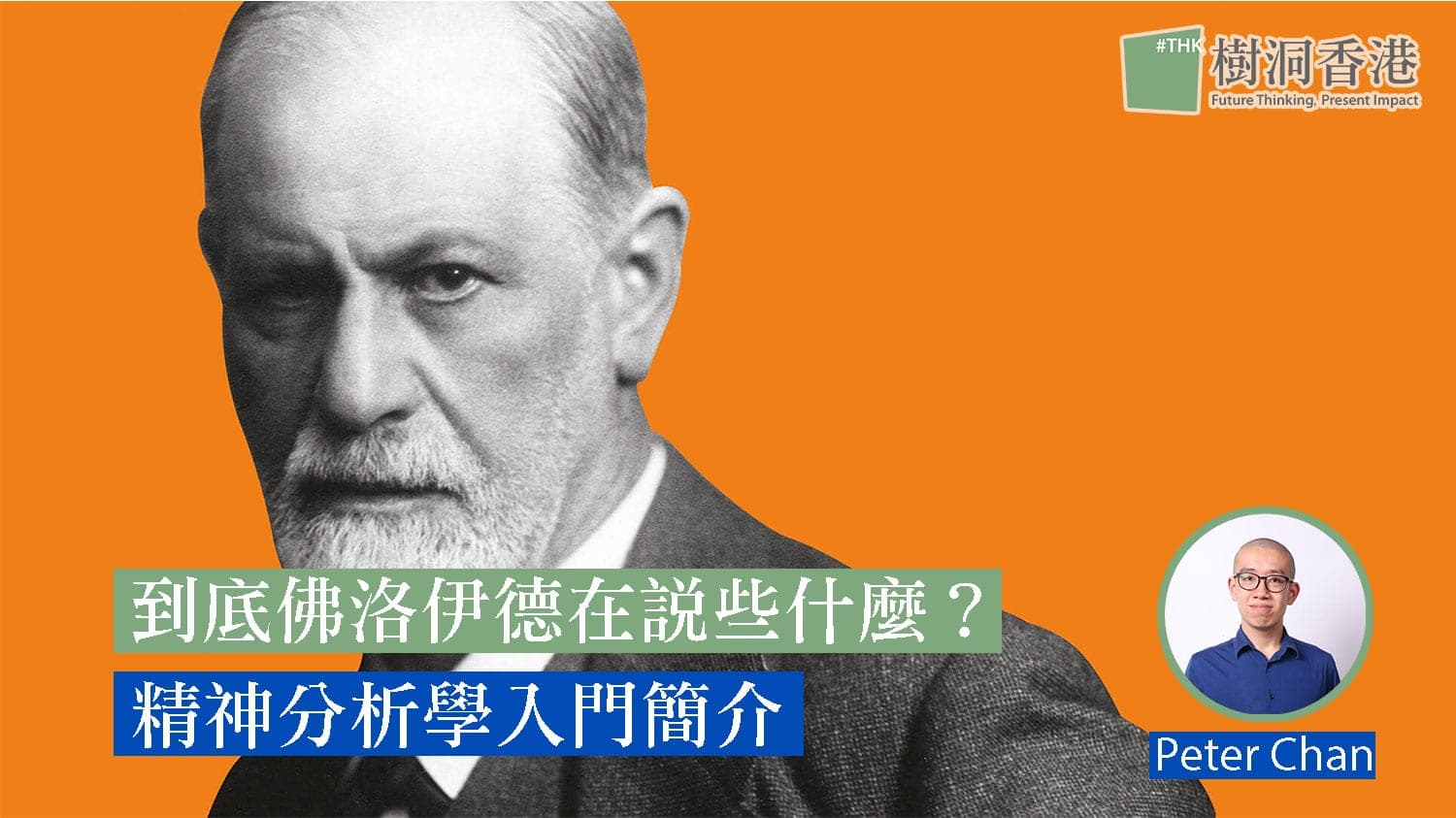
When it comes to the most famous psychologists, Freud (Sigmund Freud) is in a class of his own. Whether or not you have ever studied psychology, the odds are you have heard his name, and many people even mistake him for the father of modern psychology (that was actually Wilhelm Wundt). Terms like the unconscious, dream interpretation and the Oedipus complex have even lent psychology an air of mystery, as though it were beyond ordinary reach. But in truth, to understand how psychology developed — and perhaps even "human nature" itself — you need to know what Freud thought. After all, he was one of the greatest thinkers of the twentieth century.
One reason Freud became so widely known is that his theories about sex are very juicy: hear them once and you remember them (though, of course, Freud's standing in academia is not simply a matter of having said shocking things). Freud believed that, in childhood, a son wishes to make love to his mother, but the father's presence makes this an unattainable goal. So what is to be done? The son sets in motion a self-defence mechanism: first he represses his sexual desire for his mother into the unconscious; then he recasts the father, once seen as an enemy, as a role model, learning his values and behaviour in the hope that, once grown up, he might attract a woman who resembles his mother to make love to. A daughter follows a parallel pattern.
So — do you want to make love to your own parents? Most people's reaction is: "You're out of your mind!"
That very reaction is the perfect way in to Freud's theory of the structure of consciousness. Freud would say: "Actually, you do want to make love to them. It's just that this is a goal at odds with the reality principle, so you've repressed it into the unconscious." Freud held that the human mind is divided into three parts:

The conscious, as the name suggests, is simply what we are directly aware of in the present moment. Freud used the famous iceberg theory (Iceberg Theory of Consciousness) to describe this layer that floats above the water — what sits above the surface is what we are aware of in the moment, and compared with the whole iceberg, the conscious is only a very small part. Say, for instance, you are having a meal and fretting over what to eat. In that moment, your conscious mind holds nothing but the various food options.
Beneath the conscious lies the preconscious: the preconscious refers to those things that are not within our immediate awareness, but which surface into consciousness the moment we try to recall them. Take your own name — you are not thinking about your name every moment of the day; that is, for most of the time it sits outside your awareness. But the instant I ask what your name is, you retrieve the memory of your name from the preconscious and let it float up into consciousness to answer the question. A name, you could say, lies in the shallow layer of the preconscious, because a single thought is enough to bring it back. Deeper in the preconscious there may be memories that are harder to recover, such as the names of your secondary-school classmates. But generally speaking, the contents of the preconscious can be brought to mind.
The deepest layer of the mind is the unconscious. Freud believed the unconscious to be by far the largest part of the mind. Consider this: a great many things happen every day, yet only a tiny fraction of them are things we can remember (in the preconscious) — and yet every single one of them affects your unconscious. Unlike the preconscious, the contents of the unconscious cannot be recalled by ordinary means.
Earlier I mentioned sexual desire towards one's parents; Freud held that this desire resides in the unconscious. Why in the unconscious? It comes back to the self-defence mechanism described above — wishing to make love to one's parents, yet knowing that in reality it is not possible (because of rivalry with the same-sex parent), would cause suffering. To protect oneself, the only option is to repress this desire into the unconscious so that one no longer brings it to mind.
Although we cannot become aware of the contents of the unconscious, the unconscious is constantly shaping our behaviour and our thoughts. This idea is aptly captured by a famous line from the philosopher Schopenhauer (Arthur Schopenhauer — Freud's thinking was in fact deeply influenced by Schopenhauer): "A man can do what he wants, but not want what he wants." In everyday life, different thoughts arise in our consciousness, and we may even choose whether or not to act on them, but we cannot choose which thoughts arise; these thoughts seem to appear out of nowhere. From the standpoint of psychoanalysis, the arising of different thoughts is in fact a manifestation of the unconscious — we are simply unaware that it is so.
Take the Oedipus complex (or the Electra complex) again: although we do not have thoughts of making love to our parents, when we meet someone of the opposite sex we like and can't help being drawn to them, then from the psychoanalytic standpoint this is in fact the unconscious desire to make love to one's parents, surfacing through a disguise (Disguise) that conforms to social norms.
Freud's psychoanalysis (Psychoanalysis) explored in depth the relationship between the conscious and the unconscious, revealing the motives and sources of stress behind our behaviour. While learning about these theories, we can also draw on modern technology to strengthen our psychological resilience and meet a range of emotional challenges. MindForest is a psychology-based AI application that offers a variety of tools and strategies to help you improve your mental wellbeing.

By using MindForest, you will master the essential skills for managing emotional stress effectively, and cultivate the resilience needed to overcome psychological challenges. This not only helps with the emotional issues of the moment, but can also support your long-term emotional health and personal development. Talking with the AI will bring to light more of the unconscious deep within, offering precious insights for your journey of self-discovery.

Having understood the three parts of consciousness, we can begin to explore how the "self" is made up. Freud held that the self is divided into three parts, scattered across the different layers of consciousness:
First is the id — the id symbolises humanity's most primal desires: food, aggression, sex. Freud's main object of study was sexual desire, which he called the libido (Libido). It is worth noting that the id is wholly immersed in the unconscious. As human beings, we cannot directly know the id's wishes.
The id is the most primal part of a person, present from birth. The id is like an infant: it wants something and it wants it at once — it operates on the principle of instant gratification (Instant Gratification). Unsurprisingly, this way of behaving runs into obstacles at every turn — and the id's first great setback is the wish to make love to one's parents, which cannot be fulfilled.
So how is this unattainable desire to be resolved? The id alone cannot solve the problem, and at this point two different "selves" come into being: the superego and the ego. These "selves" are born through introjection (Introjection) — that is, imitating others' patterns of behaviour and incorporating them as part of the "self".
Take the superego first. The superego in fact symbolises social norms (Social Norms), that is, "what you ought to do" and "what you ought not to do"; the superego says no to the id's desires. So how does the superego form? It comes back, again, to the Oedipus complex: when the id wishes to make love to the mother but becomes aware of how much stronger the father is than oneself, castration fear (Castration Fear) arises. At this point the sexual desire for the mother is repressed (Repress) into the unconscious through the self-defence mechanism, and the superego too is formed — a "self" that lays down norms, represses desire and conforms to society.
But constantly repressing our own desires would cause us a great deal of suffering. A better approach is to satisfy our desires as far as possible in a way that conforms to social norms — and this is precisely the function of the ego. The ego is the "self" that operates according to the reality principle (Reality Principle); its main role is to mediate (Mediate) between the id's desires and the superego's norms, and to steer one's behaviour in a suitable way.
The ego can adopt more refined self-defence mechanisms, rather than simply repressing desire. Take the Oedipus complex once more: the ego employs the self-defence methods of identification (Identification) and internalisation (Internalisation), identifying with the father's values and behaviour and trying to replicate them. Why do this? It is like this: once you become someone who resembles your father, can't you then make love to a woman who resembles your own mother? In this way the desire (to make love to one's own mother) and reality (one cannot make love to one's own mother) are reconciled, expressed in a compromised, suitable way (making love to a woman who resembles one's mother).
All in all, the ego is a crucial part of a psychologically healthy person. It can balance desires and goals. Take losing weight: your id's desire is to keep eating junk food; the superego knows this is something one ought not to do; the ego then works out a suitable plan and carries it out — for instance, settling for the next-best option of healthy snacks, or controlling your portions. From this you can see the importance of the ego.
If you are struggling with emotional difficulties, TreeholeHK's professional team can help — we offer psychotherapy and counselling services led by clinical psychologists, counselling psychologists and counsellors.
That covers Freud's two most important theories. I'm sure you must be wondering: so, do I really want to make love to my parents? This is a highly contentious question, and I don't think I have the standing to answer it. But my suggestion is this: you can treat the Oedipus complex as a story, and learn the lessons within it.
What lessons? First, on Freud's theory: in modern psychology, quite a few people consider Freud's theory to be unscientific (Non-scientific), the main reason being that the manner of argument in the psychoanalytic camp can arbitrarily patch (Arbitrarily Patch) its own theory to fit the observed results. For example, I say you want to make love to your parents; you deny it flatly, and I can simply say you have merely repressed this desire. When you do admit it, I say my theory is correct. This kind of "heads I win, tails you lose" theory is a bit like personality tests or astrology: it sounds all-encompassing, but in substance says nothing at all. Of course, this criticism is aimed only at the more original psychoanalysis; the more modern psychoanalysis does in fact have ways of dealing with this issue, but space does not permit us to go into it.
When it comes to the development of psychology, or to personal understanding, I think several of Freud's ideas have been profoundly influential:
Fundamentally, these ideas are widely accepted in modern psychology, and that is to Freud's credit. And these theories carry profound implications for personal understanding too. At its simplest: we cannot rely on will alone (because it is part of the manifest consciousness) to steer our own behaviour; we need emotions, environmental design and the like working alongside it before we can govern the direction we take. There will be another chance to talk with everyone about psychoanalysis.

蔡榮
兒時想和媽做愛,這點我不同意,男仔成長後,只想做愛,媽只是最初接觸的女人,就做成這現象


Comments2 comments