


Psychology has long been a dream subject for many secondary students. Understanding yourself and understanding others is a desire we are born with, and getting to grips with the human mind can be a genuinely fascinating — even rather cool — thing to do. At least, that is still how I see it after four years studying psychology. Yet before you choose to read psychology, there are quite a few things worth weighing up. Otherwise you may end up bitterly disappointed, burning four years for a degree that, in the end, commands little earning power. In my view, before deciding to read psychology, you should first understand what psychology is, get a basic sense of Hong Kong's psychology scene, and then weigh up — against your own interests, abilities and real circumstances — whether reading for a psychology degree is right for you.
First, understand what psychology is and what it's for: psychology is not mind-reading
When I told friends and relatives I was reading psychology, the first reaction was almost always: "Whoa! Then you must know exactly what I'm thinking!" If you believe that a psychology degree turns you into a mind-reader, you are in for a serious disappointment. Most people's idea of psychology comes from cheaply made TV dramas and "read anyone in five seconds" pop books — but sadly, that sort of material is worlds apart from psychology as it is taught at university.
Put simply, modern psychology is the scientific study of human emotion, behaviour and thought. Its findings can be applied to psychotherapy, to improving organisational efficiency, to marketing, and much more. Generally speaking, psychological research is rigorous and involves gathering large amounts of data. Say you wanted to study whether long-distance relationships (Long D) cause feelings to cool: you might have to recruit fifty couples and hand out two questionnaires, before and after a stretch of long distance (just imagine — how easy is it to find fifty Long D couples?), to see whether intimacy changes either side. The process means a great deal of administration, paperwork and dealing with all manner of unexpected events along the way (people who no-show, couples who break up, and so on). It is absolutely not as breezy as idle chit-chat.
If you want a basic introduction to psychology, you might start with a popular-science book or a textbook on the subject. For popular science, I'd recommend The Happiness Hypothesis. Once you've finished it, find an introductory university textbook and have a look — see whether the content is what you expected and something you'd enjoy.
Understand where a psychology degree leads – the local job market
Think that once a university accepts you, you've nothing left to worry about? Wrong, very wrong! Graduating from a psychology programme is when the real challenge begins – psychology is a notoriously dead-end degree, because a psychology graduate holds no professional qualification of any kind. In Hong Kong, the two main professions for which psychology is the specialism are clinical psychologist and educational psychologist, with monthly salaries generally above $45,000. To become a clinical / educational psychologist, you must complete the relevant master's programme. And getting into these master's programmes is extraordinarily competitive — the grade requirements are on a par with DSE "god subjects" like medicine and law, and they demand a maturity in handling people and excellent communication skills. Fundamentally, nine in ten fresh psychology graduates will not be admitted to these programmes.
Without one of these master's degrees, then, where does a psychology student end up? According to 2015 data, the median starting salary for an HKU social sciences graduate was $14,000. Many psychology graduates won't go on to work in anything psychology-related, in which case psychology knowledge isn't of much help in the job hunt. Quite a few graduates also choose to work as research assistants or psychologist's assistants, staying in the field and grafting away in hope of a place on a clinical / educational psychology master's; some succeed, while others, of course, come away disappointed. Another path is to head into academia, pursuing a research degree such as an MPhil or PhD — but academia has its own brand of bitterness. It demands a genuine passion for research just to keep you from being worn down to the bone (and mind you, even the passionate get ground down to the bone by an MPhil/PhD).
Weighing interest, ability and reality: try out an introduction to psychology
Above, we talked about some common misconceptions the public holds about psychology, as well as the job market in the field. Another key thing a student should consider is whether the subject of psychology itself fits their own abilities. In my view, language ability — reading, writing, listening and speaking, in both Chinese and English — is hugely important for a psychology student. First, reading for a psychology degree means studying a large volume of academic literature, and this literature is markedly harder to read than the text of any secondary school course or exam. I've attached an easy-to-read piece of psychology literature here, so you can give it a quick try. What's more, many psychology courses use report writing as their assessment criterion, and a psychology student needs to express complex concepts in English effectively.
The undergraduate degree I read (HKU psychology) was academically oriented, and its course design put little emphasis on developing students' communication skills — yet almost any job that applies psychology fundamentally requires communicating with people. So psychology students should work hard to hone their listening and expression, which is the only way to put their knowledge to its fullest use — a point that matters all the more for students aiming to become psychologists.
This article has touched on many of the obstacles a psychology student faces, and I hope it hasn't put anyone off. After all, psychology is a deeply fascinating subject, and I found a great deal of joy in reading it. For more on the appeal of psychology, you can look at the The Happiness Hypothesis mentioned above, or allow me to shamelessly plug my own Treehole article collection, which also features plenty of intriguing psychology pieces.
About the writer:
Peter @ Treehole TreeholeHK
Founder of the social enterprise Treehole TreeholeHK, devoted to improving Hongkongers' psychological wellbeing through psychology and mindfulness meditation. First-class honours graduate in psychology from HKU; visiting student at the University of Oxford's Department of Experimental Psychology. Has been interviewed on psychology and mindfulness by numerous media outlets, including Hong Kong radio stations and Apple Daily.
If you're considering stepping into the world of psychology, then beyond a university programme, Treehole's psychology courses in Hong Kong offer introductory workshops on a range of themes, letting you test the water before committing to a full-time degree.
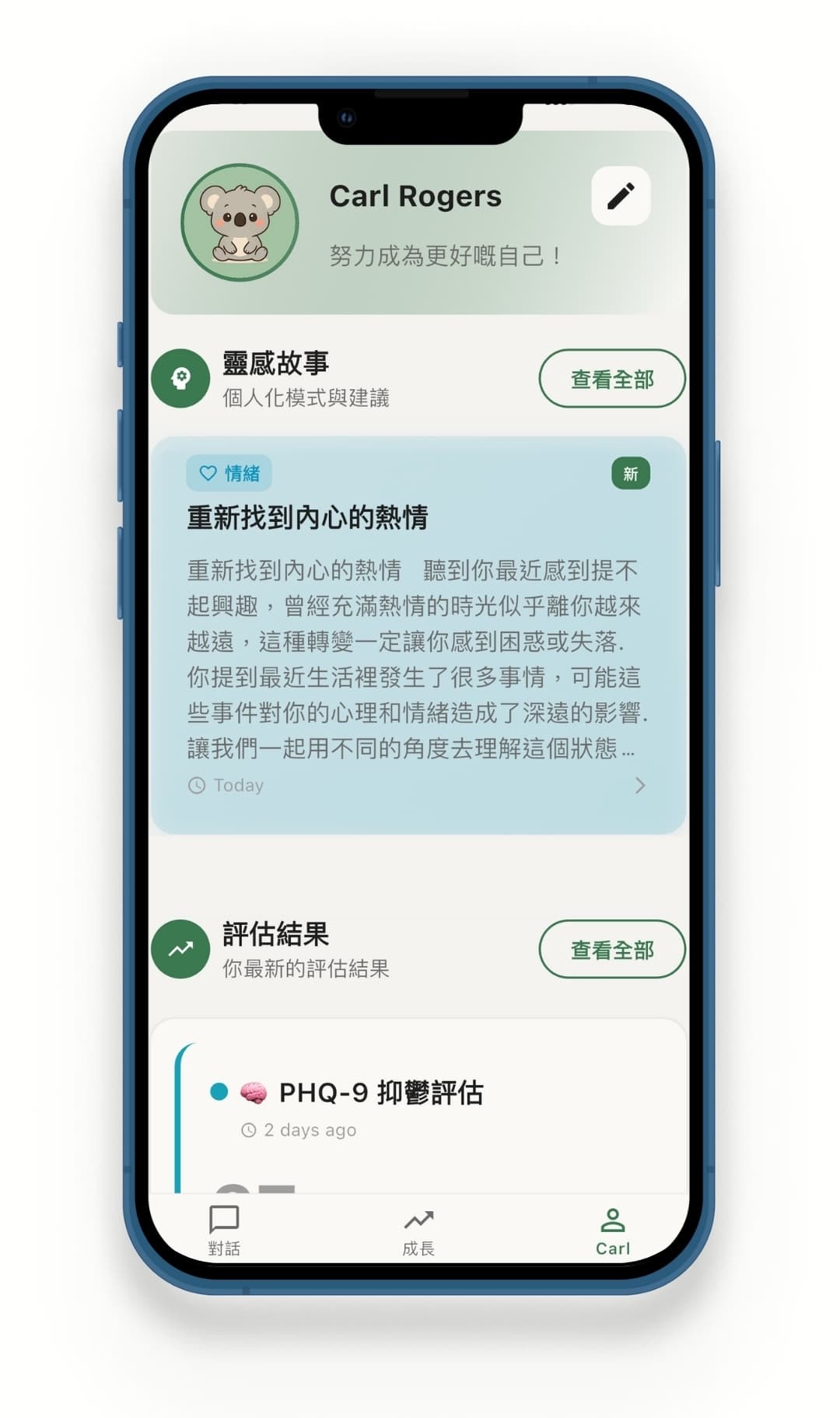
Want to get to know yourself a little better before stepping into psychology? The MindForest App has a built-in BIG5 personality test and an AI chat feature to help you understand your own personality traits.




Comments2 comments
Martin
Dear mr Treehole,
I am reading your article on the middle of Pacific Ocean on my way back to Hong Kong from Canada, and this is because I am struggling in between two options of school in terms of which could best allow me to become a clinical psychologist in Hong Kong. In particular, I studied BA psychology in Simon Fraser University and I had only received a slightly above average GPA of 2.8, however, perhaps because of my personal statesmen, two master schools in the UK gave me an offer to further pursue higher studies in psychology. In particular, the first is Bangor University’s Clinical and Health Psychology MSc course and the second is the University of Westminster’s Health psychology MSc course. My dream is to become a clinical psychologist in Hong Kong, and I am dedicated to it after reading many of your articles. The problem now is that, Bangor university’s Clinical and Health Psychology MSc is not accredited by the BPS, while Wesrminster’s Health psychology is accredited by the BPS which will allow me to progress to stage two training more easier. My question is: to become a clinical psychologist in Hong Kong, is it true that I do not have to follow the HKPS guidelines which they requires an accredited Clinical Psychology MSc courses, and simply a (non-accredited oversea) master in Clinical psychology course would be sufficient for both to be employ in the government jobs and also the private sector? I had thought and research about this concern regarding the more secure Health MSc and my more passionate Clinical and Health Psychology MSc for almost one month, and I wonder could you provide me any guidance on this? I would really appreciate your advices Mr. Treehole.
Martin
TreeholeHK
To become an HKPS approved clinical psychologist in Hong Kong with an academic credential from overseas, the programme has to fit the requirements listed out here: https://hkps-dcp.org.hk/en/join-dcp-en.
You’re encouraged to check with your specific offers to see if it fits perfectly with the criteria. Better yet, call the CP department to confirm as we do not represent HKPS and can only answer you based on publicly available information.