Burnout Isn't Always About Working Too Hard
You know there's plenty to do, yet you just can't bring yourself to start — and you slept plenty last night, so why are you still this tired? If that sounds like you, burnout may already have set in.
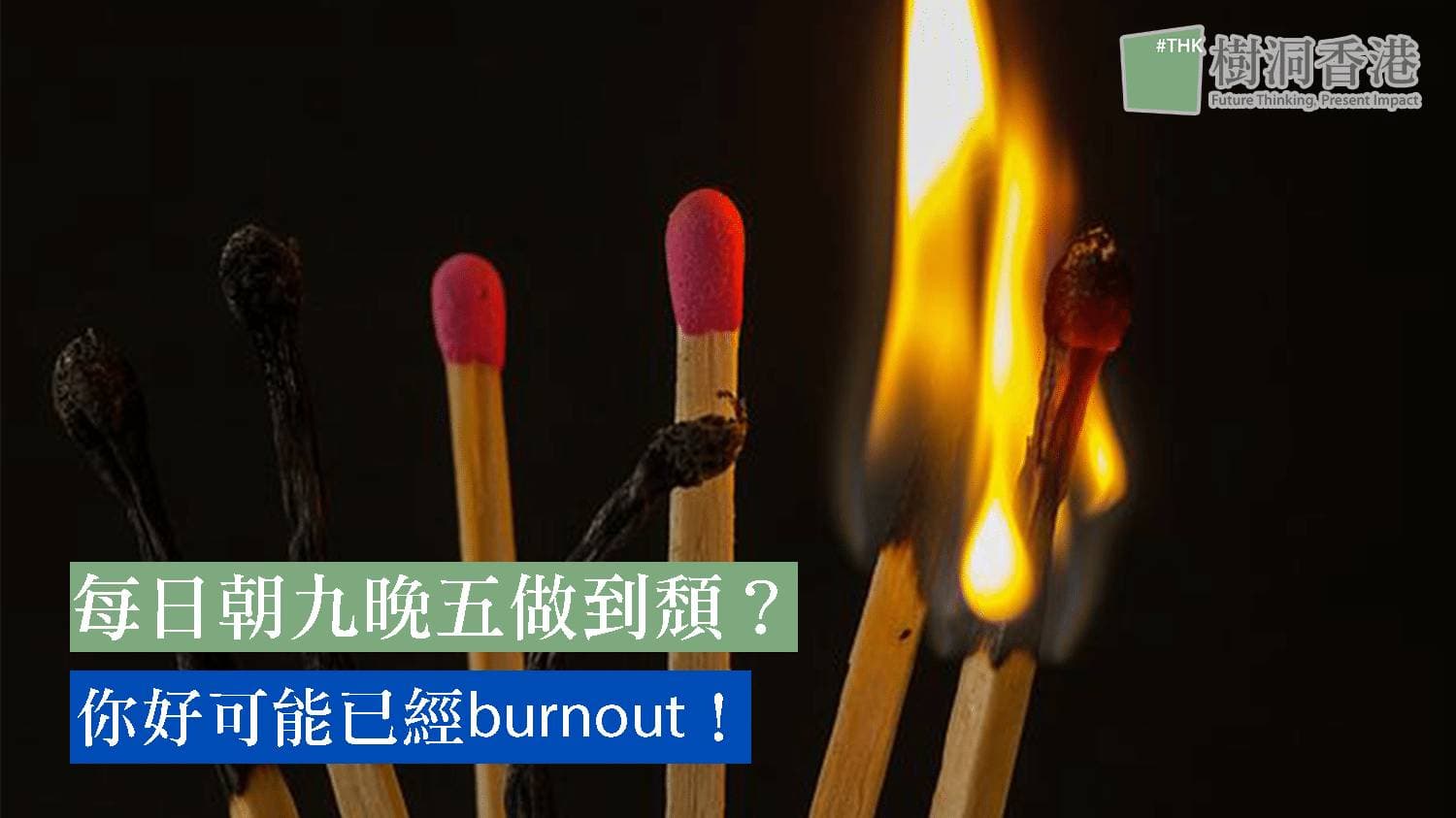

You know there's plenty to do, yet you just can't bring yourself to start — and you slept plenty last night, so why are you still this tired? If that sounds like you, burnout may already have set in.
Day after day you feel listless. You know there's plenty to be done, yet you can never muster the drive to start — and you're growing more and more fed up with your own work. You slept plenty last night, so why are you still this tired? Every day you just want to throw your head back and yell, "I'm so worn out!" Do these symptoms ring a bell? Perhaps you've already burnt out!
Burnout is occupational exhaustion. According to the World Health Organization, it is a syndrome resulting from chronic workplace stress that has not been successfully managed. Under ICD-11, the symptoms of burnout fall into three areas: feeling that your body, mind and spirit have been "hollowed out", growing increasingly cynical about your work, and a drop in professional efficacy. The clinical psychologist Barry A. Farber once classified burnout in an experiment with teachers as his subjects, sorting people experiencing burnout into three types. One type adopts an attitude of giving up in the face of excessive stress or too little reward; another works even harder, trying to resolve the source of the stress or to win appropriate recognition; and the last type, though under little work stress, takes no enjoyment from the job at all. While burnout is not, at present, an illness — it counts only as a kind of adjustment disorder — it is well worth the attention of us working folk, and indeed of bosses hoping to improve staff productivity.
Burnout occurs chiefly because of a gap in expectations, and two of the most common gaps are around workload and the reward it brings. When we face a heavier workload than we expected, or when the workload is out of proportion to the reward, burnout sets in all too easily. Take the writer of this piece: while writing this very article, I kept turning over whether I had, in the end, burnt out because of work myself (the writer is, after all, writing this article amid a bout of procrastination brought on by being utterly unable to face my own work!). At first I assumed that without much work stress there would be no burnout; it was only while researching this article that I discovered the real culprit is the gap between what we expect of work and what we get. And now, with the writer taking home a modest salary while doing repetitive, monotonous work every day, a gap in expectations around the reward of that work can well arise — and from there it may develop into burnout.
Burnout once described a temporary weariness with work, or a failure to adapt to stress — perhaps taking some leave or going on a trip would have set it right. But these days burnout has grown more and more serious, with symptoms that are sometimes even linked to depression, so all the more reason to deal with it at the root! The simplest and most clichéd answer is, of course, good time management — doing your best to keep a healthy work-life balance. The writer also keeps work stress in check by doing the things I enjoy. When you're on leave, you really do need to put down the work in hand and rest properly. A rubber band stretched too tight for too long loses its elasticity, so when you're off, go ahead and binge a show, paint, dance — really let yourself unwind!
If the reader of this piece happens to be a team leader, you might try managing your team's expectations and outcomes around work to boost their motivation, drawing on the expectancy theory of the renowned American psychologist and behavioural scientist Victor H. Vroom. Put simply, the theory says you need to help your team form reasonable expectations about the workload they ought to take on, then deliver reasonable results, and from there offer suitable rewards — this gives the team more drive to keep going. Managing expectations sensibly also narrows the team's expectation gap around work, and so wards off burnout.
Want to understand yourself more deeply? MindForest — a self-discovery app that brings together psychology and AI, helping you explore your inner world and manage your emotions anytime, anywhere.
If you're facing emotional difficulties, the professional team at TreeholeHK can help — we offer psychotherapy and counselling services led by clinical psychologists, counselling psychologists and counsellors.
For you who are under heavy work stress: perhaps you set very high standards for yourself, or perhaps you simply don't like your current job and feel it has no meaning at all. Perhaps, too, in this money-driven age, it's all too easy to find ourselves bowing for the sake of a wage. Even if we feel resigned about life, we can still seek out an interest or hobby in our spare time — only then can we avoid living half-spent and listless. If you're perfectly happy with your current job and simply feel out of step because you set the bar too high or the workload is too great, then take some time to recalibrate! Finding meaningful work is no easy thing, so since you have a calling you want to pursue, take stock of your own capacities and then spread your wings and soar!
References:
Oxford Reference. (n.d.). Valence-instrumentality-expectancy theory. https://www.oxfordreference.com/view/10.1093/oi/authority.20110803115048339
World Health Organization. (2019, April). QD85 Burn-out. ICD-11 for Mortality and Morbidity Statistics. https://icd.who.int/browse11/l-m/en#/http://id.who.int/icd/entity/129180281
World Health Organization. (2019, May). Burn-out an “occupational phenomenon”: International Classification of Diseases. https://www.who.int/mental_health/evidence/burn-out/en/




Comments
No comments yet — share your thoughts.