

Overcoming Speaking Anxiety: How I use anxiety to be a better speaker
Peter Chan | 樹洞香港創辦人及首席心理學顧問 2017-11-28
How I use anxiety to be a better speaker
A simple, practical mindfulness technique
Who this is for:
People who get too anxious when doing a public speech.
TL;DR
1. Some level of anxiety is good for public speaking.
2. Focus on anxiety instead of trying to get rid of it.
3. It takes continuous practice to work. Repeat and repeat.
I have a confession to make. My heart races every time like a wild horse when I stand on the stage to give a speech. The way I speak may not seem like it, but do you know what’s my greatest fear? Often I have to shake hand with the master of ceremony, and I know my sweaty palms just feel salmons freshly caught from the ocean — slimy, wet and disgusting.
But contrary to popular belief, anxiety helps me speak better.
What helped me is a simple technique. It’s practical and effective.
Why we’re flooded with anxiety?
Anxiety is a product of evolution. Yes. It’s there to help us survive. When I get anxious, my sympathetic nervous system activates. The heart rate increases, bumping more blood to the brain. Then, my brain will benefit from the increase of blood flow, as a result I become vigilant and cognitively agile, and thus giving me the eloquence to speak. In other words, I’m optimally aroused in arousal curve model. People need some arousal to attain the their peak performance, even for difficult tasks like public speaking. Neither too relaxed nor too stressed is good, as the arousal-performance model Yerkes-Dodson curve shows.
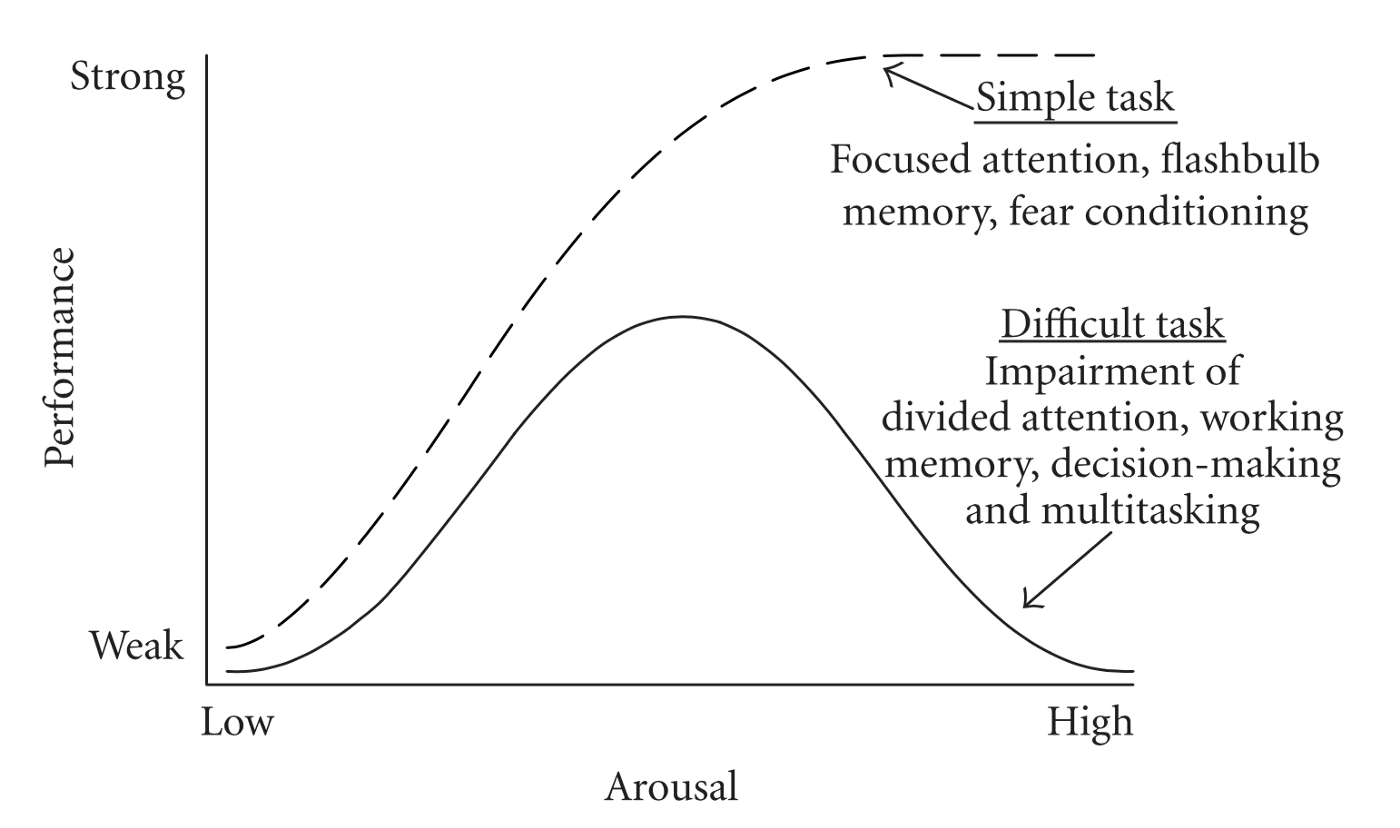
But why does it go wrong? It’s the way we manage anxiety — we want to get rid of it.
Humans are social animals. We fear to say the wrong things. We fear to be judged when we speak. That’s why we get anxious.
And it’s okay. It’s natural.
It is as natural as this. When I see a delightful piece of cake, smell the aroma in the air, my mouth starts salivating. I can’t, nor will I try to control these hard-wired responses: when I’m standing in front of a crowd, I don’t coerce myself to drive anxiety out. Because it’s much like telling my mouth to stay dry when I want to devour the cake. I simply can’t do it.
Supposed I try to get rid of anxiety — and it’s where things get nasty. If I failed to suppress my anxiety, I feel even more anxious for the failure. The more anxious I feel, the more I’m trying to get rid of anxiety … so and so on. And bloom! Do you see a full-fledged vicious cycle here? My arousal level would ascent and ascent far beyond the optimal, without even the slightest hope to relieve. This is when my mind would turn blank, and can’t even utter a word except um, huh or what.
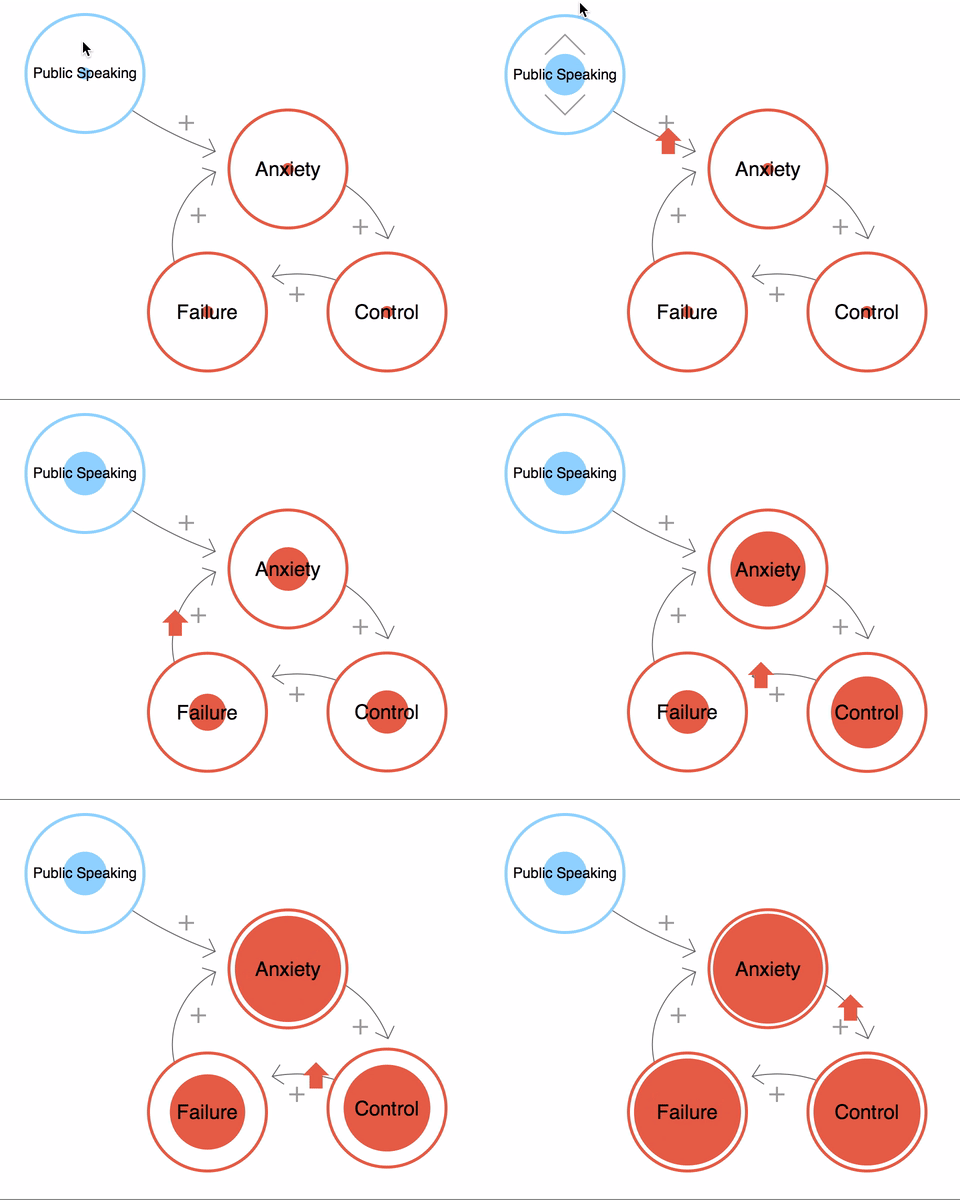
What should we do about it?
Let’s utilise what we’re already good at to cope with anxiety: losing attention.
As students, I guess everybody knows how good we are at losing attention. Focusing on the lecturer is almost like standing on a giant metal ball on one foot. Usually, my attention will stay for a moment then it will slip. When we just focus on one thing without engaging it, losing attention seems almost inevitable.
Why don’t we do the same to anxiety? Focus on it; Don’t try to get rid of it.
How does rhythm of pump-pump-pump in the racing heart feel like? What about the texture of the sweaty hands?
The key is to notice these physical subtleties, not to think about them. However, when I am meditating, I won’t force myself to stop thinking about these sensations either: it’s perfectly fine to have the thoughts such as “Oh my hand is so wet” to drift through my mind. If that happens, I just notice the thought too and let it fades away.
Okay. It’s enough theory there. I recommend you to bookmark this article, or copy the following part down. Everytime before I speak — I go through the exact same self-talk as written below. If you can’t wait to try it now, recall a stressful situation as vivid as you can, then follow the prompts.
Here’s how I do it:
Step 1. Feel myself
I sit down on a chair and find a comfortable position. Then close my eyes and start deep breathing. And gently notice all the sensations running through my body. I try to notice:
– What sensations are in my body?
– What thoughts are going on my mind?
– What emotions do I have?
Then I spend a few moments here.
Step 2. Focus on the anxiety
Now, I gently shift the focus to the body parts where anxiety resides.
Maybe it’s the racing heart? The shortness of breath? Or sweaty palms?
It doesn’t matter what they’re, I just try to notice them. I maintain a curiosity for them as if I’m trying to learn more about my body. How is anxiety affecting me?
Step 3. Transfer
Finally, I open my eyes and start to get in touch with the environment around me.
I ask myself: What can I hear? What can I see? Then I try to transfer and maintain the lucid awareness all the way until I give my speech.
What’s next?
Meditation is like going to gym, a gym of mind, and it takes practice. While this simple technique will help, it won’t make us perfectly composed speakers in no time. We need to practice often on that.
There is a myriad of benefits when I deepened my practice in meditation. It helped me to become a happier and less anxious person, noticeable result kicked in quite fast after I gave it a serious try. These effects, including boosting happiness and relieving anxiety, are scientifically proven. Practicing mindfulness turned out to be one of my best life decisions. A good book that I’d recommend, to begin with, is Mindfulness: A practical guide to finding peace in a frantic world.
Lastly, three takeaways from this article:
- Give up controlling public speaking anxiety.
- Notice how the body feels when we’re anxious.
- Do it. Do it every time.
I hope this article helped you. Let’s spread the love and share it to more people in need!
Disclaimer: This is NOT an empirically tested intervention to boost public speaking performance, and should not regarded as such. I derived this method from my meditation practice and knowledge on mindfulness based intervention and found it to be quite effective to me and my friends - it's a personal sharing.