The One Psychology Book I Recommend First
Every so often someone asks me where to start with psychology. My first pick is always Jonathan Haidt's The Happiness Hypothesis — and here are the two things it does so well.

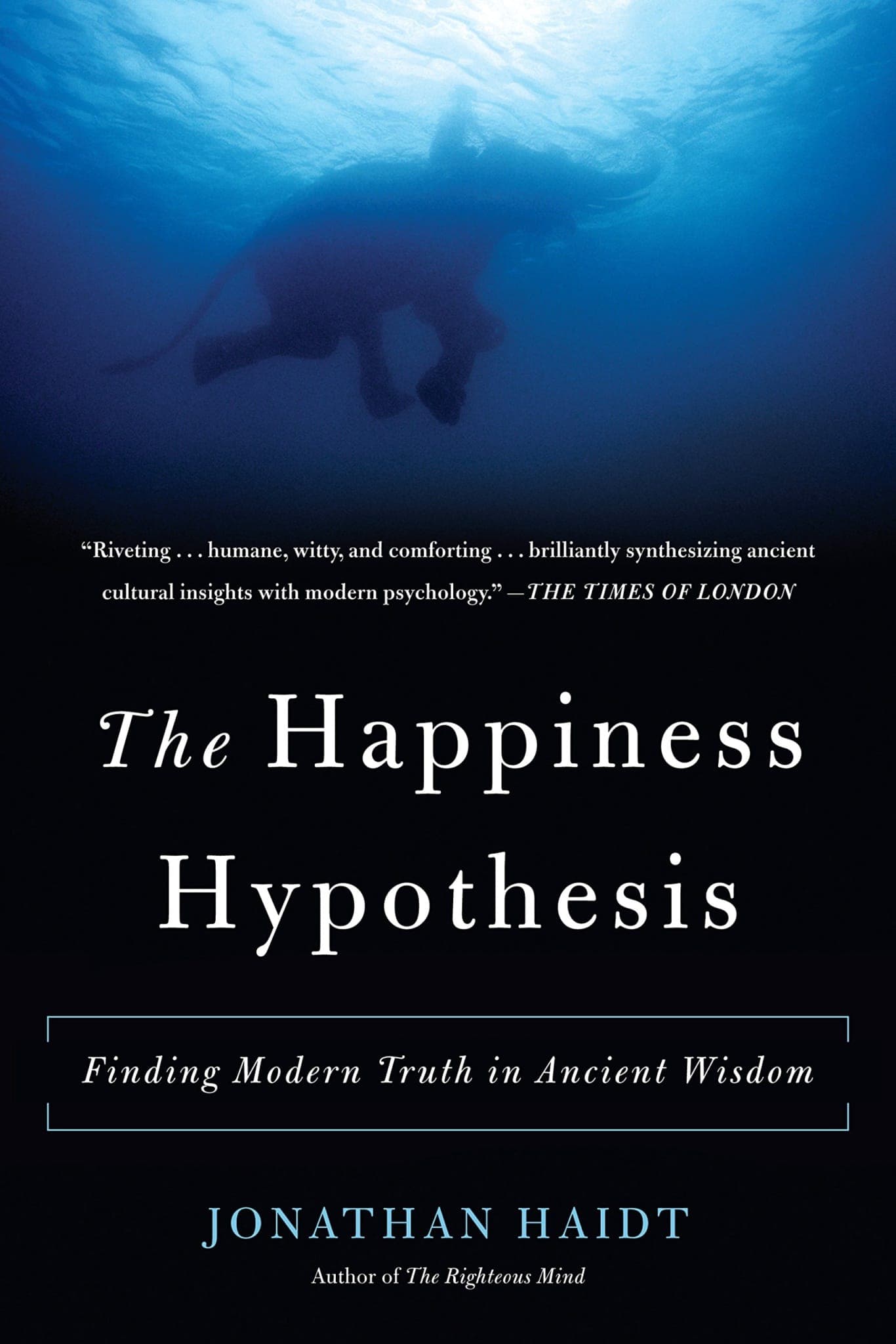

Every so often someone asks me where to start with psychology. My first pick is always Jonathan Haidt's The Happiness Hypothesis — and here are the two things it does so well.
Every so often someone asks me where to begin with psychology. My first recommendation is always The Happiness Hypothesis by Jonathan Haidt. Once you have read it and found it rewarding, picking up an introductory university textbook would be no bad next step. The book draws on psychology to examine ten questions of profound importance to human life, among them faith, love, adversity, morality and happiness. I will leave the specifics for you to discover, but there are two things the author handles so well that they are worth sharing here:
Focusing on psychology's predicaments, not merely its puzzles
In Chinese, a single word for "problem" carries two senses at once: a predicament and a puzzle. A predicament, left unresolved, robs us of sleep and peace of mind; it is a pressing concern in daily life. A puzzle, by contrast, springs mostly from intellectual curiosity. Part of what makes psychology so absorbing, and so readily able to capture the public's interest, is that many of the problems it explores are the predicaments of everyday living.
Morality, happiness, love, adversity and the like are matters every one of us must face. The Happiness Hypothesis draws on a wealth of psychological research to examine and probe these very themes, offering concrete suggestions for the pressing predicaments behind questions such as "I was born melancholic and joyless — what can be done?", "How do I forgive others?" and "Why do people always think well of themselves?" These are not problems that reading a single book will solve, yet the book's perspectives are genuinely fresh and illuminating, and the reading itself is engaging from first page to last.
Of course, beyond its predicaments psychology also has a great many puzzles. "What makes for a good piece of psychological research?", for example, and so on — questions that matter a great deal to psychology, but which this book does not dwell on. I actually think that is a good thing for the beginner, because if readers find the questions above compelling, they will naturally keep on learning, only to discover that answering those predicaments through psychology is no simple matter, drawing in puzzles of research method, neuroscience and more.
An erudite author who sees both the trees and the forest
Most contemporary psychology books, textbooks especially, lean heavily on modern psychology to explore human nature, insisting at every turn on being scientific and rigorous in method. In truth, understanding human nature is a longing as old as humanity itself; no shortage of celebrated philosophers and religious traditions have had a great deal to say about it. Yet modern psychology rarely touches on the insights of traditional wisdom, which makes this book all the more precious.
The author is himself a social psychologist, well versed in science and rigorous in argument. What is rarer, though, is that he is equally at home with philosophy, with the worldviews of various religious traditions, and even with the evolutionary history of our species. In this book he cites and interprets some weighty psychological experiments — and more than that, the most masterful passages of all lie in how he uses the results of those experiments to construct an exquisite worldview. He sets this alongside traditional wisdom from Christianity, Buddhism and beyond, exploring how modern psychology might guide us towards a better life.
In closing: a rare gem
The bookshelves hold no shortage of works on "life's big questions". The best of them usually share the life wisdom an author has earned through experience — not science, but well worth reading all the same, for not everything need be understood through a scientific lens. The poorer ones dress themselves up as "psychology" or "science" but are, in substance, so much waffle. The author of The Happiness Hypothesis not only possesses life wisdom but is also able to back his position with rigorous science, which makes the book singularly persuasive. So whether you are after a book to inspire your life or a practical introduction to the themes of psychology, this one fits the bill beautifully.



Comments
No comments yet — share your thoughts.