
Last Sunday, at the invitation of Hong Kong Pig Save, I led a compassion meditation at a vigil outside a slaughterhouse. Together, those who came bore witness to the suffering of other living beings, and with open hearts sent their blessings to lives that were about to pass.
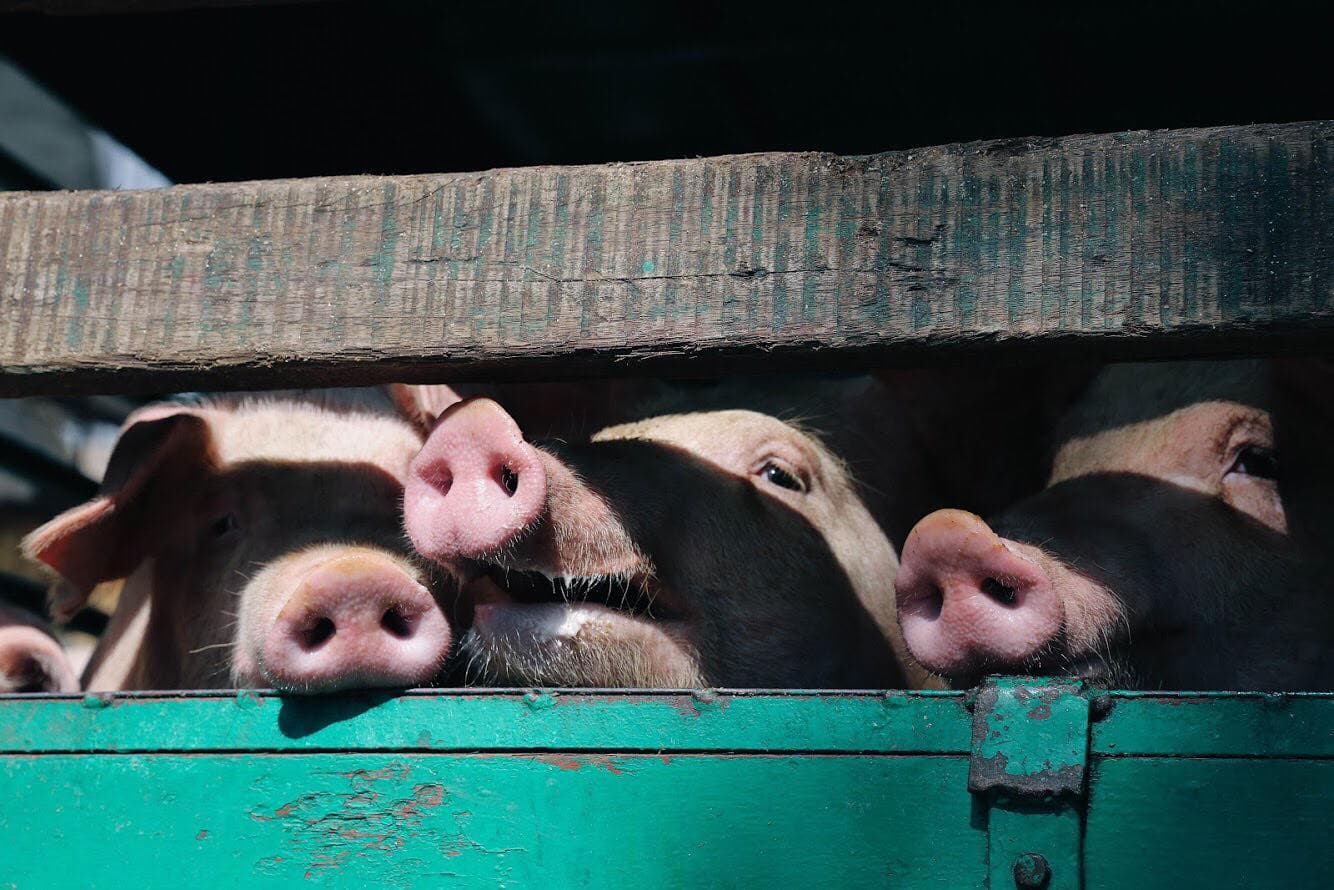
I don't know how the others felt. But for me, the meditation cut deep. One part of it asks you to gaze into a pig's eyes and try to feel what the animal is feeling. This is a practice clinical psychologists use to cultivate the capacity to understand others, and to nurture empathy. I turned it on the pigs, and I saw fear, helplessness, despair. I had no power to change what was happening, yet in that moment the connection between us felt so real — like watching an old friend in agony, all I could do was hold a silent prayer in my heart, hoping we would meet again in some better place.
When the vigil ended, I went home. Again and again I found myself wondering how they were now. Were they all right? No — the final dozen or so hours inside a slaughterhouse could hardly be called all right. Slaughter usually happens in the small hours of the morning. At that time I was soaking in a comforting hot bath, and as I thought of the pigs I had sent off that morning, something in me turned bitter.
The next day, I passed by the butcher near my home. Suddenly I noticed I no longer looked at the pork the same way. I couldn't help wondering: were these yesterday's pigs? Grief welled up in my chest, and quite naturally I let my gaze drift away. This was the grief of bereavement — because once you are bound to another life, not even death can sever the tie, and so the final parting leaves its wound.
I don't eat pork myself, and over those few days I tried to eat as little meat of any kind as I could — just as I had called out to the other participants that day: "Perhaps there is a sense of helplessness… but as human beings there is, in fact, so much we can do…" As I said this, a sharp chorus of cries carried over from the slaughterhouse, one unbroken from the next. I stopped my talk at once — in that instant, the platform belonged to them. That was the cry of life itself.
Would you be willing to listen to what they have to say?
With thanks to Ann Chan and Charlotte Hopkins for the photographs.

Comments
No comments yet — share your thoughts.