When a Pandemic Reaches the Mind
The virus harms more than the body — our economy, our social lives, and our minds all sit within its reach. Here is a look at how the pandemic and mental health are bound together, and what organisat…
The virus harms more than the body — our economy, our social lives, and our minds all sit within its reach. Here is a look at how the pandemic and mental health are bound together, and what organisat…
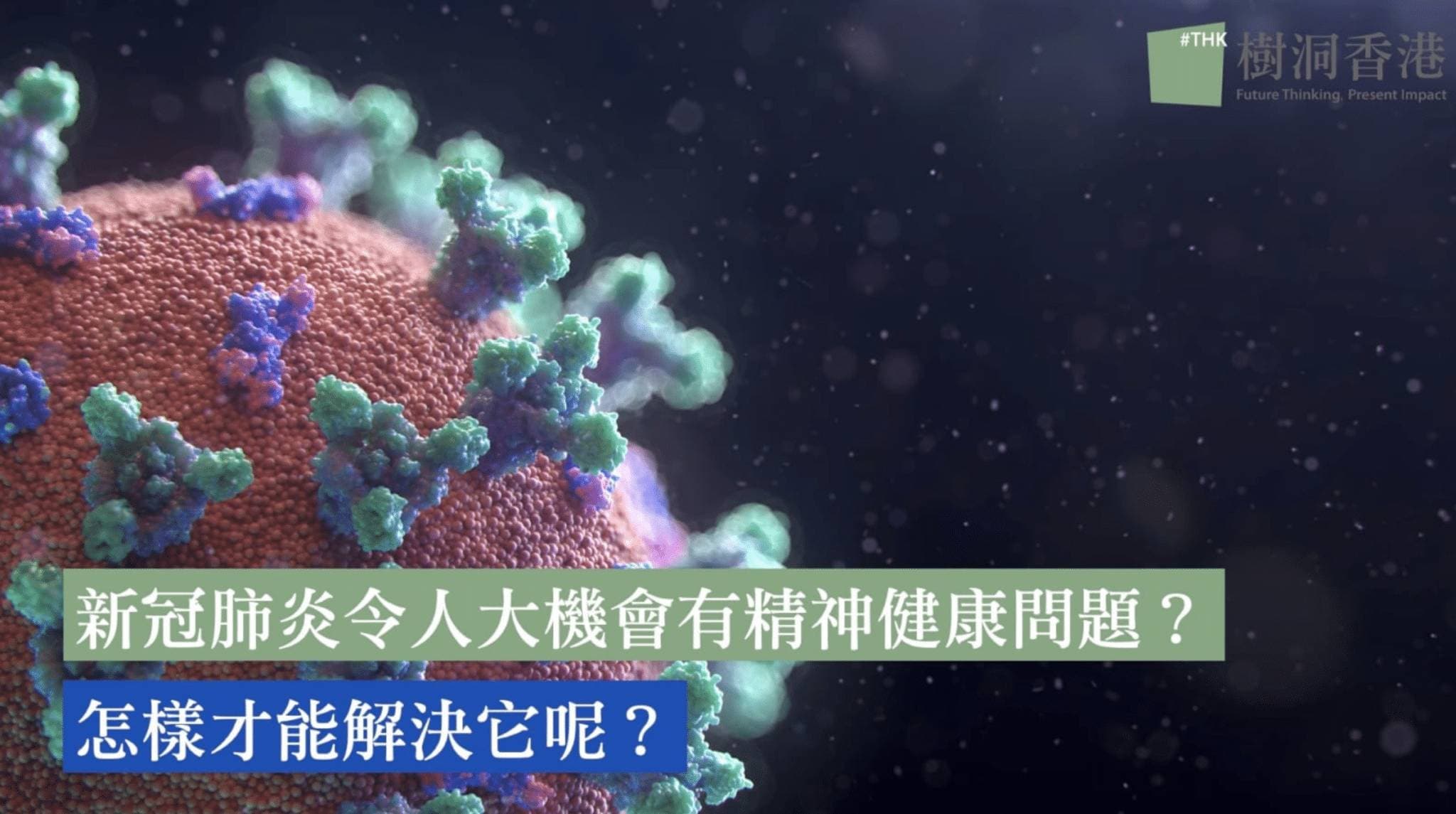
Zhong Nanshan, the mainland Chinese epidemiologist, originally predicted that 8 February 2020 would mark the peak of the COVID-19 outbreak. Yet even now the pandemic remains grave, ravaging the world and catching people off guard. Everyone hopes it will end soon. Hong Kong has been affected like everywhere else, but our local confirmed-case numbers have stayed low by international standards. We owe that to the awareness and effort of Hong Kong people, who have held firm under a pandemic that has swept the globe. By now, a good many of us have come to realise that the virus harms more than just the body — the economy and our social lives are within its reach too. So is mental health within the virus's reach as well? Through this article, I want to talk with you about the relationship between the pandemic and mental health.
When COVID-19 first broke out, I would occasionally hear news of people queuing through the night to snap up face masks, clearing out the pharmacies of disinfectant, and emptying the supermarket shelves of rice and toilet paper. I asked myself: why would people behave so abnormally, so frantically?
In an unfamiliar situation, people very easily slip into a whirlpool of panic and anxiety. Amid that turmoil, they tend to lose their reason. This is an animal instinct. Choices made in extreme panic are often the wrong ones, and the consequences may turn out worse than the original problem. I noticed that quite a few people fell for rumours during the pandemic and simply went along with the crowd. It throws human herd mentality into sharp relief. And yet I think this is, in truth, hard to avoid. When SARS broke out 17 years ago, people were gripped by the same dread. Incidentally, people's psychological reactions to these two epidemics have been broadly the same.
Everything described above happened in the early stage of the pandemic. In the middle stage, some people began to buckle under enormous psychological stress. Over-anxious, they showed signs of depression. Mental health problems such as depression have an enormous impact. The most severe consequences are suicidal thoughts and self-harming behaviour.
Depression can do more harm than the virus itself.
As Singapore's Prime Minister Lee Hsien Loong once cautioned his fellow citizens
Hong Kong went through several months of social unrest, and just as things had settled for a while, a more infectious wave of the epidemic struck — one disaster following another. The pressure people faced was greater than during SARS. With no light yet visible at the end of the outbreak, everyone felt those long months were almost unbearable. Hong Kong's confirmed cases kept rising, and the community saw several large clusters. Having lived through SARS, people grew more vigilant; coupled with how connected we now are online, true and false information swirled together, leaving people on edge. Some did not leave home for a long while, some were admitted to hospital for treatment, some had to be quarantined. As the death toll climbed, people's worries snowballed — at the milder end, "adjustment disorder"; at the more serious end, it could develop into "post-traumatic stress disorder" (PTSD).
Hong Kong has been through so much. The economy has inevitably taken a heavy blow, with businesses struggling across the board — retail, food and beverage, and tourism in particular saw a large-scale wave of layoffs. Facing unemployment or the threat of it, people's emotions were pent up, and the suffering was hard to bear.
In the long run, some people, battered by blows from within and without, may develop "cognitive biases" — for instance, fearing the worst at every turn or being spooked by shadows — which cast a serious shadow over their mental health. When they later run into similar problems, they will repeat irrational and over-sensitive emotional reactions.
These days everyone's emotions have nowhere to go. The Leisure and Cultural Services Department closed all its facilities; even the libraries shut; gathering with friends for a meal became a taboo. By eight in the evening the streets emptied, foot traffic grew sparse and thin, like a dead city. Hong Kong turned, in an instant, into a "city of depression" — and living inside it, it was hard not to catch a touch of depression too.
On this point, I have a few suggestions:
We should do our utmost to care for those around us, offering support and encouragement to anyone in need. Friends or even family members close to us may develop mental health problems because of the pandemic. At one time or another, all of us might feel at a loss, not knowing how to handle the situations mentioned above. Since most of us are not professionals, I want to share a few actions you can take.
When you see a family member or friend feeling low, you should listen carefully and gently encourage them to pour out their inner troubles. What's more, try to notice whether they have any suicidal or self-harming tendencies; if they do, seek professional help for them at once. Also, try through conversation to help them feel a sense of hope, for example: "Even though your problem can't be fully resolved right now, we can work through it little by little…", or "I'll be here with you to sort it out." Even if they respond coldly, you can still clearly express your willingness to face the problem alongside them.
In addition, you can take the following actions for those experiencing mental health problems.
With the pandemic so pressing right now, as we all pull together to fight it, let's also take good care of our own mental health!
Social Welfare Department
Tel: 2343 2255
The Hong Kong Psychological Society
Tel: 2528 0196
The Hong Kong Psychological Society (2018). Mental Health First Aid Manual (Hong Kong, Fourth Edition). Hong Kong: Advanced Commercial Printing.
Keep reading

Personal Growth
Psychology
Personal Growth


Comments
No comments yet — share your thoughts.