What Good Team Building Actually Does
In a 21st-century workplace where machines increasingly handle the repetitive tasks, communication, collaboration and creativity matter more than ever. Here are the three things we keep in mind when …

In a 21st-century workplace where machines increasingly handle the repetitive tasks, communication, collaboration and creativity matter more than ever. Here are the three things we keep in mind when …
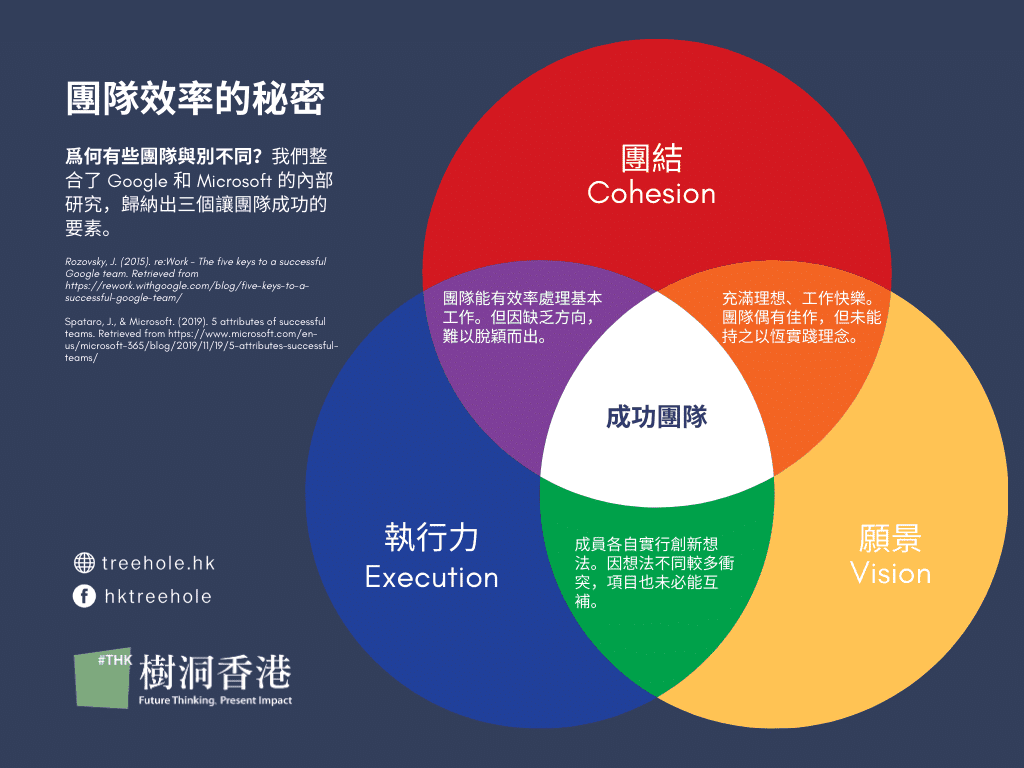
In the 21st-century workplace, where most repetitive work is gradually being taken over by computers, communication, collaboration and creativity matter more and more. To bring out the "human" side of their staff, many companies arrange Team Building programmes for employees to take part in. Research has also shown that Team Building activities can help staff divide the work between them and improve a team's effectiveness.
Below are the three essentials we consider when we design a Team Building activity:
One of the goals of Team Building is learning to collaborate. But why learn it at a Team Building session? Aren't colleagues collaborating all the time anyway?
Of course colleagues collaborate day in, day out — and in any workplace, given enough time, a unique work culture naturally develops, along with assumptions, and even prejudices, about one another. For example, we form the impression that certain colleagues are better suited to speaking up, while others prefer to put their heads down and get on with the work. Those impressions are sometimes accurate, but not always. Those "head-down, hard-at-work" colleagues are often perfectly capable communicators too — they just happen to be more introverted by nature. So how do we draw out their potential through Team Building?
Here's how it works: a Team Building activity asks colleagues to complete various tasks, and their everyday working style is projected onto the way they approach those tasks. At that point, the facilitator can observe — as an outsider — and point out the small-group dynamics (Team Dynamics), surfacing the team's strengths and weaknesses. These are things team members often find hard to notice, precisely because they are in the thick of it themselves.
So, with the facilitator's help, participants re-think the way they collaborate. If the facilitator notices a colleague who communicates well but is introverted by nature, they can encourage that person to voice their own views, helping them build confidence and prompting other colleagues to recognise their strengths.
In short, Team Building is about providing an environment close to work, but one in which colleagues can experiment freely and fail without fear. The aim is to reveal the existing characteristics of a team's relationships and ways of working, and to uncover opportunities to improve.

Another reason some employees dislike Team Building activities is that certain facilitators love getting participants to chant gung-ho slogans: "We are the best!" "XX Company — number one in Hong Kong!" If those slogans come from the heart, they're proof that a team really is united — but you can't put the cart before the horse and expect slogans alone to unite a team. Precisely because a team is rehearsing collaboration in a sandbox (Sandbox), a team-building activity is the best chance to expose where it isn't united.
I remember a cooking workshop that went like this: the participants introduced their dish group by group. Johnson worked in sales and was a smooth talker. He genuinely spoke well, tying the dish neatly to the spirit of teamwork, describing how his team had pulled together to design the dish from the very start. As soon as he finished, the whole department broke into applause.
I walked over to a quieter member of the same group and asked him: "Did you know Johnson would say all that during the group briefing?" His expression turned slightly awkward; after a brief pause, he said, "No." I asked again: "Did you have any part in designing the dish?" He said no to that as well.
This, right here, is a team-communication problem. Clearly the team and its sub-groups weren't all marching in step, but possibly out of a wish to live up to the boss's expectations, they kept performing "we're the most united," "we're number one," "we're full of fighting spirit" — and as a result the communication problem just kept getting buried.
The very last thing a Team Building activity should do is let colleagues put on an act, papering everything over with a veneer of harmony. On the contrary, the point is to expose these communication problems, so that colleagues recognise the need to improve, and to offer a direction for doing so.
If a debriefing (Debriefing) keeps trotting out "auntie wisdom" — things like "communicating with clients is so important" or "smile more and relationships will improve" — it won't necessarily lead to lasting change. The truth is that a facilitator's time with the participants is very brief; if you can't shake the participants' existing perception (Paradigm) of how things work within those two or three hours, then no matter how much fun they had or how much relationships improved in the moment, the gains will fade the moment they return to their usual workplace.
By contrast, good training should help participants grasp new concepts and view familiar things from a more accurate angle. Take this example: some colleagues may believe that, to maintain good team relationships, they can't point out a colleague's mistakes. But if Team Building can teach the concept of Radical Candor, helping participants understand that staying silent about a mistake is like overdrawing on trust — whereas criticism delivered with the motive of helping the other person improve is constructive communication — then it can change the participants' fundamental understanding of communication.
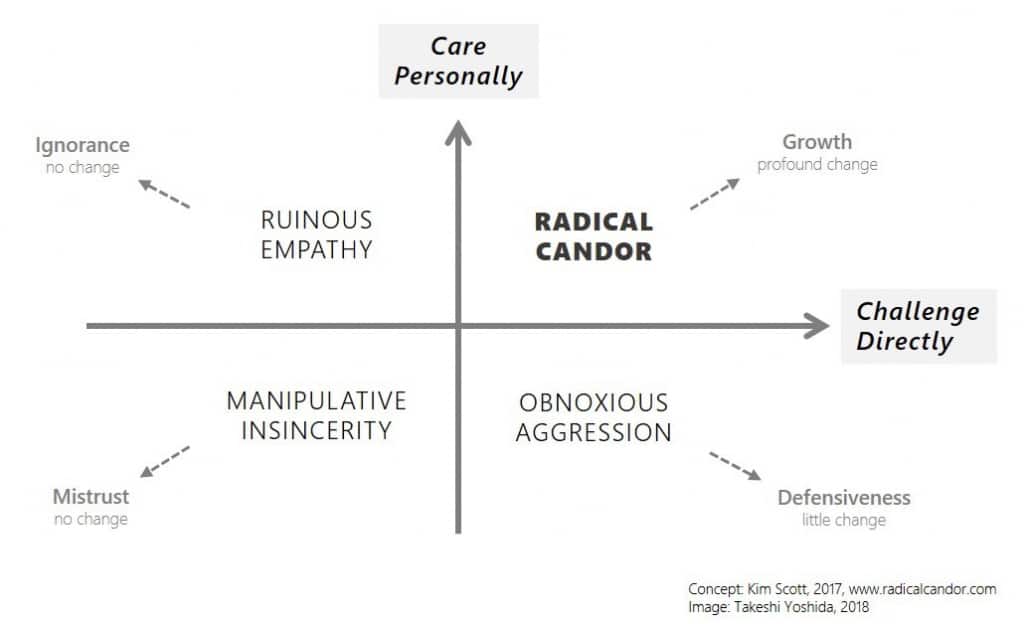
A change in belief is like a seed, while a Team Building that only chases happiness is like a flower: the former gradually grows, steadily improving behaviour, whereas the latter gradually withers — once the fun is over, things snap back to their original shape.
The entrepreneur Zig Ziglar once said: “You don’t build a business. You build people, and people build the business.”
Used well, Team Building consultancy is a huge help in building a team. But Team Building is not a cure-all painkiller: if a company's policies don't put people first, and it isn't willing to make changes, then no amount of Team Building activities will help build a genuine team.


Comments
No comments yet — share your thoughts.