Wabi-Sabi: Finding Beauty in Imperfection
Flawless skin, perfectly curated feeds, the idealised life — modern culture is steeped in the pursuit of perfection. The ancient Japanese philosophy of wabi sabi offers another way of seeing, one tha…

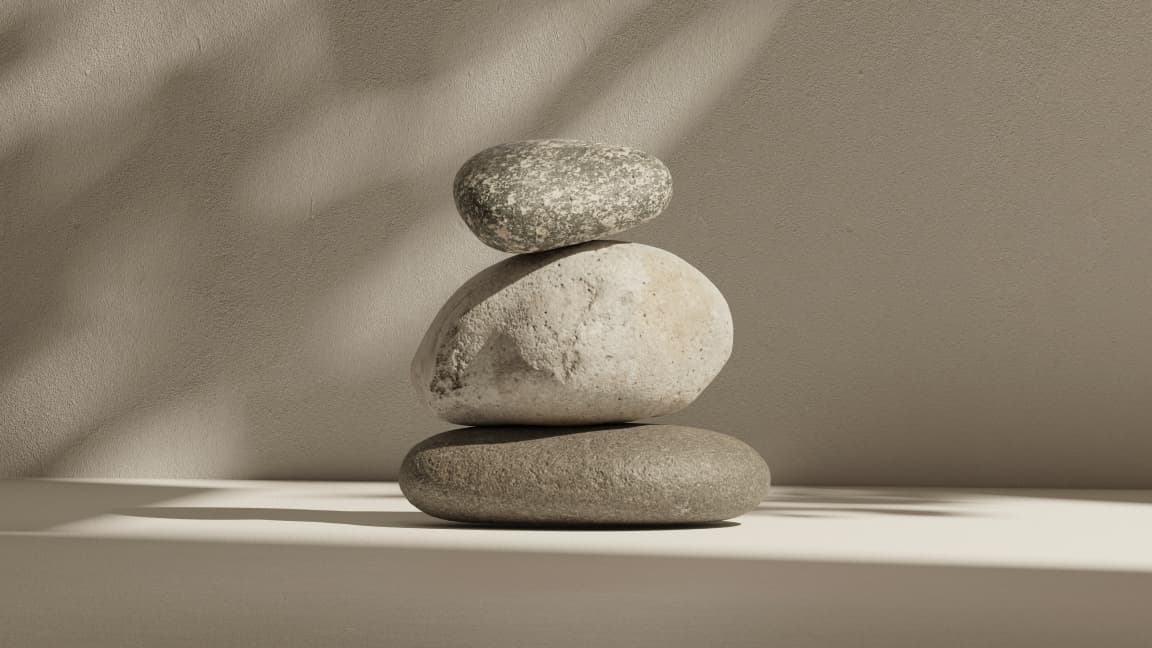

Flawless skin, perfectly curated feeds, the idealised life — modern culture is steeped in the pursuit of perfection. The ancient Japanese philosophy of wabi sabi offers another way of seeing, one tha…
Modern society is steeped in the pursuit of "perfection" — flawless skin, meticulously curated social-media feeds, the idealised way of living. Yet the ancient Japanese philosophy of wabi sabi invites us to reflect differently. Rooted in Zen Buddhism, wabi sabi celebrates impermanence, simplicity and the beauty of imperfection. It is not about chasing a state free of every flaw, but about reminding us to accept life's natural cycles and to savour the fleeting beauty of the passing moment. From a psychological perspective, this worldview can nurture a sense of happiness, build psychological resilience and help us face ourselves more honestly. This article introduces the spirit of wabi sabi, its links to mental health, and how to embrace imperfection.
The concept of wabi sabi is often hard to translate precisely into a Western context. "Wabi" originally referred to the solitude of living quietly in nature, but over time it shifted to mean an appreciation of plain simplicity. "Sabi" suggests the beauty found in the marks left by the passage of time — a mottled vessel, weathered wood, fabric faded by the years (Juniper, 2003). Together, the two form a worldview that can find beauty in cracks, in flaws and in fleeting moments.
Unlike the Western aesthetic that prizes symmetry, refinement and perfection, wabi sabi delights in the imperfect, the incomplete and the impermanent. This sensibility exists not only in Japanese art and design but also permeates daily life and relationships. As Koren (1994) puts it, wabi sabi expresses "a beauty of things imperfect, impermanent, and incomplete … a beauty of things modest and humble".
Within the framework of psychology, wabi sabi thinking is closely tied to many positive psychological outcomes. Contemporary psychology increasingly emphasises that accepting imperfection is part of psychological flexibility, and that psychological flexibility is closely linked to emotional resilience and reduced anxiety (Kashdan & Rottenberg, 2010).
Pursuing perfection to excess often leads us into the trap of "perfectionism". Although society sometimes encourages striving for perfection, research shows that perfectionism is frequently associated with anxiety, depression and low self-esteem (Flett & Hewitt, 2002). By contrast, a wabi sabi mindset can foster self-compassion (self-compassion), an important ingredient of emotional health. Neff (2003) notes that the heart of self-compassion lies in acknowledging our own shortcomings without harsh self-criticism — much like admiring a cracked ceramic bowl, where we see its story and texture rather than viewing it merely as damaged.
Wabi sabi and the widely applied psychological practice of contemplative stillness (mindfulness) share much common ground. Both encourage us to live in the present, observe with a non-judgmental mind, and accept change. In fact, mindfulness itself is deeply rooted in the Buddhist tradition — and wabi sabi springs from the same source.
Research shows that mindfulness can effectively reduce stress (Baer, 2003). In the same way, observing the world through a wabi sabi lens — admiring the marks of time on an old wooden door, gazing at a leaf drifting on the wind — can help us cultivate awareness and let go of our fixation on "controlling outcomes".
Put another way, weaving the aesthetics of wabi sabi into everyday life is not only a visual pleasure; it can also be an extension of mindfulness, allowing the practice of the mind to flow into every small detail of life.
Emotional resilience — the capacity to recover from adversity — is closely tied to how we view and respond to difficult circumstances. The spirit of wabi sabi encourages us to accept loss, change and the passing of time, all of which are an unavoidable part of life.
In psychology, this corresponds to "existential acceptance" — recognising the finite nature of life. Research in existential psychology suggests that when people genuinely acknowledge death and impermanence, they are in fact able to experience the truth and beauty of life more deeply (Yalom, 1980).
Beyond this, the wabi sabi perspective can also soften the blow of failure and setbacks. If we can see imperfection as an indispensable part of life's journey, we will not internalise setbacks as personal flaws, but can instead accept the highs and lows of life with equanimity.
Gratitude — focusing on and appreciating the good in life — has been shown to increase happiness, improve relationships and raise life satisfaction (Emmons & McCullough, 2003). The wabi sabi worldview guides us precisely towards appreciating beauty that is subtle yet profound: a mottled teacup, a faded photograph, or the quiet, still hours of early morning.
Wabi sabi shifts our focus from what is "missing" to what is "real and meaningful", and this state of mind can bring a deeper sense of fulfilment. It trains our eyes and our hearts to appreciate "being itself" rather than clinging to "the way we imagine things should be".
Bringing wabi sabi into your life requires no tea ceremony or Zen meditation. It can begin with the smallest details of daily life:
Choose furnishings that tell a story — wooden furniture worn by the years, handmade pottery, fabric in natural, faded tones.
Accept the quirks and imperfections of the people close to you. Embrace others' flaws along with their authenticity.
Replace harsh criticism with kindness, reminding yourself that "imperfection is precisely a part of being human".
Slow your pace and savour every ordinary yet genuine moment — the turning of the seasons, the texture of clothing against your skin, the rhythm of falling rain.
These small practices can bring the rhythm of our lives closer to the present moment, nurturing humility and an awareness of impermanence.
The pursuit of authenticity, mental health and minimalist living is becoming a movement. From a design leaning towards natural materials to the popularity of "slow living", all of it reflects how people are gradually embracing the value of "imperfection".
On a psychological level, this represents a collective release from perfectionism — becoming more sincere, more grounded, and forming a deeper connection with ourselves and the world.
Learning to appreciate imperfection is exactly what wabi sabi reminds us of: cracks, chips and scars can all be the most authentic scenery in life. Through the MindForest App, you can observe your inner emotions more closely, practise accepting yourself gently, and express your true needs within your relationships.

When you are facing stress or unease, ForestMind AI responds to your emotional state with suggestions that speak to the heart, helping you feel that you need not chase perfection in your relationships, but can instead find balance and peace of mind.

Use the journal to record the ups and downs of your days, observing those subtle shifts in emotion. These seemingly unremarkable moments are in fact the texture and warmth of life.

Through psychological assessment, gain a clearer understanding of your personality, and find the rhythm of life that suits you best, rather than forcing yourself to fall in step with others.

Download MindForest now, and let's practise together in everyday life — accepting imperfection, appreciating the beauty of wabi sabi, and living as a more authentic, more at-ease version of ourselves.
Wabi sabi reminds us that accepting things as they are holds a quiet yet steadfast strength. It honours imperfection, and in people, in events and in objects, it offers us a way to counterbalance modern society's pursuit of "perfection". From a psychological perspective, wabi sabi can help us cultivate contemplative stillness, psychological resilience, self-compassion and gratitude.
To embrace wabi sabi is not to lower our standards, but to redefine "beauty" and "success" — and to live in a more human way.
In the end, the cracked bowl, the falling leaf, even our own unease and flaws, are not signs of inadequacy but the marks of life. This authenticity is, in itself, profoundly beautiful.
References
Baer, R. A. (2003). Mindfulness training as a clinical intervention: A conceptual and empirical review. Clinical Psychology: Science and Practice, 10(2), 125–143. https://doi.org/10.1093/clipsy.bpg015
Emmons, R. A., & McCullough, M. E. (2003). Counting blessings versus burdens: An experimental investigation of gratitude and subjective well-being in daily life. Journal of Personality and Social Psychology, 84(2), 377–389. https://doi.org/10.1037/0022-3514.84.2.377
Flett, G. L., & Hewitt, P. L. (2002). Perfectionism and maladjustment: An overview of theoretical, definitional, and treatment issues. In G. L. Flett & P. L. Hewitt (Eds.), Perfectionism: Theory, research, and treatment (pp. 5–31). American Psychological Association.
Juniper, A. (2003). Wabi Sabi: The Japanese art of impermanence. Tuttle Publishing.
Kashdan, T. B., & Rottenberg, J. (2010). Psychological flexibility as a fundamental aspect of health. Clinical Psychology Review, 30(7), 865–878. https://doi.org/10.1016/j.cpr.2010.03.001
Koren, L. (1994). Wabi-Sabi for artists, designers, poets & philosophers. Stone Bridge Press.
Neff, K. D. (2003). The development and validation of a scale to measure self-compassion. Self and Identity, 2(3), 223–250. https://doi.org/10.1080/15298860309027
Yalom, I. D. (1980). Existential psychotherapy. Basic Books.



Comments
No comments yet — share your thoughts.