Why a Banner or a Chant Holds Real Power
A group of Hongkongers pour everything into climbing the 3,952-metre Yushan, then raise a protest banner before a crowd of onlookers. What is the point? The psychological concept of intersubjectivity…
A group of Hongkongers pour everything into climbing the 3,952-metre Yushan, then raise a protest banner before a crowd of onlookers. What is the point? The psychological concept of intersubjectivity…

~6 min readUpdated 14 Sep 2026
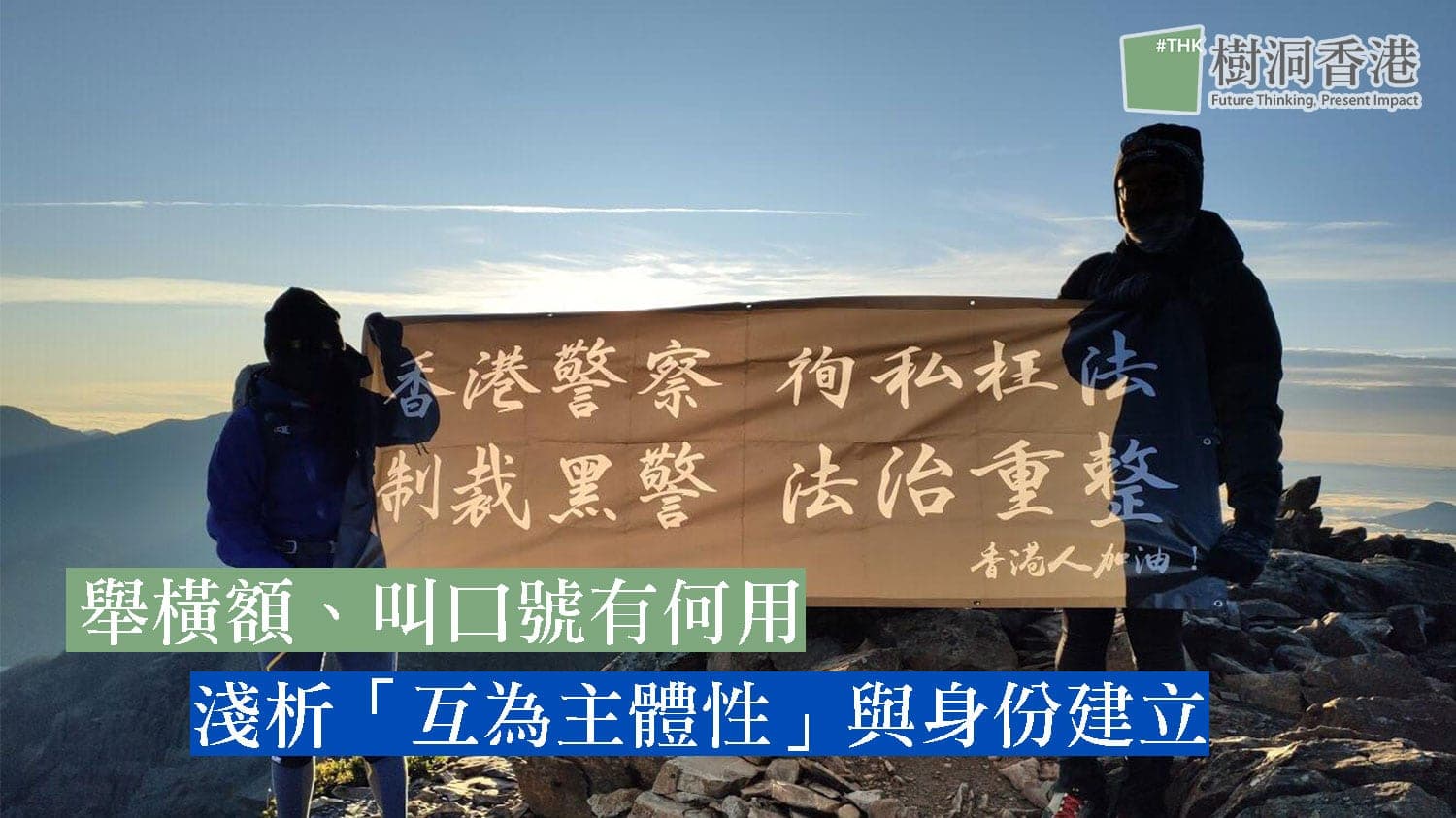
A group of Hongkongers poured everything they had into climbing the 3,952-metre Yushan, and there, before a crowd of Taiwanese and foreign onlookers with their cameras and their gaze, they slowly raised banners reading "Five demands, not one less" and "Hong Kong police, abusing the law, disband the rogue police, overhaul the rule of law".
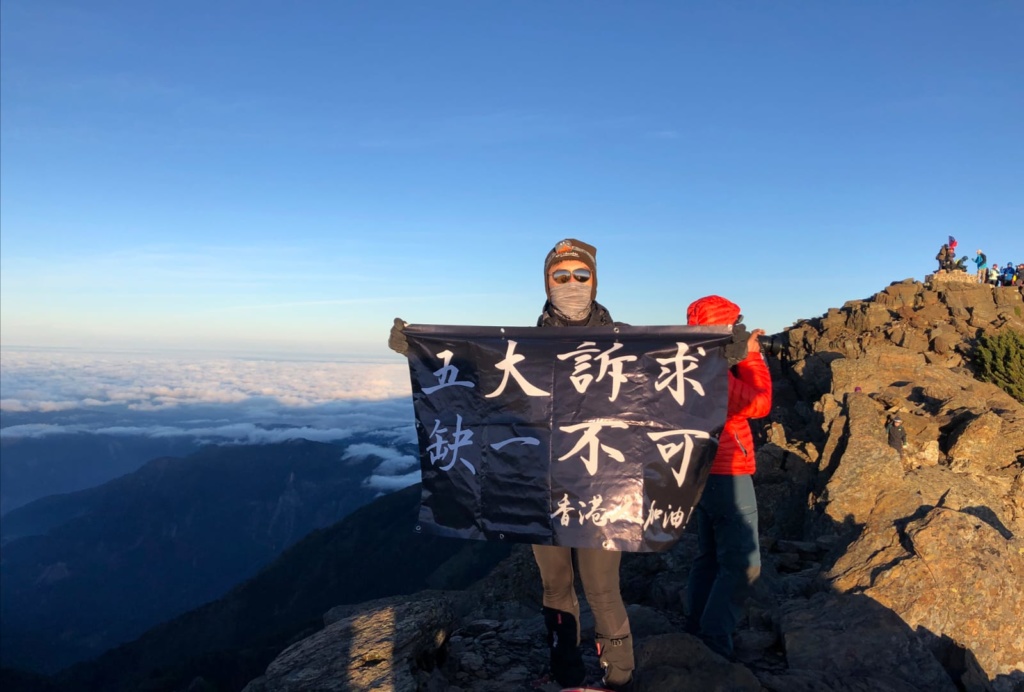
Whether you lean yellow or blue, plenty of people are bound to ask: "What's the use of that?" Many assume that each person is a separate, self-contained individual, with private feelings, thoughts and experiences walled off from everyone else. So when the people around us see us raising a banner, they think we are just going through pointless motions — that we will never shake those in power.
When the psychoanalyst Jacques Lacan introduced Intersubjectivity into psychology in 1953, he made it clear that every person's psychological state is connected to, and shared with, the people around them.
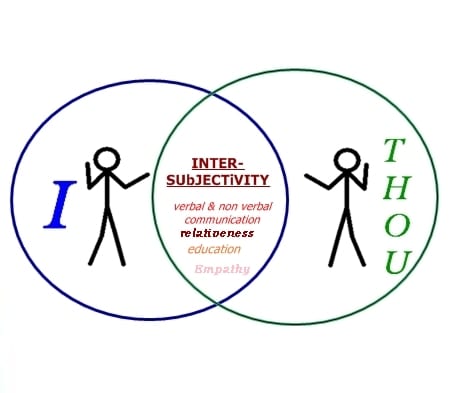
To understand intersubjectivity, it helps to start with the objective and the subjective. If I point at Lion Rock and say it is a mountain with many trees on it, I am referring to an objective entity — that is objectivity. If, on the other hand, we point at Lion Rock and say it represents the spirit of Hongkongers, that is a subjective idea — that is subjectivity.
Intersubjectivity has two parts – Inter and Subjectivity. Believing that Lion Rock represents the spirit of Hong Kong is a personal, private, subjective conviction that no one else can see from the outside.
When the vast majority of Hongkongers believe this — when they mutually (Inter) share that subjective idea — that is intersubjectivity.
Intersubjectivity can form a powerful force, allowing a subjective belief to shape how the world works, almost as though it were an objective reality. Other examples of intersubjectivity include money and law: their "objective reality" is really just a piece of paper marked with some symbols, and it is society's shared belief in them (intersubjectivity) that gives them their power.
Later, social psychologists such as Alex Gillespie and Flora Cornish went further and described intersubjectivity as a kind of "psychological force field". Within this "force field", we pass "psychological energy" to one another and build "psychological connections".
Apply this to the situation of me raising a banner in front of a crowd: I form a point of contact with every single person there, and together we build a "psychological force field". This also explains what raising a banner is for — it "transmits" the courage of the resistance and an unyielding "psychological energy" against those in power to the onlookers around me, and each of those onlookers, in turn, "transmits" back to me their appreciation (or disdain) for that act.
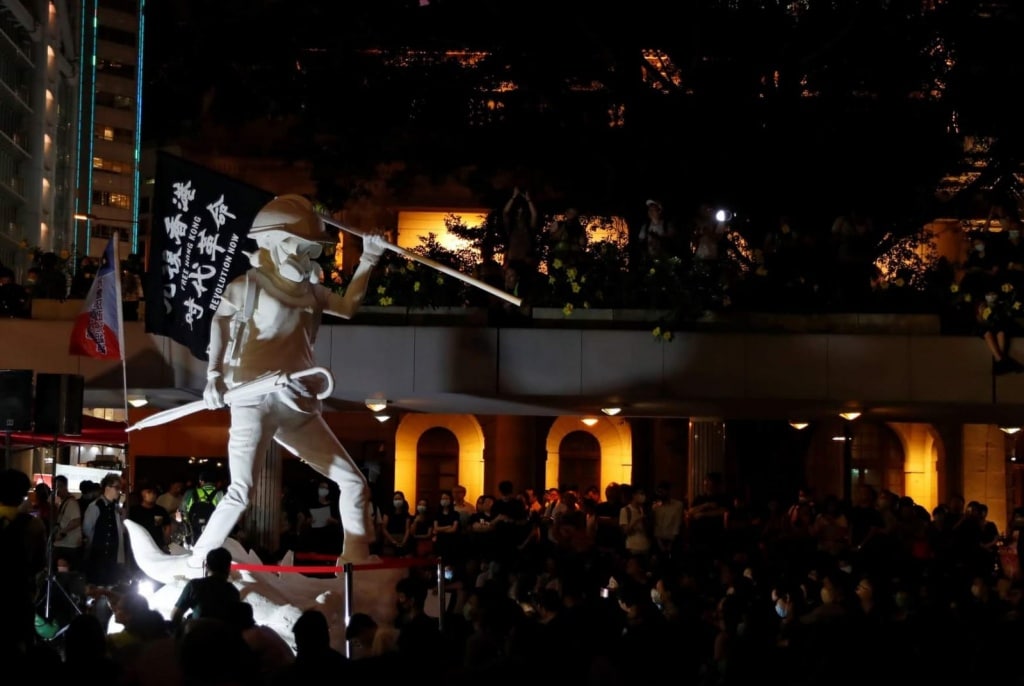
You may have noticed that, throughout the anti-extradition movement, most forms of protest have not been the kind of nonviolent resistance that directly and violently attacks the regime. And among the many nonviolent methods, things like singing "Glory to Hong Kong", making "Lennon flags", Lennon Walls and human chains feel a little different from non-cooperation campaigns and strikes — as if they carry some kind of imagery.
This sort of "cultured" protest is what we call symbolic protest. We can all agree that ideals of democracy and freedom need to be spread continually, but when these ideals are not easily put into words, they need a "vessel" to carry them. The importance of symbolic protest lies in its ability to do exactly what is described above: through the "symbols" expressed during a protest, it builds a "psychological force field" that serves as a "vessel" to convey ideals of democracy and freedom, and the resolve of the resistance.
Finally, let me share two small anecdotes from climbing Yushan. As we made our way up the mountain, the following exchange repeated itself again and again:
Them: Where are you from?
Us: We're from Hong Kong.
Them: (eyes lighting up at once) Oh, you're from Hong Kong! You must be so busy every weekend~
Us: (helplessly) Yes, we are…
Them: Stay strong! You have to stay strong!
During our July trip, plenty of foreigners had similar reactions. This shows that, after the resistance of this summer, the intersubjectivity that "Hongkongers have a tenacious spirit of resistance" really has taken deep root in the minds of people overseas. That recognition of our identity is, you might say, a small reward for everyone's efforts over these past few months.
As we climbed, we also kept singing "Glory to Hong Kong". You could tell that even the foreigners hiking alongside us, who could not understand the lyrics, came away with some impression of its melody. And after we have weathered however many bitter winters, on some future day — no matter what Hong Kong has become — when the opening bars of "Glory to Hong Kong" rise again, the singing will still ripple out like a stream, stirring something in everyone's heart.
Keep reading
Psychology
Society & Current Affairs
Society & Current Affairs

Comments
No comments yet — share your thoughts.