What Inside Out Teaches Us About Difficult Emotions
Pixar's Inside Out won the Oscar and the Golden Globe for Best Animated Feature, and its five "emotion buddies" — Joy, Sadness, Fear, Disgust and Anger — are loved by audiences worldwide. With the se…
Pixar's animated film Inside Out was released in 2015 and went on to win the Oscar and the Golden Globe for Best Animated Feature. Its five "emotion buddies" — Joy, Sadness, Fear, Disgust and Anger — won the hearts of audiences everywhere. Nine years on, the sequel Inside Out 2 drew rave reviews at its recent preview screenings. Alongside the five original emotions, this instalment introduces brand-new emotion characters too!
Let us start by getting to know the five original emotion buddies.
Inside Out — Meet Joy and Sadness
Joy looks on the bright side no matter what, staying upbeat and acting as everyone's source of cheer; she simply doesn't understand why Sadness is so often, well, sad.
Sadness, for her part, can never quite shake off her gloom, and finds it hard to feel happy.
In the first film, Joy keeps pushing Sadness aside. Joy believes that Sadness is always causing trouble, so she forbids Sadness from "contaminating" any happy memory orbs, trying to stop her from turning them into sorrowful ones.
One of Riley's core memories is of an ice hockey match. In that game, Riley missed a golden chance to score and lost the match; she blamed herself so harshly that she climbed up a tree and cried. It was only after her parents came over to comfort and stay beside her that she returned to her team and let her teammates cheer her on.
With the loving company of those closest to her, Riley faced the hurt together with them and turned her sorrow into a happy memory.
Still from Inside Out – Joy and Sadness
Inside Out — Meet Fear, Disgust and Anger
Fear lives in dread every single day, but his panic and fluster are all about protecting Riley — keeping her careful and away from danger;
Disgust is hard to please; thanks to him, the broccoli Riley loathes and other off-putting things can never get anywhere near her;
Anger is short-tempered and quick to flare up, and whenever someone crosses a line, he speaks up indignantly on Riley's behalf.
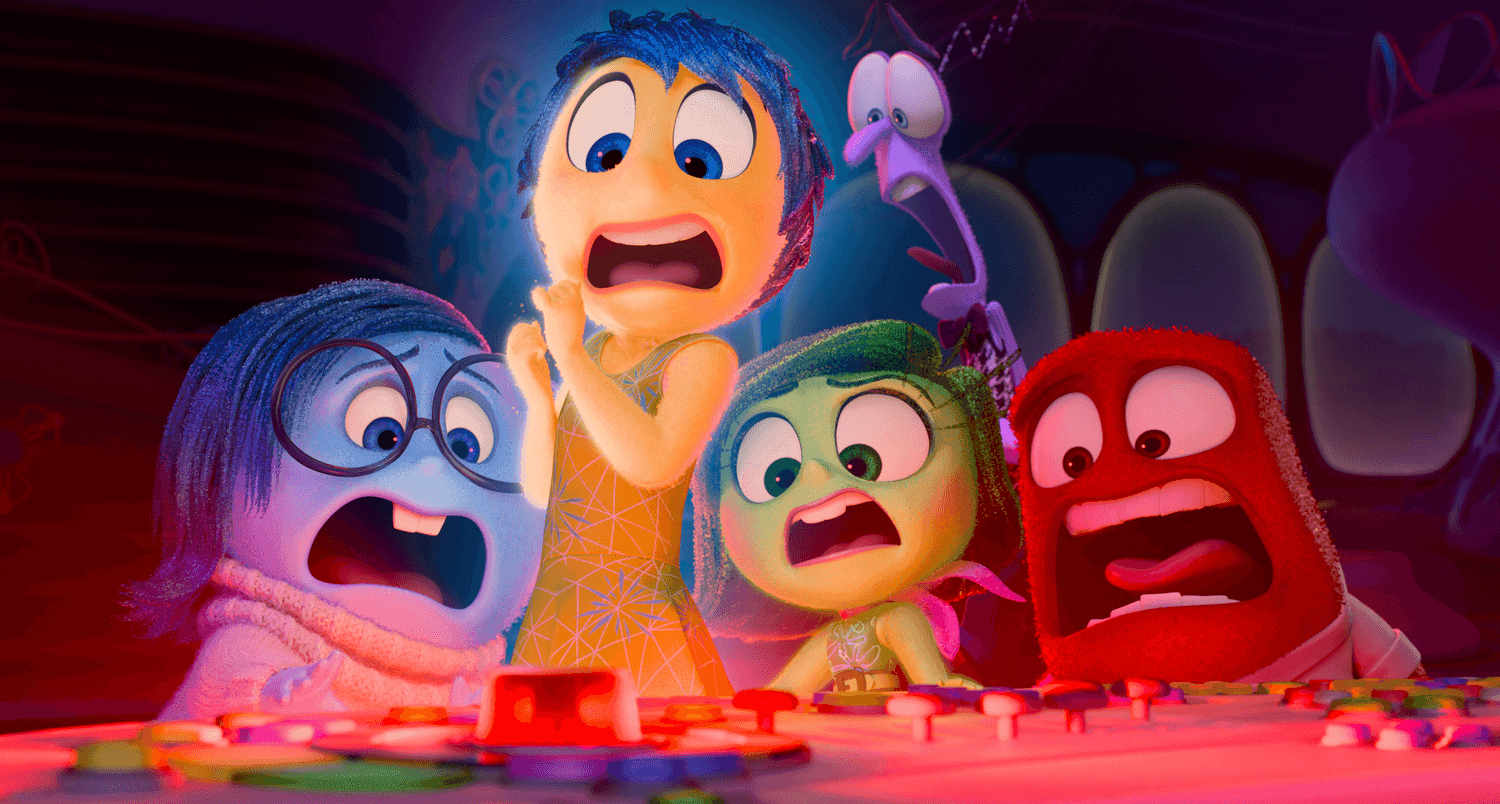
When Sadness and Joy are also swept off into the depths of the mind, Riley's emotional control panel is left with only Fear, Anger and Disgust. Riley can handle things with these three emotions alone, setting off a chain of disastrous events. Do you understand your own emotion buddies? Can you sit with the fears inside you? Do you ever hold back from expressing your anger? Do you do things you dislike just to fit in with others?
Still from Inside Out – Disgust, Anger and Fear
How should we face our "negative" emotions?
1. Notice your body's responses
Many emotions come with physical responses — for example, sorrow can bring tears and uneven breathing; anger can speed up the heartbeat and tense the muscles. If we get into the habit of noticing the state of our body, we gradually become able to read its signals, noticing how an emotion arises, how intense it is, and how it passes.
2. Regulate emotions through deep breathing
3. Enter the emotion
We can try to recall, observe, enter and stay with an emotion. Close your eyes, slowly breathe deeply, focus on your breath, try to observe how your body feels, try to name those feelings in your mind, and allow yourself to feel these emotions.
**It is advisable to do this with the support of a psychotherapist**
How do we understand the message behind an emotion?
1. Observe what tends to trigger this emotion
2. Try to listen to your inner voice and ask yourself questions (Is this an emotion that has built up over time? Is it connected to past experiences?)
3. Put into words the reasons, motivations, goals and behavioural tendencies behind the emotion
4. Explore your own needs and hopes
Every "emotion buddy" is indispensable
As we face all sorts of things in life, we feel a range of different emotions. Perhaps we were brought up to be "a positive person", but is being positive really the best way to be? Is being positive the only thing that wins others over?
We cannot do without Joy, but we cannot do without Sadness either. Every emotion has its purpose. Rather than suppressing or avoiding negative emotions, we would do better to understand the message behind them, and to try to welcome and embrace each and every emotion.







Comments
No comments yet — share your thoughts.