

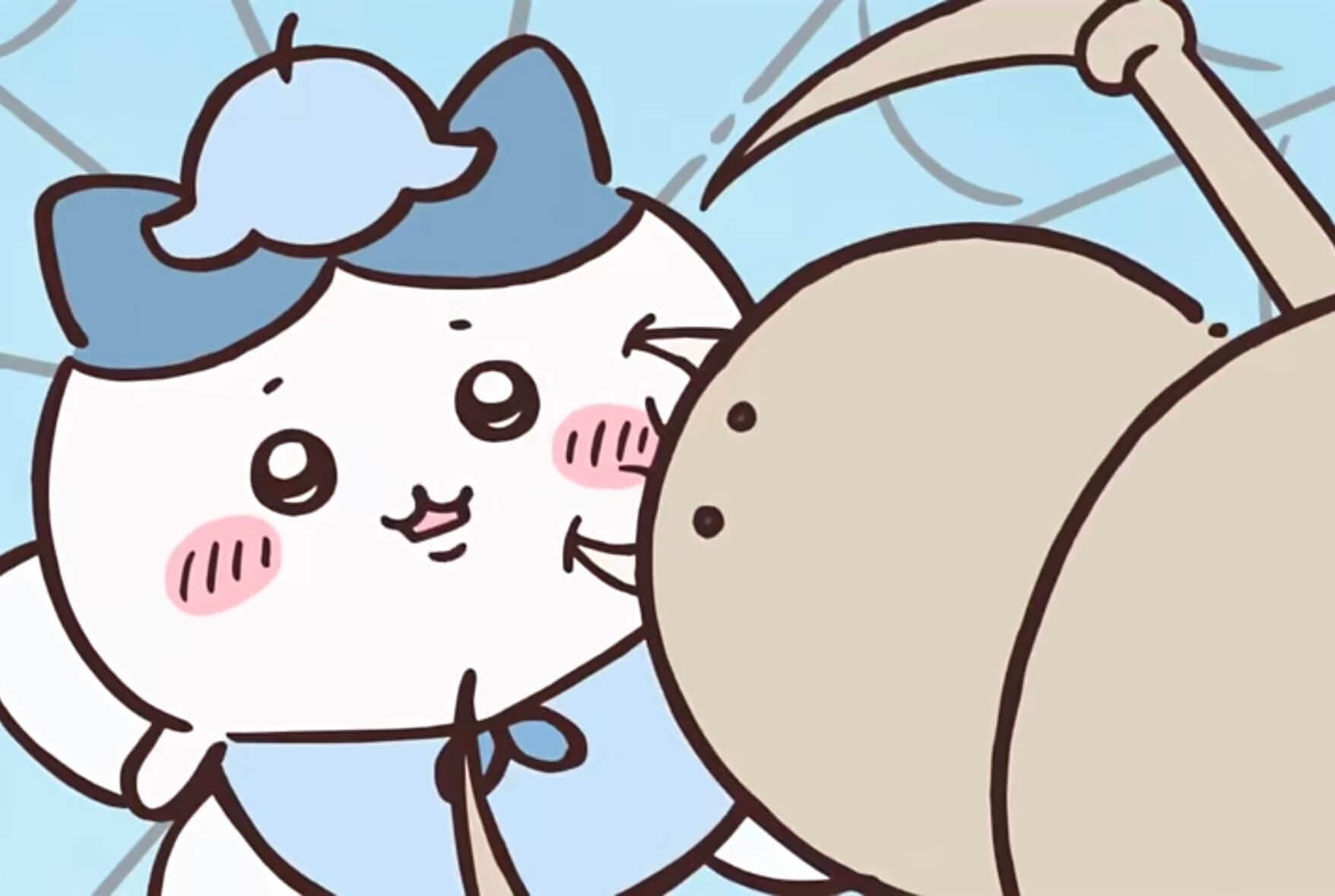
Hachiware, the hero of Chiikawa, has captivated a huge following with a personality that is at once a "super-warm guy" and a master of looking on the bright side — and the appeal is impossible to ignore. Are there really people like Hachiware in real life? And how does psychology make sense of a "personality" like Hachiware's?
The psychologists McCrae and Costa, among others, proposed five factors to capture a person's personality: Openness, Conscientiousness, Extraversion, Agreeableness and Neuroticism. The initials of these five factors (Big Five/Big 5) spell out the word "OCEAN" — and two of them, "Agreeableness" and "Neuroticism", are a portrait of Hachiware to the letter.
Do You Have Hachiware's Warm-Hearted Streak?
People high in "Agreeableness" place greater weight on relationships and harmony. They care more about how others feel, tend to be kinder, and have plenty of compassion and consideration; they find it harder to turn others down, don't keep score over what they give, and come across as generous. They are also more inclined to trust people, to wish those around them well, and even to put other people's welfare first. Isn't all of the above a description of our warm-hearted Hachiware?
In the story, Hachiware is always so considerate towards friends — often cooking up different dishes to treat Chiikawa and Usagi, and feeling content just from watching friends eat with relish, even without having a single bite. Though living a life of hardship, Hachiware never hesitates to share with good friends; somehow always senses when a friend is feeling low, knows when Chiikawa is heartbroken over the kabutomushi, and thinks nothing of running over to Chiikawa's home to comfort them; and, as the loyal friend who "stands up for what's right", steps in to face the Kimera even while knowing they may not have what it takes.
Yet people high in Agreeableness, like Hachiware, are often deceived or betrayed by ill-intentioned people precisely because they trust too readily. In the three-star hotel episode, for instance, Chiikawa clearly senses that the hotel staff are unfriendly, yet Hachiware trusts them without a shred of doubt and steps into the boiling-hot water, believing they have been invited to take a bath — when in fact they are being cooked as food……

How Do You Stay Warm-Hearted Without Losing Out?
As the saying goes, kind people get taken advantage of. In everyday life, trusting people too readily and being unable to bring yourself to say no can sometimes leave you worse off. Have you ever found that, because you "kindly" lent a hand, the other person pushed for more, made a further request — and you simply didn't know how to refuse?
Valuing relationships and staying kind-hearted are certainly traits worth admiring, but when faced with an unreasonable request, you can first try to take your own feelings into account and, at the right moment, learn to decline gently. Setting healthy personal boundaries will not turn you into someone disagreeable. Friends who truly cherish you — just like Chiikawa and Usagi in the story — would never hold it against you.
Are You Often as Calm and Upbeat as Hachiware?
People high in Neuroticism tend to have more sensitive, unstable emotions; they easily turn pessimistic and downcast, anxious or angry over small things or setbacks, and need more time to recover. They readily become overly anxious, tense or fearful, are easily affected by stress, and lack a sense of security. All of the above is the opposite of Hachiware……
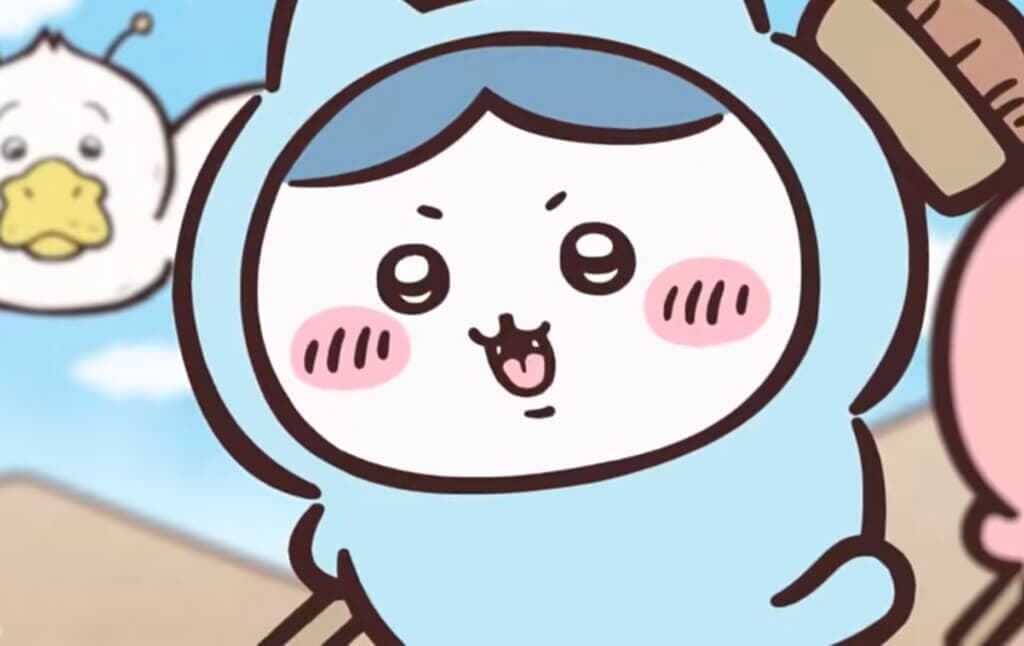
Hachiware scores extremely low on Neuroticism and is emotionally stable; when facing a crisis, and unlike Chiikawa's panic, Hachiware can always respond calmly. For example, faced with the Ootori, Hachiware firmly believes "there's always a way", and resolves the team's predicament with a single broom. When caught in danger, Hachiware is never at a loss, and even in the most hopeless moments calmly trusts that the rain will pass and the skies will clear.
So Does That Mean, Like Hachiware, the Lower Your Neuroticism the Better?
It's true that research indicates the higher a person's Neuroticism, the greater their chance of developing psychological conditions such as anxiety and depression. However, a moderate degree of negative emotion such as anxiety and fear is adaptive: it allows a creature to avoid danger and increases its chances of survival. People with overly low Neuroticism feel less fear, so when genuinely confronted with danger they may not actually notice it and get away.
Hachiware, with extremely low Neuroticism, has an extremely low awareness of danger. Hachiware is therefore often in peril without realising it — as when chased by the Yoroisan Mask, when stuck on a spider's web, or when, after a soul swap, Chiikawa as the worried one keeps searching for coins because the swap couldn't be reversed: Hachiware just sits there with a bottle cap in their mouth, blissfully unaware, leaving fans breaking into a cold sweat over all this "excessive optimism".
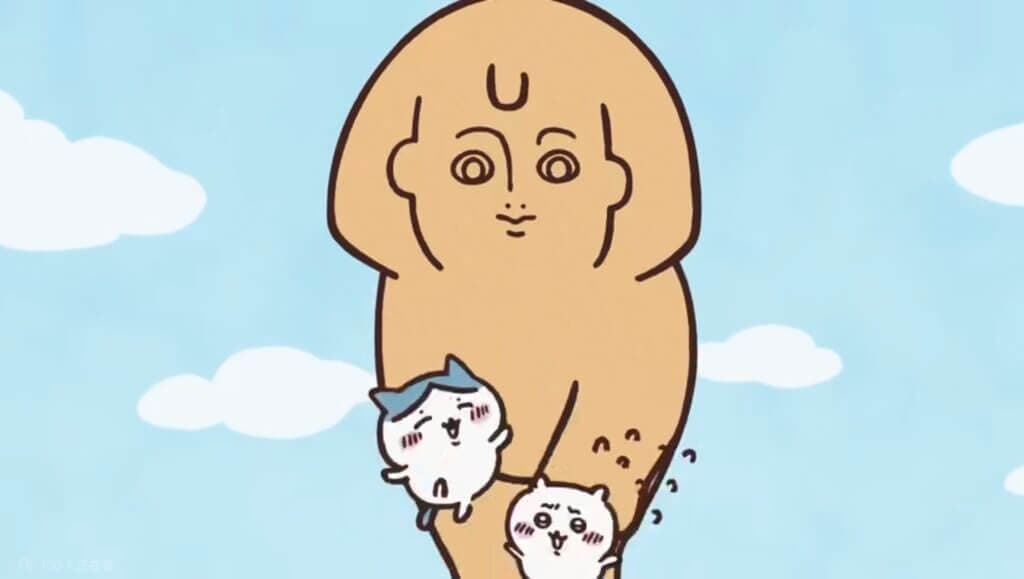
So no single personality is inherently "good" or "bad"; what matters is the effects that scoring too high or too low can bring. That said, it's exactly Hachiware's "super-warm" nature, paired with that "extremely low awareness of danger" innocence, that makes the character so utterly lovable!
References
McCrae, R. R., & Costa, P. T. (1987). Validation of the five-factor model of personality across instruments and observers. Journal of personality and social psychology, 52(1), 81.
Graziano, W. G.; Eisenberg, N. (1997). “Agreeableness; A dimension of personality”. In Hogan, R.; Briggs, S.; Johnson, J. (eds.). Handbook of Personality Psychology. San Diego, Calif.: Academic Press.
Graziano, W. G., & Tobin, R. M. (2009). Agreeableness. In M. R. Leary & R. H. Hoyle (Eds.), Handbook of individual differences in social behavior(pp. 46–61). The Guilford Press.
Gunthert, K. C., Cohen, L. H., & Armeli, S. (1999). The role of neuroticism in daily stress and coping. Journal of personality and social psychology, 77(5), 1087.
Paulus, D. J., Vanwoerden, S., Norton, P. J., & Sharp, C. (2016). From neuroticism to anxiety: Examining unique contributions of three transdiagnostic vulnerability factors. Personality and Individual Differences, 94, 38-43.
Roelofs, J., Huibers, M., Peeters, F., & Arntz, A. (2008). Effects of neuroticism on depression and anxiety: Rumination as a possible mediator. Personality and Individual differences, 44(3), 576-586.
Furnham, A. (2022). Bright and Dark Side of Personality. Overcoming Bad Leadership in Organizations, 51.



Comments
No comments yet — share your thoughts.