

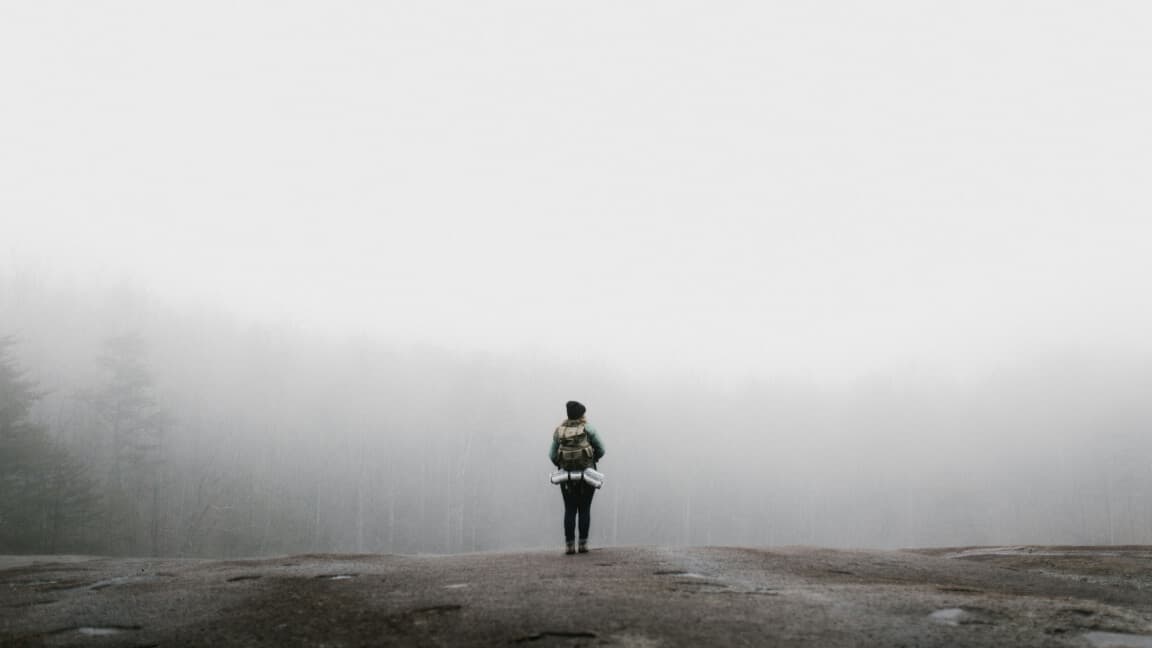
Picture this: you are sitting in a quiet room, everything around you is calm, and yet you feel lonely. Your phone is right beside you, but you still feel cut off from the world. Loneliness sometimes slips into our lives unannounced, leaving us ill at ease. Psychologists, however, have found that solitude carries real benefits for the mind. This article introduces five simple ways to help you face loneliness, change how you see being alone, and treat it as an opportunity for personal growth. With a few psychological techniques, you can turn loneliness into strength.
Lonely vs. Alone
Both loneliness and solitude are experiences of being on your own, yet the feelings they bring are very different. Loneliness is usually a negative emotional state, arising when a person senses a gap between the social connection they hope for and the connection they actually have. Even in the middle of a crowd, loneliness can still appear if a person feels isolated. This feeling often brings sorrow, emptiness and a sense of being abandoned. Prolonged loneliness can take a negative toll on mental health, leading to problems such as depression and anxiety (Owczarek et al., 2022).
Solitude, by contrast, tends to be a positive or neutral experience. It is usually a state we choose for ourselves, rather than one forced on us by circumstances. People choose solitude to reflect on themselves, foster personal growth, or simply give the mind a rest. Solitude often brings a calm and clear-minded state. This experience is good for the individual (Long & Averill, 2003;
Blatchley, 2022), and can help people to:
• Reflect on their own thoughts and feelings
• Spark creativity and the ability to solve problems
• Ease stress through introspection
Loneliness contains a yearning for connection, whereas solitude offers a space for deeper self-reflection. Even though both are experiences of being on your own, the two states have markedly different effects on the mind.
1) Express Gratitude to Strengthen Social Connection
Expressing gratitude to others can strengthen social connection and deepen a sense of belonging.Psychological research shows that when people express thanks, they not only nurture their relationships with others but also boost their own sense of wellbeing (Caputo, 2015). Writing a thank-you note, or regularly appreciating the small kindnesses of others, can strengthen emotional connection and reduce the loneliness that can come with being alone. A habit of gratitude shapes a positive influence within relationships, letting people feel supported by their social network. By focusing on gratitude, we can shift our attention from loneliness towards meaningful relationships.
2) Practise Mindfulness
Mindfulness lets us focus on the present and observe our own emotions without judgement.When a person practises mindfulness, they learn to observe their thoughts and feelings from the perspective of an onlooker, which helps reduce the negative self-talk associated with loneliness (Teoh et al., 2021). Regular mindfulness practice, such as mindful breathing, can build psychological resilience and inner calm. Focusing on the present moment can ease loneliness and help us understand our own feelings more clearly, learning to enjoy solitude.
3) Join a Community That Shares Your Interests
Psychologists recommend reducing loneliness by taking part in community activities (Yanguas et al., 2018). Taking part in activities tied to your interests or hobbies encourages interaction with like-minded people, making it easier to build meaningful connections.Whether it is an online forum, a fan club or an interest class, joining community activities can give us a sense of belonging. These settings provide common topics for social interaction, easing the anxiety around communication and helping us strike up friendships more easily.
4) Exercise Regularly to Boost Endorphins
Exercise not only improves physical health but can also effectively reduce loneliness (Hawkley et al., 2009). Being physically active prompts the release of endorphins, a substance that can improve mood and relieve stress. Taking part in group activities, such as a fitness class or team sport, creates more social opportunities and brings us a sense of belonging. Even an individual activity like running or yoga can bring a sense of accomplishment and boost self-esteem. By weaving a regular exercise habit into daily life, a person can generate more positive emotions, easing loneliness by fostering both social connection and personal health.
5) See Solitude as a Positive Experience
Understanding the benefits of solitude and seeing it as a positive experience helps ease the effects of loneliness (Rodriguez et al., 2020). Psychological research shows that solitude supports deeper self-reflection, greater creativity and better emotional regulation (Long & Averill, 2003; Blatchley, 2022). When people see solitude as an opportunity for personal growth, they turn their inner loneliness into strength, deepening self-awareness and emotional independence. Activities such as journaling or a mindful walk can bring a sense of fulfilment to time spent alone, easing the psychological burden that loneliness can carry.
Download the MindForest App to Face Loneliness and Learn to Enjoy Solitude
Facing loneliness and learning to be alone is an important step towards mental wellbeing. MindForest is an advanced AI app that offers you personalised support, helping you turn the unease of loneliness into the calm of solitude.
1) Interactive psychology courses: these courses guide you to understand psychological resilience and cultivate self-awareness. You will learn how to observe your own thoughts and turn loneliness into a force for personal growth, making your time alone more fulfilling.
2) A personalised AI guide: MindForest's AI guide offers tailored advice and emotional support based on your own growth journey. Whether you are looking for strategies to face loneliness or learning how to use time alone for self-reflection, the AI guide provides ongoing guidance and encouragement.
3) Inspiration journal: the app's automated journaling feature lets you record your own thoughts and feelings, deepening your understanding of loneliness and solitude. By writing down how you feel, you can have a space for self-reflection and gradually come to appreciate the positive side of solitude.

With MindForest, you will learn to face loneliness, nurture your mental wellbeing, and turn solitude into an opportunity for self-improvement.
References
Blatchley, B. (2022, December 29). The benefits of solitude. Retrieved from https://www.psychologytoday.com/ca/blog/what-are-the-chances/202212/the-benefits-of-solitude
Caputo A. (2015). The Relationship Between Gratitude and Loneliness: The Potential Benefits of Gratitude for Promoting Social Bonds. Europe’s journal of psychology, 11(2), 323–334. https://doi.org/10.5964/ejop.v11i2.826
Hawkley, L. C., Thisted, R. A., & Cacioppo, J. T. (2009). Loneliness predicts reduced physical activity: cross-sectional & longitudinal analyses. Health psychology : official journal of the Division of Health Psychology, American Psychological Association, 28(3), 354–363. https://doi.org/10.1037/a0014400
Long, C. R., & Averill, J. R. (2003). Solitude: An exploration of benefits of being alone. Journal for the Theory of Social Behaviour, 33(1), 21–44. https://doi.org/10.1111/1468-5914.00204
Owczarek, M., Nolan, E., Shevlin, M., Butter, S., Karatzias, T., McBride, O., Murphy, J., Vallieres, F., Bentall, R., Martinez, A., & Hyland, P. (2022). How is loneliness related to anxiety and depression: A population-based network analysis in the early lockdown period. International journal of psychology : Journal international de psychologie, 57(5), 585–596. https://doi.org/10.1002/ijop.12851
Rodriguez, M., Bellet, B. W., & McNally, R. J. (2020). Reframing Time Spent Alone: Reappraisal Buffers the Emotional Effects of Isolation. Cognitive therapy and research, 44(6), 1052–1067. https://doi.org/10.1007/s10608-020-10128-x
Teoh, S. L., Letchumanan, V., & Lee, L. H. (2021). Can Mindfulness Help to Alleviate Loneliness? A Systematic Review and Meta-Analysis. Frontiers in psychology, 12, 633319. https://doi.org/10.3389/fpsyg.2021.633319
Yanguas, J., Pinazo-Henandis, S., & Tarazona-Santabalbina, F. J. (2018). The complexity of loneliness. Acta bio-medica : Atenei Parmensis, 89(2), 302–314. https://doi.org/10.23750/abm.v89i2.7404







Comments
No comments yet — share your thoughts.