Why We Can't Stop Loving Chiikawa
Chiikawa has become one of the most beloved anime around — but beyond its adorable characters and slice-of-life charm, what is it that draws us in so deeply? We unpack four psychological reasons behi…


Chiikawa has become one of the most beloved anime around — but beyond its adorable characters and slice-of-life charm, what is it that draws us in so deeply? We unpack four psychological reasons behi…
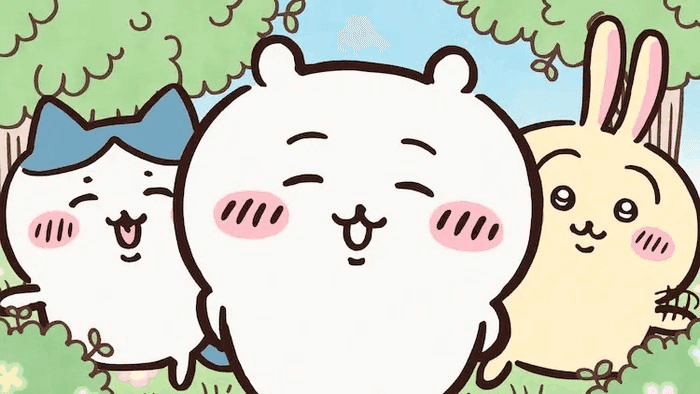
When it comes to the anime that has captured everyone's hearts lately, Chiikawa is surely near the top of the list. Chiikawa is a Japanese healing-style manga that centres on Chiikawa, Hachiware and Usagi, telling a series of small everyday stories about their lives — playing together, working hard, and the like. These elements add warmth and charm to the stories, fleshing the characters out in fine detail, and they are part of why Chiikawa is so well loved. But beyond all this, what exactly is it that has made Chiikawa so beloved?

Whether it is Chiikawa, Hachiware or Usagi, each has dainty features and a tiny little body. These traits make everyone find them adorable. Looking at these cute animations or animals can stimulate activity in the orbitofrontal cortex, a region that plays an important role in our emotions and feelings of pleasure. This explains why cute features capture our attention so quickly and so completely. Beyond the activity in the brain, evolutionary psychology points out that we have an innate tendency to form emotional bonds with animals — especially cute ones, which stir up empathy and compassion in us. And so Chiikawa, drawing its inspiration from animals, can forge a close bond with its audience and draw them in all the more.
In Chiikawa's stories, the main characters do not simply enjoy good food and fun. Just like the working folk of real life, they too have to go to work, pull weeds, and even take on jobs such as subduing monsters. As small-bodied characters, they cannot help but feel afraid when facing enormous enemies, and Chiikawa sometimes even bursts into tears. But as long as they band together and cooperate, they can bravely defeat their opponents without fear. This experience may well resonate with working people who feel low and discouraged in their jobs. They can find in the characters' journeys the sense of a fellow traveller, and feel that even when the road ahead is hard and bitter, they too can clear the obstacles before them with the help of friends.

The stories also depict moments of rest for the characters. After a performance by the pyjama party wraps up, the scene of Chiikawa and Hachiware watching the sunset and chatting together also strikes a chord with people. In our fast-paced modern society, we are often weighed down by exhausting work and pressure. When the characters of Chiikawa let themselves relax once a job is done, watching them chat away so contentedly moves us too: rest is hard-won, and that is precisely what makes it so precious.

As Carl Jung put it, archetypes are the collective experiences held in humanity's collective unconscious. Although these archetypes are formless, they continually shape people's behaviour and patterns of thought. This is because people project their inner archetypes, unconscious emotions and desires onto external things, and by connecting themselves with others or with external things, they thereby shape their own psychological structure and behavioural patterns.
Usagi is a character especially loved by the public. He is not only full of an adventurous spirit; he also has a free and unrestrained personality. When he meets a provocation from the bat, he strikes back without the slightest hesitation, sending the bat off with its tail between its legs and showing off his courage. Beyond his cute appearance, we are also drawn to his bravery. Within our hearts lie many an archetype, and one of them is the "hero archetype". It represents qualities such as courage, adventure and combat. Usagi's "protecting his friends" in the anime, and standing up to the bat's provocation, fit neatly with the "hero archetype" in our hearts, giving rise to a special emotional connection with him.

Although Chiikawa and Usagi are good friends, their personalities are utterly different. Chiikawa has always been the more timid and sensitive one. When he meets a monster, he is all the more likely to shed tears out of sheer fear. If only we could, would we not also want to be as brave as Usagi? But sometimes, we are instead just as fragile as Chiikawa.
As the story unfolds, Chiikawa slowly grows, working up the courage to rescue his friends. There was one time when Hachiware and Usagi were about to be turned into monsters by a magic wand; Chiikawa, crying all the while, used all his strength to snap the wand in two, and in the end restored Hachiware and Usagi to their original forms. Even though Chiikawa was afraid, he could still summon his courage for the sake of his friends.
We often hold strength and power in high regard, and try every means to hide the fragility within us. In truth, fragility is not the same as weakness. Real strength, on the contrary, comes from the courage to face the fragility within. It is not easy, but we can all grow slowly, just like Chiikawa.

We often hold strength and power in high regard, and try every means to hide the fragility within us. In truth, fragility is not the same as weakness. Real strength, on the contrary, comes from the courage to face the fragility within. It is not easy, but we can all grow slowly, just like Chiikawa.
Chiikawa is so beloved not only because the characters are cute and the subject matter is down-to-earth, but more because these characters can reach deep into our hearts, letting us recognise, understand and embrace ourselves. Chiikawa tells us that fragility and courage can coexist; Usagi, meanwhile, is the ideal self in our eyes. In this day and age, Chiikawa has become a place where people rest their spirits, a harbour where they can take shelter from the storm. Through Chiikawa, people regain the courage to face reality, and to face themselves.
References
Kringelbach, M. L. (2016). How cute things hijack our brains and drive behaviour | University of. https://www.ox.ac.uk/research/how-cute-things-hijack-our-brains-and-drive-behaviour
Lam. (2024, April 11). What exactly is it about the popular Japanese character Chiikawa? Its cuteness has even men falling head over heels! GOtrip.hk. https://www.gotrip.hk/%E7%86%B1%E8%A9%B1/%E6%97%A5%E6%9C%AC-chiikawa-gt16-1033626/7/
Luster, J. (2022). Chiikawa anime premieres on April 4, more details revealed. https://otakuusamagazine.com/chiikawa-anime-premieres-on-april-4-more-details-revealed/
Otr/L, E. D. (2022, August 19). Orbitofrontal Cortex Damage: Understanding emotional & behavioral changes after TBI. Flint Rehab. https://www.flintrehab.com/orbitofrontal-cortex-damage/
Peterson, A. L. (2022, September 24). What Is. . . the Psychology of Cuteness – Mental Health @ Home. Mental Health @ Home. https://mentalhealthathome.org/2020/12/18/what-is-the-psychology-of-cuteness/#:~:text=In 1971%2C zoologist Konrad Lorenz first proposed that,a small nose and mouth%2C and chubby cheeks.
Vedor, J. E. (2023). Revisiting Carl Jung’s archetype theory a psychobiological approach. Biosystems, 234, 105059. https://doi.org/10.1016/j.biosystems.2023.105059


Comments
No comments yet — share your thoughts.