When a Father's Love Becomes Emotional Blackmail
Allen Fong's "Father and Son" was the very first film to win the Hong Kong Film Award for Best Picture. Revisit it today and you find, beneath its tender exterior, a poison that can quietly shape a w…

Allen Fong's "Father and Son" was the very first film to win the Hong Kong Film Award for Best Picture. Revisit it today and you find, beneath its tender exterior, a poison that can quietly shape a w…
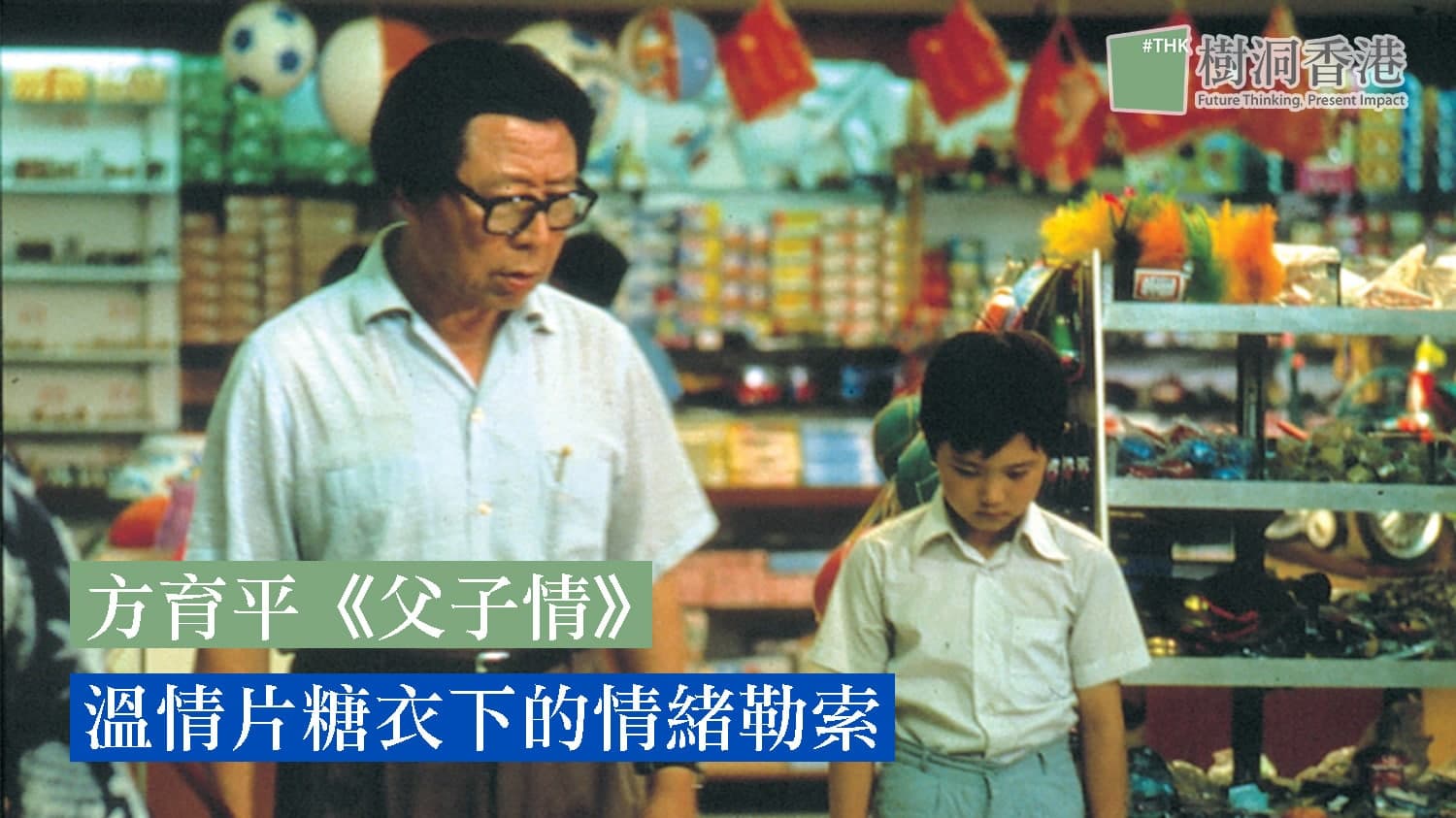
Allen Fong's Father and Son was the very first film to win the Hong Kong Film Award for Best Picture. Unlike the other Hong Kong films of its day, Father and Son records the small joys and trials of one Hong Kong family from a plain, unassuming point of view, tracing a father-and-son bond that spans more than twenty years: the father, Law Shan-muk (played by Shek Lui), is treated unfairly at his company because of his limited schooling. He has decades of experience, yet cannot win promotion over better-qualified colleagues with far less to show for themselves. So he pins his hopes on his son, Law Ka-hing (played by Cheng Yu-kor): study hard, get into university, make something of yourself. But the boy's grades fall short, and he is moved from school to school again and again. How, in the end, does the father bring his son to "knuckle down" to his books?
The film is full of warm, finely observed touches. When Ka-hing is a child, for instance, he and his friends Ng Siu-chung and his little sister Ka-hei rig up a homemade projector at home out of a candle and a shoebox; then the children daub a "daddy" onto a strip of film and cast him onto a cloth screen, letting the little leads voice the father's psychological projection "directly." Through the children's drawings, the father is rendered as two extremes — stern and benevolent at once — giving his on-screen personality greater depth. The film also opens with the father, Law Shan-muk, receiving the joyful news of his son Ka-hing's university graduation, only to be carried off by a heart attack — beginning at the end. The father who, through years of hardship, raised his son and sent him off to study never lives to see with his own eyes the son who has finally made good, and the audience grieves alongside him.

In ninety-seven minutes, director Fong lays bare the typical life and values of the Hong Kong person, and sketches an ordinary father's doting love for his son — striking a chord with audiences and moving them deeply. Yet look again at these ideas and values today, and you find that beneath the sweet coating lies a poison capable of destroying a life. You, reading this article, may well have swallowed that poison yourself — and may even have fed it to others. Its name is emotional blackmail.
The term emotional blackmail (Emotional Blackmail) was popularised by Susan Forward in her book of the same name. It refers to one party in a relationship using their own negative emotions to threaten or manipulate the other into giving them what they want, controlling that person's behaviour. The blackmailer's usual tactics include belittling the victim's self-worth, making them feel guilty, and undermining their sense of security. In Chinese society, emotional blackmail is all the more common. On the one hand, Confucian ideas such as "let the ruler be a ruler, the minister a minister, the father a father, the son a son" are deeply rooted in the Chinese mind, leading people to submit to authority and to put filial piety first. On the other hand, Chinese families less often teach their children how to express emotion in a healthy way, which makes the suppression and distortion of feelings more likely to arise.
In Father and Son, the son Ka-hing simply does not enjoy studying — he may not even have a head for books — but the father, Law Shan-muk (played by Shek Lui), driven by his own experience of being unable to win promotion because of his limited schooling, insists his son study, walking the road the father himself could never walk, to make good his own regret. When Ka-hing tries to push back, summoning the courage to explain to his father what he himself wants, the father feels hard done by instead, deciding that his son simply will not knuckle down, and that he himself is forever in the right. At the end of the story he even lets slip a line: "You're grown up now; I can't look after you any longer." Though the father does not scold Ka-hing outright, he leaves the boy racked with guilt, with the sense that he has somehow let his father down.

In the end, Ka-hing tears up the audition notice from the television station he has dreamed of, says goodbye to his dream of film, and decides to fulfil his father's wish by going abroad to study. What is so cutting about Fong's direction is that the story ends with Ka-hing boarding the plane. Did Ka-hing face discrimination and bullying once he was studying in America? We do not know. After he graduated from university, did he really make good as his father had hoped? We do not know that either. But one thing is certain: for more than twenty years Ka-hing's life lay in the palm of his father's hand. After his father's death, could he finally find true freedom? We do not know, because a parent's upbringing (those shackles) takes root in a child's mind long before they have grown. The decisions they make for the rest of their lives are largely shaped by those values. Just so: after Ka-hing returns to Hong Kong on graduating, his little sister Ka-hei (played by Yan Sin-mei) rushes to help him pack his bags, because she reasons, "If Dad finds out I didn't help you pack, he'll say I'm lazy" — even though their father will never have the chance to know.
Raised within this family schooling that prizes sons over daughters, the daughters' minds have long since absorbed the inferiority of women. Ka-hei does well in her exams and is on the brink of a place at university, yet the father tells her to go out and start working sooner, so there will be money to send her elder brother Ka-hing abroad to a third-rate university. Ka-hei is furious at first, but in the end she enrols, "grudgingly," in a nursing school. Bitterly disappointed though she is, she still urges Ka-hing to go and study overseas, all so as to make their father happy. Faced with a father who lives through Ka-hing's life by carving away her own, Ka-hei nonetheless chooses to please him. However much it grieves her, she quietly accepts the disregard and dispossession that patriarchy visits upon women.
The eldest sister, Ka-han (played by Yung Wai-man), has it worse still — zero resistance. The father tells her to find a man able to bankroll her younger brother Ka-hing's studies and marry him. This is, in plain terms, selling a daughter. To sell off a daughter's life so that a son can have the life the father has in mind for him — how selfish a thing is that? Yet Ka-han offers zero resistance, and the very next day sets about courting her boss. On the one hand it may be to fall in with her father's wishes; on the other, she has accepted that a woman's duty is to marry and bear children, so she might as well lend Ka-hing a hand while she is at it. And when the father meets Ka-han's husband-to-be, he brazenly puts to him the demand that he fund Ka-hing's studies abroad — excruciating to watch.

A father's self-centred fixation has, just like that, manipulated the lives of three children. Did they live happily in the end? I do not know. I only hope that they will not pass these values on to the next generation.
If you want to understand how a mother's psychological state shapes the formation of a child's personality, you can read the writer's analysis of the film Joker (Joker — mental illness, mothers, sons, and personality)
#AllenFong #FatherAndSon #ShekLui #ChengYuKor #ChuHung #YanSinMei #YungWaiMan #HongKongNewWave # arthousecinemapsychology
【Infographic】15 images to help you understand emotional blackmail in one go https://www.thenewslens.com/article/63074
Joker — how a mother with mental illness shapes the formation of her son's personality Joker — how a mother with mental illness shapes her son's personality
Keep reading

Psychology
Psychology
Personal Growth

Comments
No comments yet — share your thoughts.