Why Being Left on Read Hurts So Much
You watch your message land with the person you like, see the "read" receipt appear, and then nothing. Why does being left on read sting so much, and what can you actually do about it? A look at the …

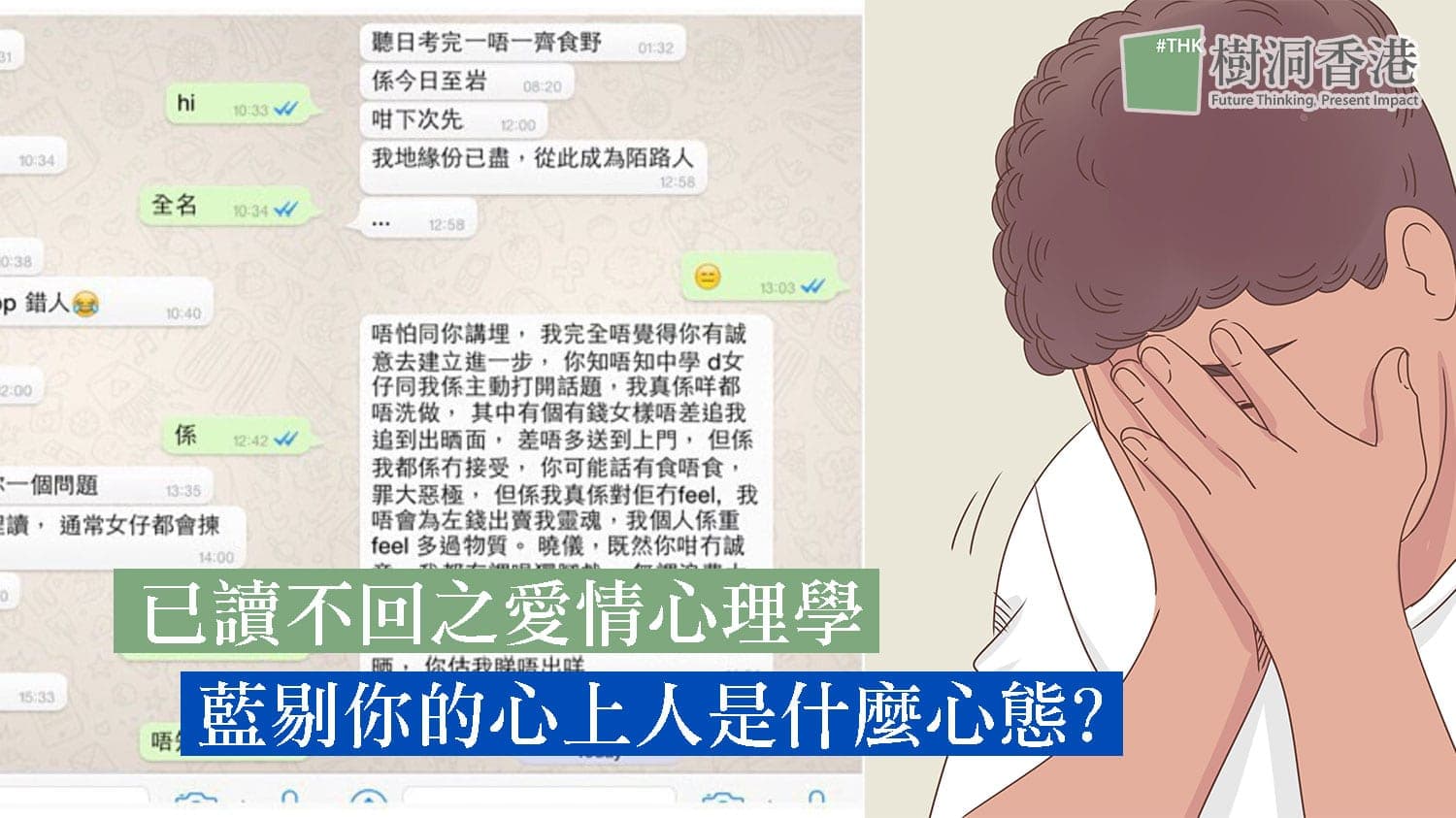

You watch your message land with the person you like, see the "read" receipt appear, and then nothing. Why does being left on read sting so much, and what can you actually do about it? A look at the …

"Ugh, left on read again…"
The longest distance in the world is watching your message reach the person you have a crush on (or your partner), seeing it marked as read — and then nothing. No "and then." With your heart hanging in mid-air, restless and uneasy, you have probably wondered a thousand times: why?
Although no one admits it out loud, the truth is that we all assign a Priority to different people and things. For the people and matters we consider more important, we choose to deal with them first; conversely, the relatively non-urgent things get pushed aside. Of course, as well-mannered, well-educated citizens, and for the sake of keeping things friendly, we would never say to someone directly: "You rank a little lower on my priority list, so sorry about that! I'll get back to you once I really, truly have the time."
That is exactly the part that hurts the most. You understand perfectly well that, as an adult, everyone has their own set of priorities — and the reason you have been left on read is simply the imbalance between you and the other person on each other's priority lists. To put it plainly: you care more about them than they care about you.
Some research on intimate relationships points out that Responsiveness has a major effect on how those relationships fare. The "intimate relationships" referred to here broadly cover romantic, friendly, and family ties. We carry big expectations of these people — partners especially — hoping they will respond to our emotional needs in time. Imagine: at the moment you most need support, the other person fails to respond promptly and soothe your feelings; some time later, you have gradually steadied, no longer so worked up, and that is when a sense of distance sets in. Let this go on long enough and the relationship becomes hard to sustain.
In reality there is no fixed standard for how long a reply should take. After all, relationships between people are not like the business world, where every task comes with a performance metric. So when you feel ignored by someone, most of the time it is because they have failed to meet the standard you had already set in your own mind. But even if you carry real weight in their heart, in real life we all have to handle work, keep family or friends company, and may not be able to reply to your messages "the second" they arrive, every single time.

According to an unpublished research manuscript from National Taiwan University, the following three types of people are especially prone to feeling left on read:
1/ Single people
(Disclaimer: no discrimination intended.) As single people who long for a partner, they are indeed more sensitive to how long the other person takes to reply.
2/ People with low emotional stability
People whose emotions are easily stirred find it harder to read someone else's behaviour from an objective standpoint. For example: when the other person is too busy with work to reply in time (within the limited window you were hoping for), people of this type tend to twist it into something more negative, feeling the other person does not value them enough.
3/ People with an anxious attachment style
Different attachment styles represent different ways of forming relationships with others. People with an anxious attachment style are generally more on edge: they need the other person intensely, yet on the other hand believe the other person does not really need them. As a result, they tend to read any signal that lacks reassurance as rejection, and so come to feel they are always being rejected, which leaves them dejected.
In short, it is because, from the recipient's point of view, this behaviour is a signal of rejection. Not only does the relationship fail to move forward, what is worse is that the other person is openly signalling a wish to cool things down between you. And when a person is rejected — social rejection in particular — the distress they experience is much the same as physical pain. The hardest part, of course, is that these signals of rejection come from someone you hold dear, because if it were someone you do not care about at all, you would not waste a thought on them anyway!
If you really have been left on read, what should you do?
First of all, does being left on read truly carry the meaning of rejection?
As mentioned above, the other person may simply be busy with their own affairs, or unable to reply promptly for some other reason; they may even just dislike using messaging as a channel of communication in the first place. So, is being left on read really a form of rejection, or is that how you have chosen to interpret it?
If it really does carry the meaning of rejection, here is something to think about:
Suppose a man is pursuing a woman, and the woman keeps signalling that she is not all that interested; this may be because, from the very start, the man placed the woman too high, treating her like a goddess, so her every move can sway his emotions — while in her eyes he does not enjoy the same standing.
In truth, a relationship is not a constant; it shifts from moment to moment. To borrow one of the examples from business guru Stephen Covey, every relationship is a bank account: you must make deposits first before you have any chance of drawing a return from that account.
So how do you "deposit" into a relationship?
The most basic approach is to offer the other person emotional support. Listen to them attentively, and respond at the right moments too. Otherwise, if one side does all the talking while the other simply takes it all in, the account cannot run properly. There is a cheeky line that does the rounds online: "skip the socialising, just the sex" — operating that way is like trying to draw a return from an account with no deposits at all — you will never succeed!
If your relationship is already stable, there is no harm in telling the other person honestly how you feel, and in a deeper conversation you can learn the reason they left you on read: were they swamped at work, or is there some friction, some sulkiness between you? What is more, everyone has their own standards and needs around response times — some people may expect the other person to reply quickly, while others do not mind a longer reply time at all. Being honest about your own feelings and understanding the other person's needs is what lets you take the discussion of how to change the situation a step further.
Acceptance means accepting the fact of being rejected, while also fully accepting your own sadness at being rejected. Some people are rather tough on themselves, refusing to let themselves feel hurt, but forcibly controlling your own emotions is a form of self-rejection. By contrast, letting yourself feel hurt over something is the very expression of treating yourself kindly (Self Compassion).
From another angle, we need to learn to accept that human vision is narrow. The narrowness here is not physiological but cognitive — it is as if we are forever peering at a single point through a telescope, intently. Focusing excessively on a certain thing or a certain person mostly ends in disappointment, because worldly affairs and other people were never within our control to begin with.
Here is an analogy: if you are a boy who loves basketball, and your dream is to dominate the basketball world like your idol Kobe Bryant, but you are only 150 centimetres tall. Within the limits of your innate conditions, if you still cling to that dream, you are bound to end up disappointed, because there is no way you can change that fact. But however much you love basketball, life still holds plenty of other goals worth pursuing.
Building relationships or seeking out a partner works the same way. When we are infatuated with someone, all we can see is their good points, and all your attention rests on that one person; but from a bystander's point of view, or once you are no longer infatuated with them, when you look back on that chapter, it turns out to be no big deal after all. It is much like a friend who has just been through a break-up — often crying their heart out, gut-wrenched, convinced they will be sunk in this low forever and never feel happy again. Yet once the moment has passed and circumstances have moved on, they can usually look back on it with a laugh.
The unspoken subtext of being left on read is that a relationship may not successfully form, or that the other person wants to reject the relationship in a gentler way. If it cannot be changed, then perhaps what we need to learn is how to accept this state of affairs.
Keep reading
Workplace
Personality Psychology
Psychology


Comments
No comments yet — share your thoughts.