Are You Being Hypnotised Every Day?
A spoiler-light look at the hypnosis techniques used in the Hong Kong thriller "Guilt by Design". Are they plausible? Where do they fall short, and how could they be improved? You'll discover that hy…

A spoiler-light look at the hypnosis techniques used in the Hong Kong thriller "Guilt by Design". Are they plausible? Where do they fall short, and how could they be improved? You'll discover that hy…

~7 min readUpdated 14 Sep 2026

The word "hypnosis" tends to carry an air of mystery — it looks like a tool that can control how people think. So what exactly is hypnosis? The truth is, we are all being hypnotised every single day……
This article examines some of the hypnosis methods used in "Guilt by Design", while doing its best to avoid major plot spoilers. Are these methods plausible? Where do they fall short? And how could they be improved? You'll find that hypnosis happens all the time in everyday life, and that common appliances and household objects can all serve as aids to it. What follows is purely an academic discussion — readers are welcome whether or not they've seen the film.
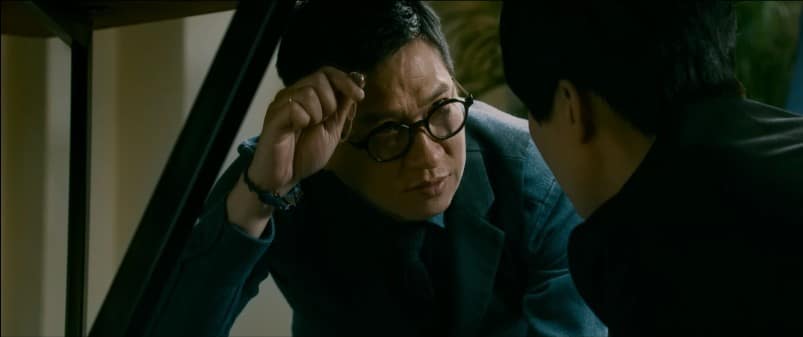
"Guilt by Design" tells the story of Hui Lap-sang (played by Cheung Ka-fai), an internationally renowned hypnosis expert who is one of the lay jurors in a family murder case. On the final day of the trial, Hui receives a mysterious phone call from someone holding his daughter hostage, demanding that he hypnotise his fellow jurors within 90 minutes to swing their verdict — voting to convict the seemingly innocent defendant Lam Tsz-chun (played by Yeung Sai-wing).

Put simply, hypnosis is a psychological state somewhere between dreaming and full wakefulness. When a person enters a hypnotic state, they become deeply relaxed yet focused, and more willing to lower the defences that ordinarily protect them. As a result, they become more receptive to suggestion and more open to changing their own behaviour.
A standard hypnosis session usually consists of the following five parts: relaxation, induction, suggestion, deepening through repetition, and emergence. Suggestion means giving the subject certain goals and a plan of action, usually in simple, direct sentences; deepening through repetition means repeating those sentences to strengthen the subject's drive and resolve to act. Suggestion and repetition can be done in several rounds as needed. The more difficult the goal or action is for the subject, the more time the repetition usually takes.

The first juror Hui hypnotises is Fong Wai-shan (played by So Lai-shan). First, Hui has Wai-shan watch the chocolate rotating inside the microwave and breathe in its aroma. These visual and olfactory stimuli help her relax and slip into a hypnotic state. He then plants the suggestion that the defence lawyer will get the offender off, tying it back to something that happened to Wai-shan ten years earlier to deepen her resentment towards the lawyer and her determination to uphold justice.
This is my favourite piece of hypnosis in the whole film — an ingenious use of the surrounding objects and the subject's own traits to carry out the induction, both plausible and creative. The hypnosis that follows starts to become rather "streamlined".
Case two is more conventional, and more of a stretch. Hui hypnotises May Yim (played by Kwok Cho-lam) in a flash beneath the table, using the most traditional method: he has May fix her gaze on a swinging pendant to enter a hypnotic state, then links the acquittal of Tsz-chun to a crash in the company's share price, reinforcing May's dread of losing four million dollars.
The strain in this case lies in having to overturn the other party's reasoned conclusion in such a short time. Judging whether a stock will rise or fall requires multiple supporting facts and data analysis before any conclusion can be drawn. The fact that May was firm enough to have her husband stake four million dollars shows how strongly she trusted her own analysis — so shaking that conviction is a colossal undertaking that calls for a deep level of sleep and plenty of time.
So in the film, changing a belief in an instant simply isn't plausible. Of course, we understand that Hui only has ninety minutes. But the writers could equally have devised a more sensibly designed piece of hypnosis.
Do you know who made the most use of hypnosis to help patients back in its heyday? A psychiatrist? A psychologist? Neither.
The answer is dentists. Before anaesthetics became widespread, dentists used hypnosis to ease the pain of having teeth pulled. By the same token, hypnosis can heighten bodily sensations.
In the film, when Hui re-enacts the case with Chan Wing-fai (played by Choi Lan-yi), he reinforces Wing-fai's mental image of being stabbed through the heart, amplifying the pain and fear and triggering an epileptic seizure. Granted, it all happens a touch too quickly — but it's still perfectly reasonable.
All three cases above are scenes of "performed hypnosis". In fact, "Guilt by Design" is itself one genuine hypnosis session.
As mentioned above, deepening through repetition exists to plant a message straight into the audience's mind. Whatever form the technique takes, it never strays from its essence: "repetition". The film features the products and logos of several brands more than once. I spotted three. How many did you spot? You're welcome to share in the comments on my page.
Keep reading
Personal Growth
Psychology
Workplace



Comments
No comments yet — share your thoughts.