The Art of Slow Living
Slow living isn't about doing nothing — it's about doing less, but with more attention and intention. Here's the psychology behind it, and five small ways to bring "slow" into your everyday life.

Slow living isn't about doing nothing — it's about doing less, but with more attention and intention. Here's the psychology behind it, and five small ways to bring "slow" into your everyday life.
What is slow living?
At its heart, slow living isn't about doing nothing — it's about doing less, but with more focus and more awareness. It isn't laziness, and it isn't inefficiency; it's choosing to spend your time and energy on what genuinely matters. Quality over quantity.
The idea of slow living traces partly back to Italy's "Slow Food" movement of the 1980s, when people began to question the influence of fast food and consumer culture. Over time, this "slow philosophy" gradually extended to work, travel, relationships — to almost every corner of daily life.
In In Praise of Slow (2004), Carl Honoré describes slow living as a cultural revolution against the belief that "faster is better". It isn't about escape; it's a kind of balancing act: refusing to let life become nothing more than ticking items off a to-do list, and instead living it with intention.
Why do we so often feel we must keep busy without stopping? From a psychological point of view, this has to do with cultural conditioning. So-called "hustle culture", particularly in the West, holds up "busyness" as a symbol of worth.
In The Paradox of Choice (2004), psychologist Barry Schwartz points out that this endless pursuit of efficiency and maximisation — and the stress it creates — often brings on decision fatigue, anxiety, and even difficulty choosing.
Research has also found that busyness is sometimes a form of avoidance. A study published in Emotion (2014) showed that people would rather keep themselves constantly distracted than sit still and be alone with their thoughts — even though "doing nothing" can actually help us relax more. Our unease with "stillness" pushes us instead into an endless stream of activity, until body and mind slowly go numb.
Slow living is like an antidote, helping us recover our awareness of the present moment. This is also the heart of mindfulness (Mindfulness). Jon Kabat-Zinn, founder of mindfulness-based therapy, defines it as: "paying attention on purpose, in the present moment, and non-judgementally."
Research confirms that mindfulness can ease anxiety and depression, sharpen concentration, and strengthen psychological resilience (Keng, Smoski, & Robins, 2011).
Slow living matters for the brain, too. Neuroscience has found that the brain's "default mode network" becomes active during rest and is responsible for consolidating memory, creativity, and self-reflection (Raichle et al., 2001). But when we constantly switch between tasks and over-multitask, this restorative mechanism is disrupted — which in turn affects our decision-making and emotional regulation.
Psychologist Susan David put forward the concept of "emotional agility": the ability to move through our emotions with awareness and values, rather than being hijacked by them. She sees this as key to long-term mental health and success (David, 2016).
Slow living is precisely a way to cultivate that space. When we are always rushing and racing, the sympathetic nervous system (the fight-or-flight system) stays switched on for long stretches, leaving us in a state of hidden stress. Easing off the pace, by contrast, can engage the parasympathetic nervous system, bringing relaxation and emotional balance (Porges, 2011).
In our relationships, slow living can add warmth as well. We listen more attentively, respond more sincerely, and are more truly present for one another. These qualities are all closely tied to emotional intelligence (emotional intelligence) (Goleman, 1995).
In truth, you don't have to quit your job and move deep into the mountains to live slowly. With just a few small adjustments, you can bring "slow" into your everyday life:
We're most prone to restlessness in certain moments: compulsively scrolling on the phone? An overpacked schedule? Doing many things at once? Simply noticing them is the first step towards change.
Focus on one thing at a time. It sounds simple, but it does a great deal to clear the mind and ease stress (Rosen et al., 2013).
Don't let your phone and notifications hold you hostage. Set aside screen-free time each morning and before bed, leaving yourself a little quiet.
Cooking, walking, chatting — try to give yourself fully to each of them. This kind of "savouring" can lift our sense of wellbeing and gratitude (Bryant & Veroff, 2007).
Sometimes "slow" has to be deliberately scheduled. Try leaving some blank space in your calendar, so that rest and spontaneity have real room to breathe.
Slow living is more than a wellness trend or a productivity hack — it's a way of valuing life. It reminds us to stop and think:
? What kind of life do I want to live?
? Where do I want to place my attention?
? What truly matters?
In Man's Search for Meaning (1946), existential psychologist Viktor Frankl wrote that finding a sense of purpose in life is essential to happiness. Slow living is precisely a way to help us recover that sense of purpose.
Slow living is less about changing "what" you do than about changing "how" you do it. It is a choice:
not to be driven along by a sense of urgency, but to learn to stop;
not to pursue more, but to pursue deeper.
Psychology tells us that slow living isn't merely beneficial — it's necessary.
As the poet Mary Oliver once asked:
"Tell me, what is it you plan to do with your one wild and precious life?"
Perhaps the answer isn't to do more, but to ease off the pace — to live with more care, and more meaning.
With MindForest App, you can ease off the pace in daily life, add a little more observation, and learn — amid the noise and the gaps in between — to settle yourself gently, opening up a slow-living practice that's all your own.
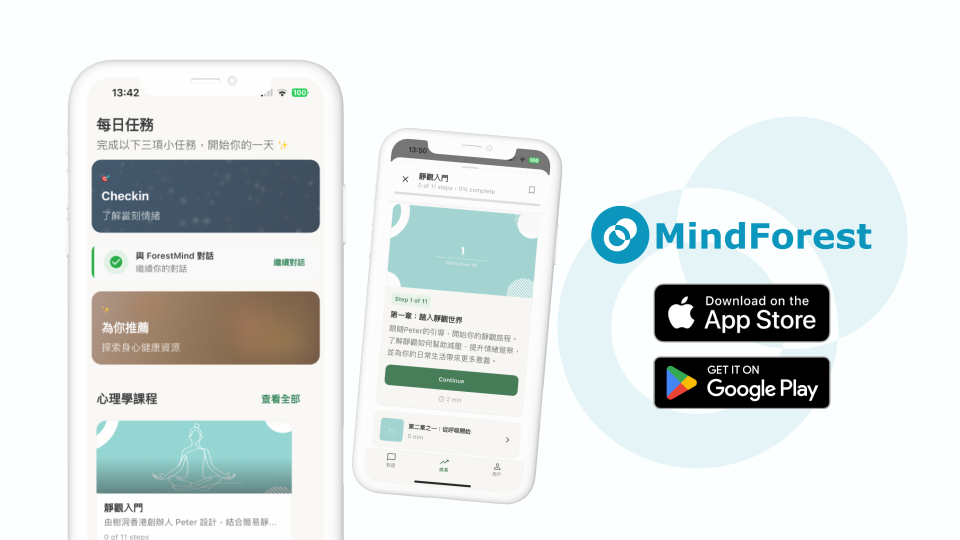
When you feel stressed or uncertain, ForestMind AI responds to your mood and the way you interact, offering gentle suggestions that help you find a rhythm of your own and move towards a lighter, more relaxed way of living slowly.

Record the moments in life that genuinely move you, so that through reflection you gradually come to see that slow living isn't about slowing down — it's about taking in, with your whole heart, every ray of light in your days.
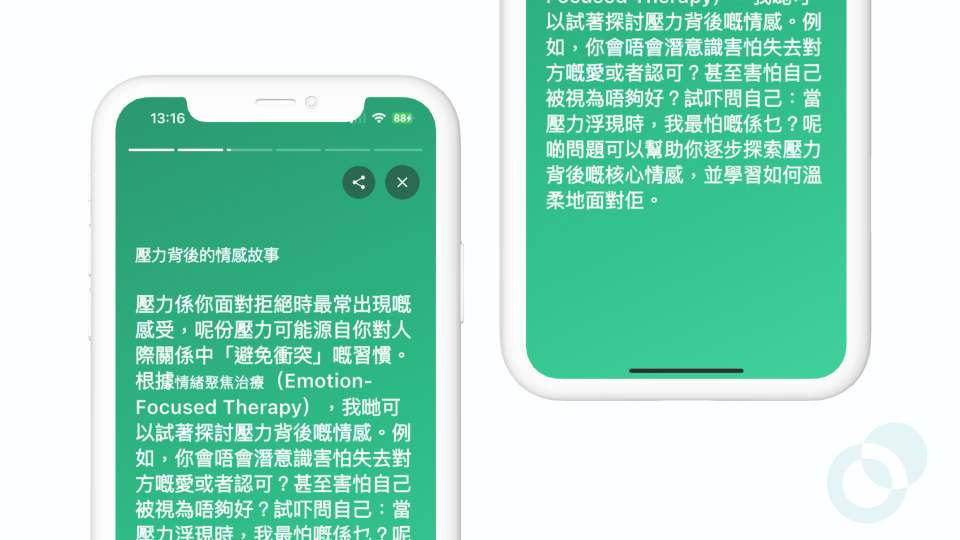
Through psychological assessment, you can understand your own personality more clearly and find the pace that suits you best, so that life is no longer a busy chase but a soothing slow-living journey.

Download MindForest now and practise with us: live slowly, and become a truer, more at-ease version of yourself.
References
Bryant, F. B., & Veroff, J. (2007). Savoring: A New Model of Positive Experience. Psychology Press.
David, S. (2016). Emotional Agility: Get Unstuck, Embrace Change, and Thrive in Work and Life. Avery.
Goleman, D. (1995). Emotional Intelligence. Bantam Books.
Honoré, C. (2004). In Praise of Slow: How a Worldwide Movement is Challenging the Cult of Speed. Orion.
Kabat-Zinn, J. (1994). Wherever You Go, There You Are: Mindfulness Meditation in Everyday Life. Hyperion.
Keng, S.-L., Smoski, M. J., & Robins, C. J. (2011). Effects of mindfulness on psychological health: A review of empirical studies. Clinical Psychology Review, 31(6), 1041–1056.
Porges, S. W. (2011). The Polyvagal Theory: Neurophysiological Foundations of Emotions, Attachment, Communication, and Self-Regulation. Norton.
Raichle, M. E., et al. (2001). A default mode of brain function. Proceedings of the National Academy of Sciences, 98(2), 676–682.
Rosen, L. D., et al. (2013). The distracted student mind: Enhancing its focus and attention. Phi Delta Kappan, 95(4), 22–27.
Schwartz, B. (2004). The Paradox of Choice: Why More Is Less. Harper Perennial.
Wilson, T. D., et al. (2014). Just think: The challenges of the disengaged mind. Science, 345(6192), 75–77.



Comments
No comments yet — share your thoughts.