


Have you ever felt this way: you are clearly good at your job, yet you always seem to clash with your colleagues? Or a small thing upsets a friend, and it leaves you emotionally drained? Don't worry — this may not be an "IQ problem" at all, but something to do with your EQ (Emotional Quotient, EQ). EQ isn't just a psychology buzzword; it's really like a "hidden superpower" in your everyday life, one that can shape your relationships, your performance at work and even your sense of happiness (Mayer et al., 2008). Today, let's have a relaxed chat about the secret of EQ.
What is EQ? The "superpower" that reads people better than IQ does
IQ can help you solve a maths problem or crack a puzzle, but EQ is more about reading the "map of the human heart". The psychologists Salovey and Mayer (1990) defined EQ as: recognising your own emotions and those of others, understanding them, and using emotions skilfully so that life and your interactions with people run more smoothly (Mayer et al., 2008).
Goleman (1995) broke EQ down into four skills:
1) Self-awareness
Knowing why you feel angry, sad or happy, and not being swept away by your emotions.
2) Self-management
Even when you're in a bad mood, being able to control your reactions and not become a slave to your emotions.
3) Social awareness
Being able to sense other people's emotions and understand what they are thinking.
4) Relationship management
Putting EQ to work in communication, collaboration and even defusing conflict, so you become a master of social situations.
In other words, EQ is simply "understanding yourself + understanding others + using emotions skilfully".
How important is EQ? You can see it everywhere in daily life
Imagine two colleagues: one is very capable at work but is forever getting into conflicts with people; the other is only average in ability, yet always manages relationships well. Psychology research tells us that people with high EQ are better able to keep their emotions steady, cope with stress, and are happier too (Schutte et al., 2007).
The 3 big benefits of high EQ:
1) Better social relationships
You understand how to empathise with others, so friends, family and colleagues are all more willing to be around you.
2) Improved performance at work
Your leadership, teamwork and conflict-resolution skills are stronger, and naturally your boss thinks more of you.
3) Stronger mental health
Lower rates of anxiety and low mood, and higher life satisfaction (Mikolajczak et al., 2007).
Put simply, EQ is a hidden "code for living". Master it, and you'll find the whole world starts to feel a little gentler.
5 traits of high-EQ people
You might be thinking: "Do high-EQ people just smile sweetly all day long?" In fact, high-EQ people are not always happy, but their behaviour shows a few telltale traits (Goleman, 1995; Schutte et al., 2007):
1) Clear self-awareness
They know why they feel angry and can address the cause, rather than lashing out at random.
2) Emotionally steady and calm
Even under pressure, they stay rational and don't let their emotions take charge.
3) Rich in empathy
They pick up on other people's subtle feelings, sometimes noticing them before a word is said.
4) Skilled communicators
They can express themselves while still respecting the other person, so conversations flow without awkwardness.
5) Highly adaptable
Faced with change and challenges, they stay unflustered, staying flexible like water.
Don't worry — if you feel you're not quite there yet, all of these EQ skills can be trained.
Want to raise your EQ? 5 practical methods, starting with small everyday exercises
The good news is that EQ can be trained like a muscle (Mikolajczak et al., 2007). Here are a few small exercises to help you raise your EQ bit by bit:
1) Self-awareness training
Keep a journal each day or sit quietly for a few minutes, observing your own emotions, studying yourself like a scientist.
2) Little tricks for managing emotions
Deep breathing, mindfulness or cognitive reframing can help you pause for a second before you erupt.
3) Build your empathy
Listen closely to friends and colleagues, and try to see the world from their point of view.
4) Practise interacting with people
Join team activities or social occasions, turning theory into real-life practice.
5) Keep learning and reflecting
Read psychology books and attend workshops, turning EQ theory into an everyday skill of your own.
Slowly, you'll find that you understand yourself better, understand others better, and that life runs more smoothly too.
In closing: EQ is the "hidden magic" of everyday life
EQ isn't an abstract concept — it lives in your daily life. When you begin to notice your own emotions, learn to manage them, understand others and improve your interactions, you'll be pleasantly surprised to find that life can run more smoothly, and be more enjoyable too.
Just like a chat between friends, EQ is really the magic of "understanding yourself, understanding the world, and making life more fun to live".
Explore the MindForest App: raise your EQ together
Through the MindForest App, you can understand yourself better in daily life, notice a little more, learn to understand and manage your emotions, gently settle yourself amid the busyness and the chaos, and slowly cultivate the habits of a high-EQ person.
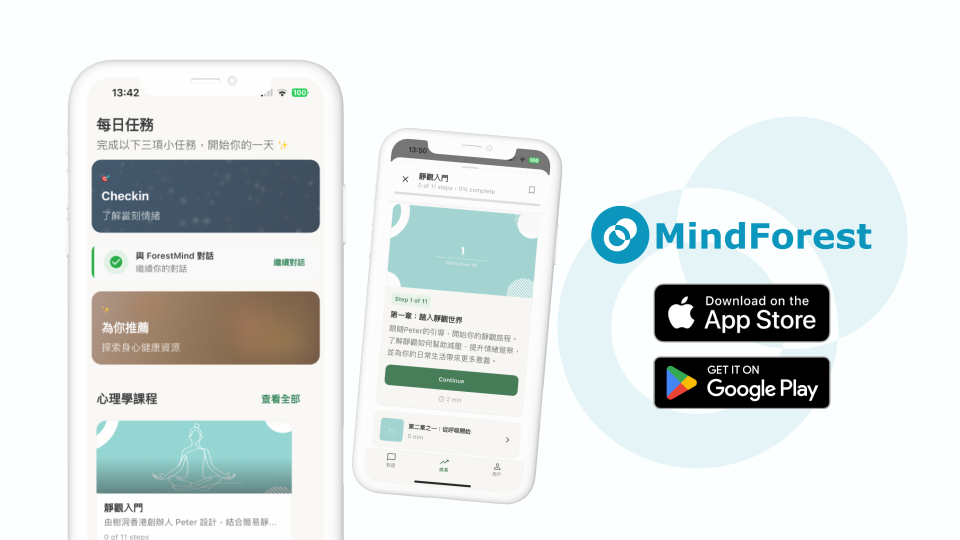
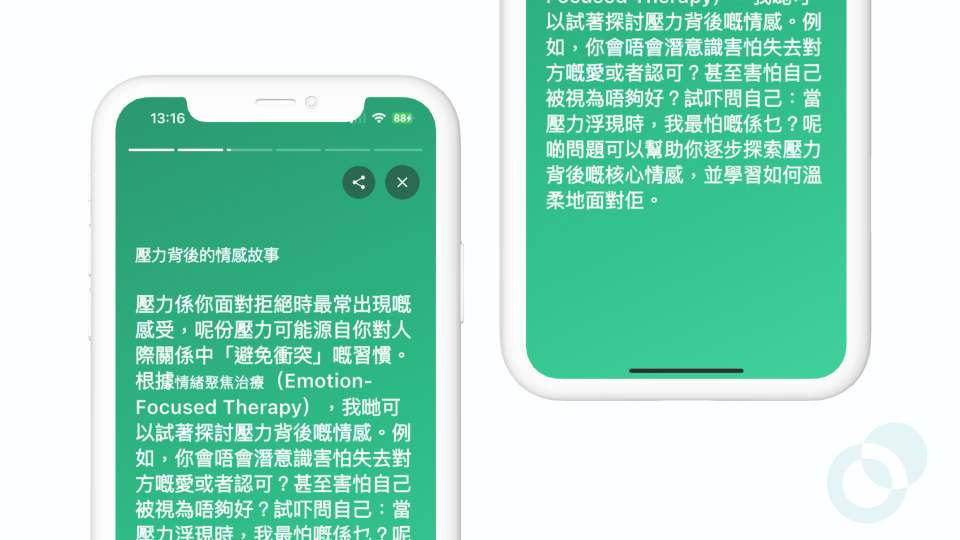
?ForestMind AI: your caring EQ coach
When you feel stressed, anxious or confused, ForestMind AI offers gentle suggestions tailored to your mood and the way you interact, helping you understand your own emotions, learn to self-regulate, and move towards lighter, more at-ease interactions and a calmer rhythm of life.

?Insight Journal: capturing the moments where emotions grow
Record the genuinely moving moments in your life, reflect on your own emotional reactions and decision-making patterns, and let yourself raise your EQ little by little in daily life, learning to relate to yourself and others more wisely.
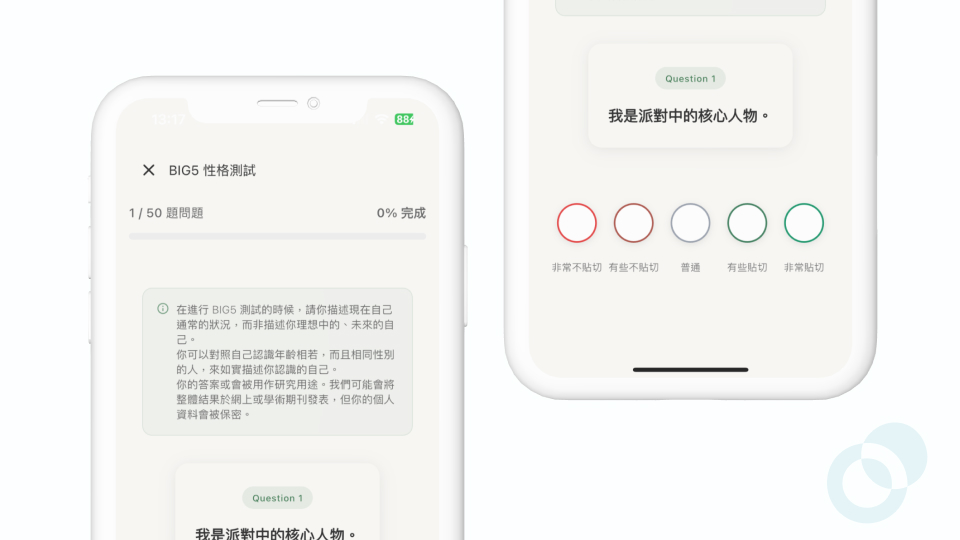
?Psychological assessment: explore your emotional map
Through psychological assessment, you can understand more clearly your emotional habits, stress responses and relationship patterns, and find the self-management strategy that suits you best, so that life is no longer a hurried chase, but a way of living as your high-EQ self — with awareness and ease.
Download MindForest now and practise with us: raise your EQ, understand yourself better in daily life, and grow more able to understand others.
References
Goleman, D. (1995). Emotional intelligence: Why it can matter more than IQ. Bantam Books.
Mayer, J. D., Salovey, P., & Caruso, D. R. (2008). Emotional intelligence: New ability or eclectic traits? American Psychologist, 63(6), 503–517. https://doi.org/10.1037/0003-066X.63.6.503
Mikolajczak, M., Menil, C., & Luminet, O. (2007). Explaining the protective effect of trait emotional intelligence regarding occupational stress: Exploration of emotional labor processes. Journal of Research in Personality, 41(5), 1107–1117. https://doi.org/10.1016/j.jrp.2007.01.003
Salovey, P., & Mayer, J. D. (1990). Emotional intelligence. Imagination, Cognition and Personality, 9(3), 185–211. https://doi.org/10.2190/DUGG-P24E-52WK-6CDG
Schutte, N. S., Malouff, J. M., Hall, L. E., Haggerty, D. J., Cooper, J. T., Golden, C. J., & Dornheim, L. (2007). Development and validation of a measure of emotional intelligence. Personality and Individual Differences, 25(2), 167–177. https://doi.org/10.1016/S0191-8869(98)00001-4



Comments
No comments yet — share your thoughts.