The Endowment Effect: Why We Overvalue What We Own
Ever held on to a person, an object or a habit you knew, rationally, was doing you no good? You may be in the grip of the Endowment Effect — and savvy retailers know exactly how to use it.

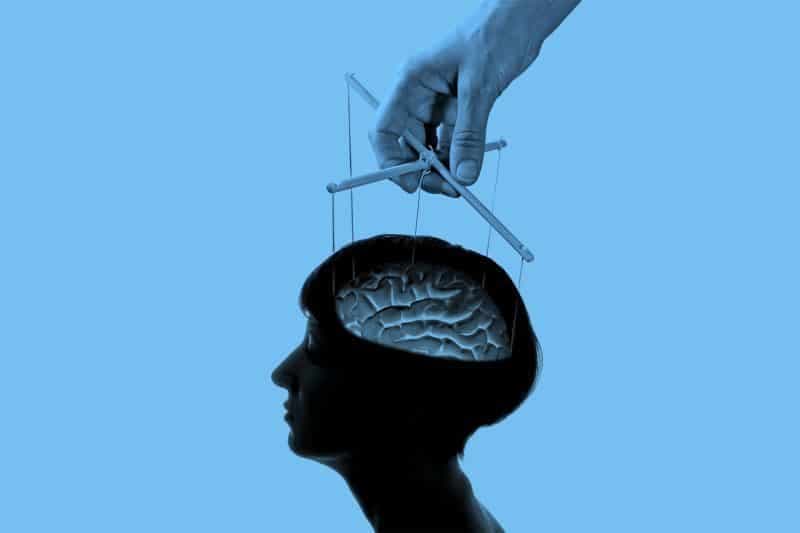
Ever held on to a person, an object or a habit you knew, rationally, was doing you no good? You may be in the grip of the Endowment Effect — and savvy retailers know exactly how to use it.
Friend, have you ever held on to a person, an object or even a habit that, rationally, you knew was doing you no good — yet you simply couldn't bring yourself to let go? If you've ever clung on like that, you may well be feeling the pull of the Endowment Effect. The Endowment Effect tells us that people tend to wildly overvalue the things they already own. It's the very same object, but before it's in our hands we think it's nothing special, and once it's ours we treasure it like a jewel.
Last century, a group of psychologists (1)(2) ran an experiment. Try picturing yourself walking into the lab: after finishing a stack of questionnaires, a staff member thanks you for taking part and hands you a coffee mug as a gift. You weren't expecting a present, so the surprise is a happy one — you turn the mug over in your hands a few times and slip it into your bag. A little later, the staff member comes back and tells you that you could actually have had a box of chocolates as the gift instead, and asks whether you'd like to trade the mug back for the chocolates. What would you do? The vast majority of people choose to keep the mug and turn down the chocolates.
Was it just that the chocolates weren't appealing enough? No, it wasn't that either — the same experiment had a second group of participants who did exactly the same thing, except that this time the experimenter gave them the chocolates first, then asked whether they'd like to swap for a mug. The mug was the same mug; the chocolates were the same chocolates. But just as in the first scenario, most people refused to trade away the thing they already had.
Why does this happen? The psychologists reasoned that simply owning something raises its value to you enormously. That, in essence, is the Endowment Effect. Its applications run surprisingly wide — take romance, for instance. Why do some people see their partner through rose-tinted glasses, or find themselves unable to make a clean break from a relationship? It may well be that the single word "ownership" has bound them so tightly that they can no longer judge the situation objectively.
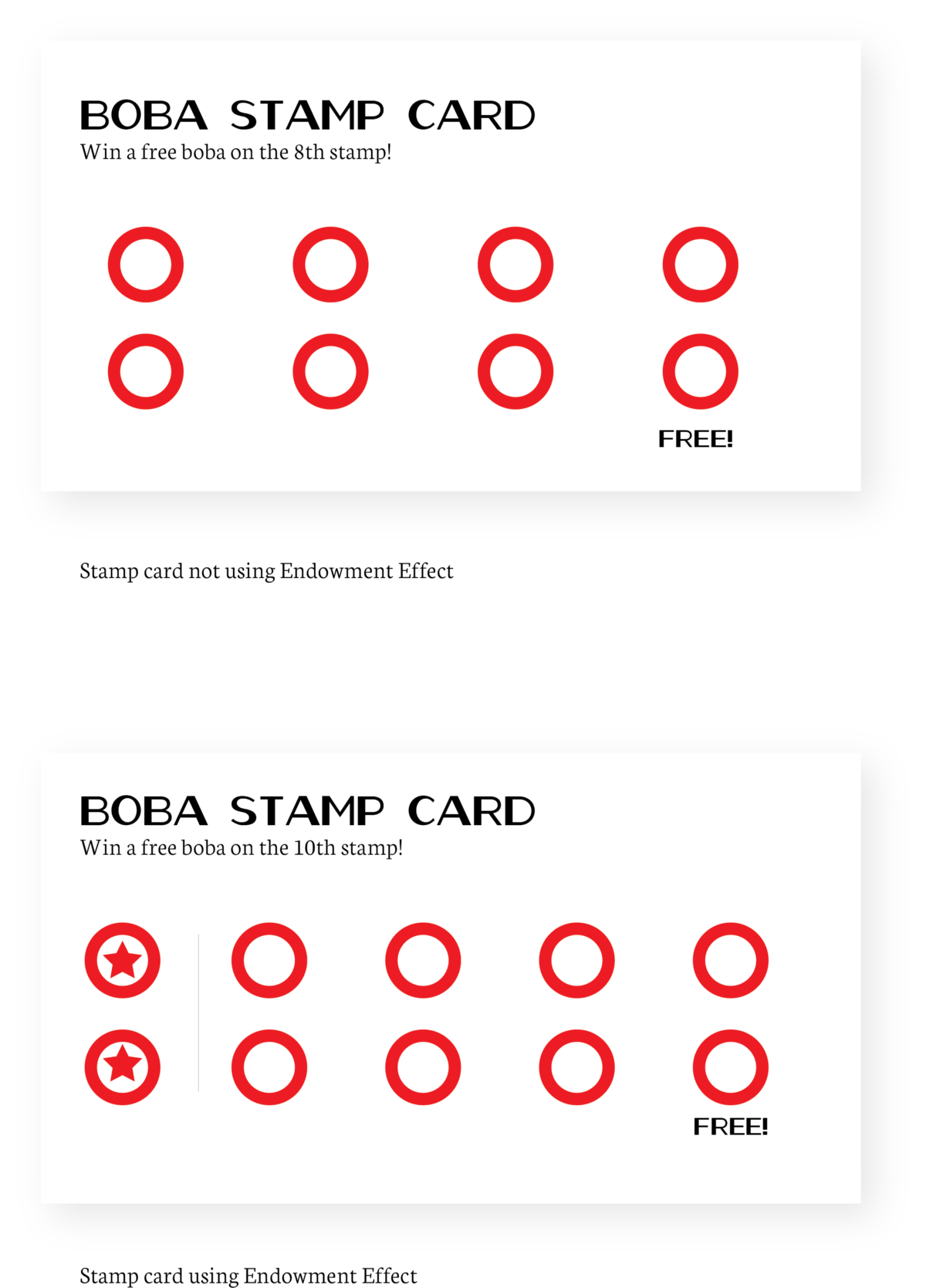
Or take business. You know those stamp cards where, once you've collected a set number of stamps, you can trade them in for a Hamburglar bag? The usual retailer's trick is to give you one stamp upfront. Because of that, you now "own" that one stamp, and thanks to the Endowment Effect you overvalue the stamp card, dutifully spending again and again, never quite using it up. And in fact there's experimental evidence: a twelve-stamp card that comes with two stamps already filled in (so you need ten more to redeem) outperforms a ten-stamp card that's empty (which also needs ten more to redeem) — customers are more willing to complete the first one (3).
What's more, plenty of online platforms do the same thing. Take LinkedIn: you may or may not remember that when you signed up, it told you "Your profile is 20% complete," even when you hadn't filled in a thing. That 20% is exactly the bit it has "endowed" to you. The reason it does this is to spark in you a reluctance to abandon a profile that's 20% complete (when it's really 0% complete), so you obligingly fill in some details and start using the service.
To go a little deeper: why do people experience the Endowment Effect at all? It may rest on two further tendencies. The first is 1) Loss Aversion, which refers to people's general unwillingness to accept a loss — even when that loss could be traded for a return slightly larger than the loss itself (studies broadly show the return has to be roughly double before people will accept the loss). The second is 2) Status Quo Bias, which refers to people's strong preference for keeping things as they are. The reason the Endowment Effect arises may be that giving up something you own involves both 1) a loss and 2) a change to the status quo.
Here's the thing: these — the Endowment Effect, Loss Aversion, Status Quo Bias and the like — are what we collectively call Cognitive Biases (Cognitive Biases), and they really are the root of all evil! They're like so many handles, and once the retailers grab hold of them and give them a few twists, they've picked our pockets. That said, it makes me wonder — if a person had no Endowment Effect whatsoever, what would that be like? Take me, for example: I've always used a Mac. In recent years Apple really hasn't been pulling its weight; spending tens of thousands on a two-core machine feels distinctly underwhelming. But if you asked me to switch to Windows, I'd find the whole way of doing things unfamiliar, and the cost of readapting from scratch would feel sky-high.
It's all very well to say this about objects, but one of the cornerstones humankind has relied on for its success is people's high degree of Ultrasociality. If we felt no Endowment Effect toward people — if we didn't especially cherish the relationships we already have, but instead changed our minds the moment we saw something better — where would human intimacy, trust and cooperation come from? If your partner didn't especially cherish you simply because they were already in this relationship with you, but instead jumped ship the instant someone better than you came along, how would you feel about that? All of which is to say: these cognitive biases are a double-edged sword. I believe the best way to face a cognitive bias is first to learn to identify it (Identification); the next time you recognise that something like the Endowment Effect is pulling hard at you, why not pause, find a calm space to think it through rather than letting your first reaction carry you off. Because cognitive biases are an indispensable part of human nature, case-by-case judgement becomes all the more important.
Image source: TIME
References
(1)
Kahneman, D., Knetsch, J. L., & Thaler, R. H. (1991). Anomalies: The Endowment Effect, Loss
Aversion, and Status Quo Bias. Journal of Economic Perspectives, 5(1), 193- 206.
doi:10.1257/jep.5.1.193
(2)
Tversky, A., & Kahneman, D. (1991). Loss Aversion in Riskless Choice: A Reference- Dependent
Model. The Quarterly Journal of Economics, 106(4), 1039-1061. doi:10.2307/2937956
(3)
https://faculty.wharton.upenn.edu/…/upl…/2012/04/PSC.pdf



Comments
No comments yet — share your thoughts.