載入中…

正體中文English
Neil Postman warned that a culture wired for entertainment can amuse itself into silence. Forty years on, as our feeds turn politics, crime and tragedy into bite-sized amusement, what happens to our …
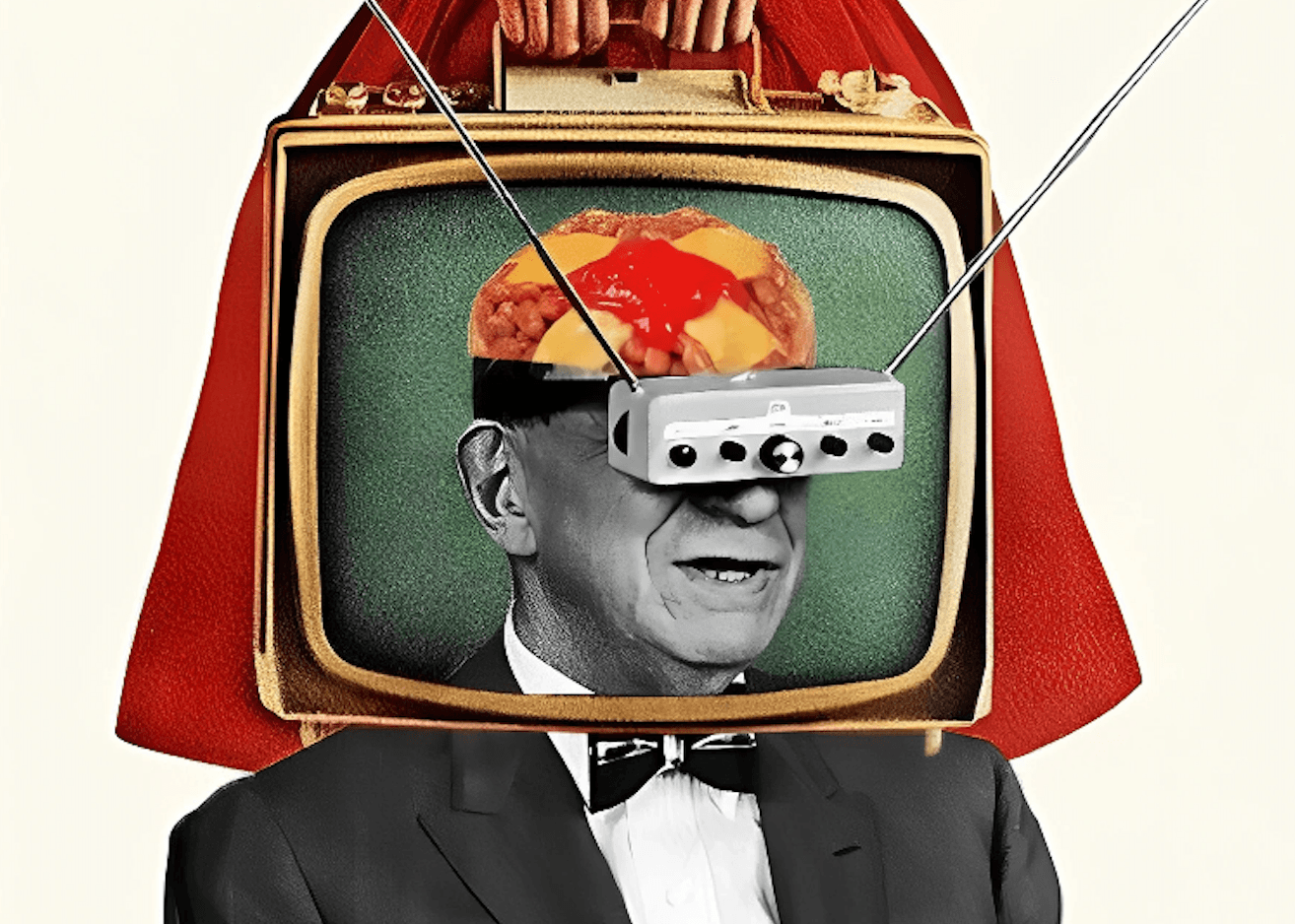
We remember the lawmaker who mistakenly addressed the chamber as "host," yet we have no idea what the motion under debate was actually about; we turned Sister Hung of Nanjing's line "they're all here" into a playful catchphrase, while losing sight of the fact that the case itself was a grave criminal offence with more than a thousand victims; we recall only that Korean protesters played K-pop as they marched through the streets, while never grasping their demands or the political situation behind them.
In his classic work Amusing Ourselves to Death, Neil Postman put forward a profound observation: the medium is the metaphor. The form of a medium is not merely a tool for conveying messages; it shapes how we think, understand and perceive the world. On social platforms, whether it is sport, news or politics, everything is wrapped lightly in humour and satire, and we, too, become the audience at an entertainment show, lending our laughter as the soundtrack to the spectacle.
We are gradually losing the patience to understand complex problems, and leaning instead towards messages that have been simplified and turned into entertainment. Entertainment offers people a refuge from the world, but it also slowly erodes our courage to face reality, affecting our sense of engagement with and responsibility towards society (Postman, 1985).
The essence of social platforms is entertainment. The sheer volume of information in modern media has swollen to an extreme, with social media in particular acting as the biggest driver, which means people are bombarded each day by a flood of news, events and social information. Yet human working memory has limited capacity, so when confronted with an overload of information people tend to choose content that is simple and easy to process (Miller, 1956). As a result, whether it is an Instagram post or Threads, which has emerged in recent years, they all package information into an easily digestible form, drawing people in with short text or attention-grabbing headlines; they will even package content to be more dramatic, deliberately highlighting violence, scandal or the absurd. Although this makes information easier to spread, it blurs the focus of the events themselves.
Politics, education, current affairs — not one escapes being wrapped in entertainment. Most of the information we take in is simplified and emotionalised; the audience pays more attention to sensory stimulation and emotional resonance, and the capacity for deep thinking about complex problems is weakened, replaced by instant, surface-level sensory reactions (Postman, 1985). An emotionally charged post may draw a flood of likes and shares, yet the truth and depth behind it are often overlooked.
Facing a daily torrent of information that is vast, fragmented and processed into entertainment, our emotions gradually become more fragile, and many people develop anxiety, exhaustion or a sense of powerlessness. We are easily drawn in by emotionalised, inflammatory content, and may even develop the illusion of "pseudo-participation," believing we are keeping up with current affairs and taking part in the discussion, when in fact we are only passively consuming packaged information. On social media, a simple like, share or comment brings a feeling of involvement, but these actions often stay on the surface and do not genuinely foster a deeper understanding of or discussion about social issues. Over the long run, this kind of pseudo-participation not only leaves people feeling distant from reality, but also weakens the possibility of public discussion and collective action.
One of the clearest hallmarks of "entertainmentisation" is its simplification bias. Social events are often complex, but the media packages them into a simple frame of "opposition" or "conflict," making them easier for the audience to digest (Entman, 1993). Social platforms are flooded with this kind of content: discussing political events in a comedic way, or talking about war in a flippant tone. Although this approach can draw more attention, it may also lead people to overlook the seriousness of a problem, exploiting binary opposition to narrow the space for thought.
Beyond this, the way the media presents things can also lead people gradually towards "dehumanisation," seeing the people involved in the news as characters in a drama rather than as real human beings. We often turn other people's pain or plight into material for entertainment, widening the emotional distance, allowing ourselves to become bystanders to the "drama" of an event and shedding our sense of social responsibility.
On top of this, continual exposure to negative news may lead to emotional numbing, with the audience's responses to violence or crime becoming muted or even cold (Funk et al., 2004), and empathy draining away with it. All of these tendencies affect not only our understanding of others, but may also intensify injustice in society.
The entertainmentisation of current affairs and crime can be seen as a psychological mechanism for escaping reality. When confronted with genuine social problems, focusing on their dramatic side lets people momentarily forget how serious the problem is, avoiding the burden of responsibility or the stress of action. Facing the "lightweight" content that circulates on social platforms every day, where complex issues are reduced to slogans, jokes or emotional venting, are we also gradually losing the capacity for deep thinking and for empathising with others? And can we even recognise that this seemingly harmless entertainment is quietly changing us?
What troubles people is not that they have replaced thinking with laughter, but that they do not know what they are laughing at or why they have stopped thinking.
For in the end, he was trying to tell us what afflicted the people in ‘Brave New World’ was not that they were laughing instead of thinking, but that they did not know what they were laughing about and why they had stopped thinking.
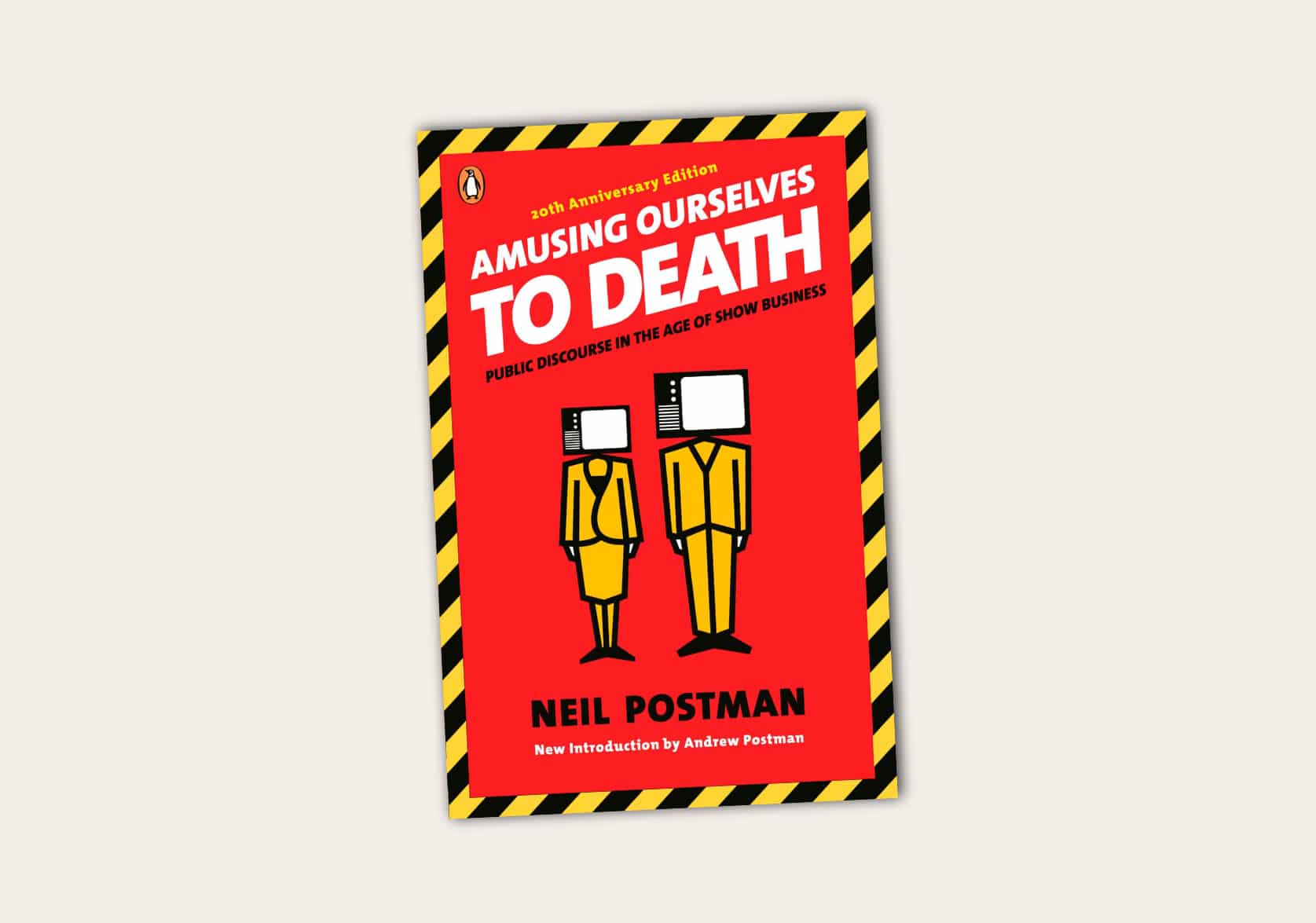
Amusing Ourselves to Death:
Entertaining content may also let people feel a brief sense of ease and satisfaction, making heavy, complex social news easier to "swallow," but over the long run it weakens the public's attention to real problems and their willingness to act. As Amusing Ourselves to Death warns from its opening pages, we will be destroyed by what we love. The book stresses that only by cultivating critical thinking can we stay clear-headed amid the torrent of information and entertainment, and avoid being manipulated. Amusing Ourselves to Death was written in 1985, when new media such as television were gradually replacing traditional print media. Looking back today, the author's misgivings seem almost to have become a prophecy — after all, you and I are reading this very article through new media.
Note: cover image courtesy of the internet
References
Entman, R. M. (1993). Framing: Toward Clarification of a Fractured Paradigm. Journal of Communication, 43(4), 51–58.
Funk, J. B., Baldacci, H. B., Pasold, T., & Baumgardner, J. (2004). Violence exposure in real-life, video games, television, movies, and the internet: is there desensitization? Journal of Adolescence, 27(1), 23-39.
Miller, G. A. (1956). The magical number seven, plus or minus two: Some limits on our capacity for processing information. Psychological Review, 63(2), 81–97. https://doi.org/10.1037/h0043158
Postman, N. (1985). Amusing Ourselves to Death: Public Discourse in the Age of Show Business.
Keep reading

Society & Current Affairs
Society & Current Affairs
Society & Current Affairs



Comments
No comments yet — share your thoughts.