


The Psychological Nature of Helplessness
In turbulent times, so many of us feel powerless. But what exactly is that feeling? To make sense of any emotion, we can start with the VAD model of emotion (Valence-Arousal-Dominance Model) proposed by psychologists (Osgood et al., 1957; Russell, 1980, 2003). The model maps emotions along three dimensions:
- Valence (positive vs negative): this one needs little explaining — it simply describes whether the emotion is positive or negative;
- Arousal (activated vs calm): whether the emotion makes you want to act, with that quickened-heartbeat, primed-and-ready sensation;
- Dominance (dominant vs submissive): whether the emotion leaves you feeling full of power, or feeling small (note: feeling small isn't necessarily a negative emotion — awe, for instance, is a positive emotion that carries a low sense of dominance).
With the VAD model, we can untangle the many complex emotions human beings feel and tell their distinctive qualities apart. Take an example: when we witness the injustice of tyranny, most people's first reaction is anger (Angry). Read through the VAD model, anger is an emotion of low Valence (negative), high Arousal (it drives you to act) and high Dominance (it makes you want to correct the other party's behaviour); and anger has one distinctive quality — it is always triggered by an event you regard as unjust or unfair. However tragic a natural disaster, you would never feel anger towards it. Put all of this together, and anger sets our blood boiling and pushes us to resist.
Yet usually, the moment you realise the other party is powerful and you yourself are under threat, a different emotion takes shape — fear (low Valence [negative], high Arousal [it drives you to act], low Dominance [you feel yourself under threat]). There are two main differences between fear and anger. The first is that fear has a lower Dominance than anger; the second is that the two emotions have different focal points — anger is about whether the other party's behaviour is just, whereas fear is about your own safety. That is why you would feel fear towards a natural disaster, but not anger.
Both fear and anger are high-Arousal emotions, and both drive you to take some kind of action. But because of the two differences above, the actions they prompt differ — fear makes you try to protect yourself. In reality, of course, fear and anger coexist and pull against each other, and this is surely a portrait of the emotions many Hongkongers brought to the protests: on one hand you feel anger and want to do something; on the other, you feel fear at the price you might have to pay, and which feeling has the upper hand often comes down to your judgement of the two sides' relative strength. It is not hard to observe that in the early days of the 2019 protests, the emotion leading society was anger; as time wore on and we entered the national-security-law era, the leading emotion gradually shifted to fear — and this also explains why social action moved from protest (a response to anger) to talk of emigration (a response to fear).
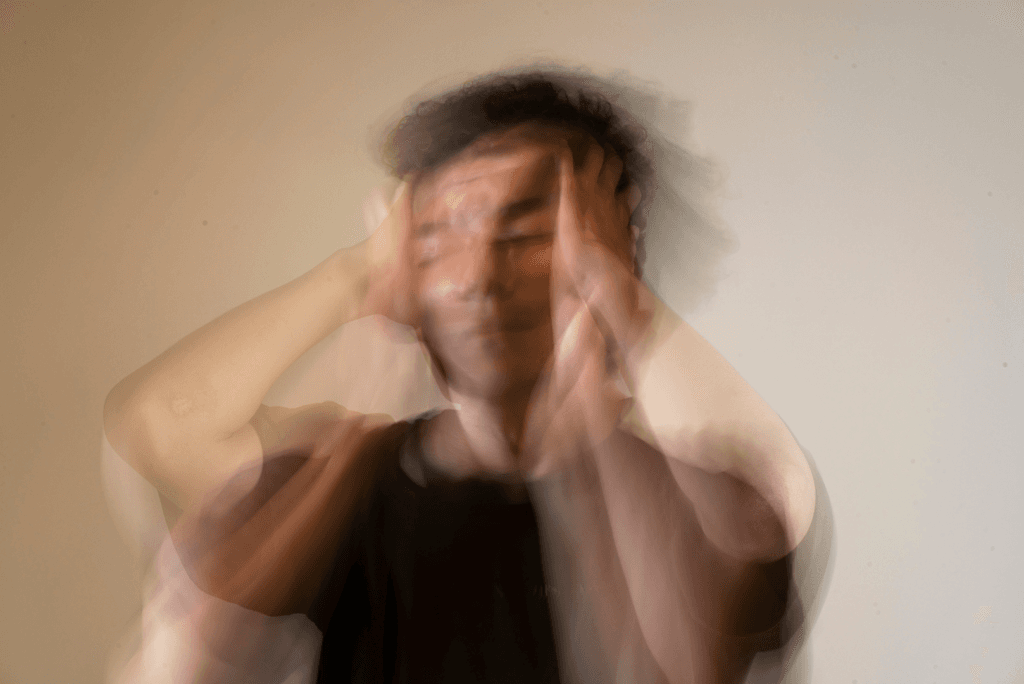
And when you find that neither resistance nor escape gets you anywhere, you fall into a worse emotional state still — helplessness (Helplessness). Helplessness is a "three-low" emotion: low Valence, low Arousal, low Dominance. In turbulent times, the feeling of helplessness is like being trapped in a dark room, bound tight to a target — you cannot see your opponent clearly, yet he can fire an arrow at any moment, and you cannot flee, cannot fight back, and can only bear it in silence. Helplessness is one of the emotions most closely associated with depression (Depression), and one reason is that the feeling of powerlessness often colours our judgement of our own ability (Self-Efficacy). Helplessness makes us feel our own incapability, and that sense of incapability makes us feel even more powerless — and so a vicious cycle forms.
How Do People Fall Into Despair? On Learnt Helplessness
If the harshness of our circumstances teaches us, again and again, to feel powerless and hopeless, it can form what is known as learnt helplessness (Learnt Helplessness). On the subject of learnt helplessness, one cannot omit the research of Martin Seligman (1972). Seligman once ran an experiment along these lines: he divided a large group of dogs into three batches. The first batch would be given an electric shock every now and then; the dogs could not predict when the shock would come, and had no way to escape it — much like our description above of a turbulent world that cannot be predicted or controlled. The second batch was also shocked from time to time, but if they pressed a button at the right moment they could escape that particular shock; the timing was not easy to master, yet they could always avoid the odd shock here and there. The last batch was the more fortunate group — in the first stage they were not shocked at all.
Afterwards, Seligman placed these dogs into another box. This box was divided into two compartments: the floor of one compartment was electrified, the other was not, and between the two stood a low partition that a dog ought to be able to jump over with ease. When the second batch (which had been able to escape shocks by pressing a button) and the third batch (which had never been shocked) were placed in the electrified part of the box, they jumped to the other compartment without a moment's hesitation; only the first batch of dogs (which had been unable to escape shocks) sat there listlessly, silently enduring the misfortune of being shocked. This tendency to give up resisting — because of having endured an inescapable misfortune before — is learnt helplessness. The tragedy of it is that the first batch of dogs could have avoided the shocks in the second stage of the experiment, but having learnt despair and learnt to abandon resistance, they suffered another round of electric punishment for nothing.
Coping with Helplessness in Turbulent Times
As human beings, we all pass through moments of despair to some degree. A miserable childhood, for instance, is much like a stage of inescapable shocks: because you are no match for your parents in strength, if they bear ill intent they can hold you in the palm of their hand. After those who suffered an unhappy childhood grow up, even though they have acquired the ability to resist and no longer need to be controlled by their parents — much like the second stage of the experiment — learnt helplessness may leave them forever wary and afraid, unable to break free of the family's control.
As for society, what stage are Hongkongers in now? Even if we would rather not face it, we may well be that batch of dogs unable to escape the shocks, with tyranny teaching us helplessness step by step. At this stage, perhaps living well and keeping ourselves out of harm's way is the wisest choice. And yet the world is vast and changes so fast that none of it is ours to foresee — just as no one foresaw the collapse of the Soviet Union. Some say time is on our side, meaning we still have decades to wait quietly for our moment; perhaps the high walls of tyranny will one day show a crack, and we will be able to leap through to the other side, to freedom.
People are not dogs — what we have is the capacity to overcome ourselves and overcome our past. And the saddest thing of all is for the moment to arrive clearly within reach, while we, in both mindset and ability, fail to grasp it; that is when learnt helplessness drives us into true despair. So if we are to fight helplessness, what mindset should we hold? Psychology offers a theory of locus of control (Locus of Control), meaning that a person can hold one of two worldviews. The first is an external locus of control (External Locus of Control), which means a person tends to believe their life circumstances are largely shaped by their environment rather than by themselves; an internal locus of control (Internal Locus of Control) is precisely the opposite.
Even when facing the very same situation, people can hold different loci of control, and the difference between them lies in one's own focal point. Whether in relationships, careers or even social problems, everyone has, to some degree, knots of powerlessness. You can of course choose to pour all your energy into sighing and complaining about the helplessness of reality — and there is even some truth to those sighs, because circumstances really are bleak. But our lives and our energy are both finite, and to pour all that energy into lamentation is to flood your entire life with helplessness.
But however bleak the situation, more often than not we can find a way to do something for what we believe in. No one, for example, can halt global warming by their own efforts alone, but if you care about the environment, eating less meat and using fewer plastic bags is something you can control right away. Nobody needs to be told this is no grand heroic gesture. In turbulent times, perhaps we must push back against our instinctive love of clear-cut outcomes, and let go of a consequentialist (Consequentialism) mode of thinking. Because, for one thing, in turbulent times no one can accurately reckon the outcome. And for another, even if our efforts come to nothing, the act itself can stand against helplessness, and lets our deeds be no burden upon another's life.
Social problems are so complex that they cannot be turned around by one person's strength alone, but we can always contribute towards what we believe in and control our own actions — from supporting fellow travellers to building ourselves up. In turbulent times, placing your energy and your spirit within the range of what you yourself can control is the best way to fight helplessness.
In turbulent times, drinking plenty of water and reading plenty of books is not avoidance — it is the only choice. Our bodies and our will may one day be put to use again by what we hope for.
Osgood, C. E., Suci, G. J., & Tannenbaum, P. H. (1957). The measurement of meaning (No. 47). University of Illinois press.
Russell, J. A. (1980). A circumplex model of affect. Journal of personality and social psychology, 39(6), 1161.
Russell, J. A. (2003). Core affect and the psychological construction of emotion. Psychological review, 110(1), 145.
Seligman, M. E. (1972). Learned helplessness. Annual review of medicine, 23(1), 407-412.
This piece is excerpted from Fear and Hope: Psychology Written in Turbulent Times — available at major bookshops across Hong Kong.

| Author | TreeholeHK | |
| Publisher | Liang Guang Culture Limited |
In the twenty-first century, the great wheel of the age turns at breakneck speed; the world is vast and changes so fast that none of it is ours to foresee.
As human beings, we all pass through moments of despair to some degree — whether as individuals, as a society, or as a world. Some have lived through a miserable childhood and, grown up, still cannot escape the family's control; facing the complexity of social problems, they feel it cannot be turned around by one person's strength alone. Finding your place in turbulent times is not easy; and in today's glittering, materialistic modern society, understanding yourself is harder still.
Psychology is the science that studies human thought, behaviour and emotion, and many phenomena in society — including helplessness, avoidance, discrimination, religion, identity and the fear of death — are all bound up with concepts from psychology; so learning psychology can be of real help in understanding these strange, fragmented modern phenomena.
These past few years, what was once familiar is familiar no longer. Perhaps you feel lost and at a loss; but seen from another angle, this may also be a pivotal age in history — as Dickens put it: "It was the best of times, it was the worst of times."


Comments
No comments yet — share your thoughts.