Self-Sabotage: Why We Get in Our Own Way
You're on a diet, yet you raid the fridge every night; the promotion is right there, and you hesitate, then turn it down. If you keep giving up the moment you set a goal, you may already be caught in…

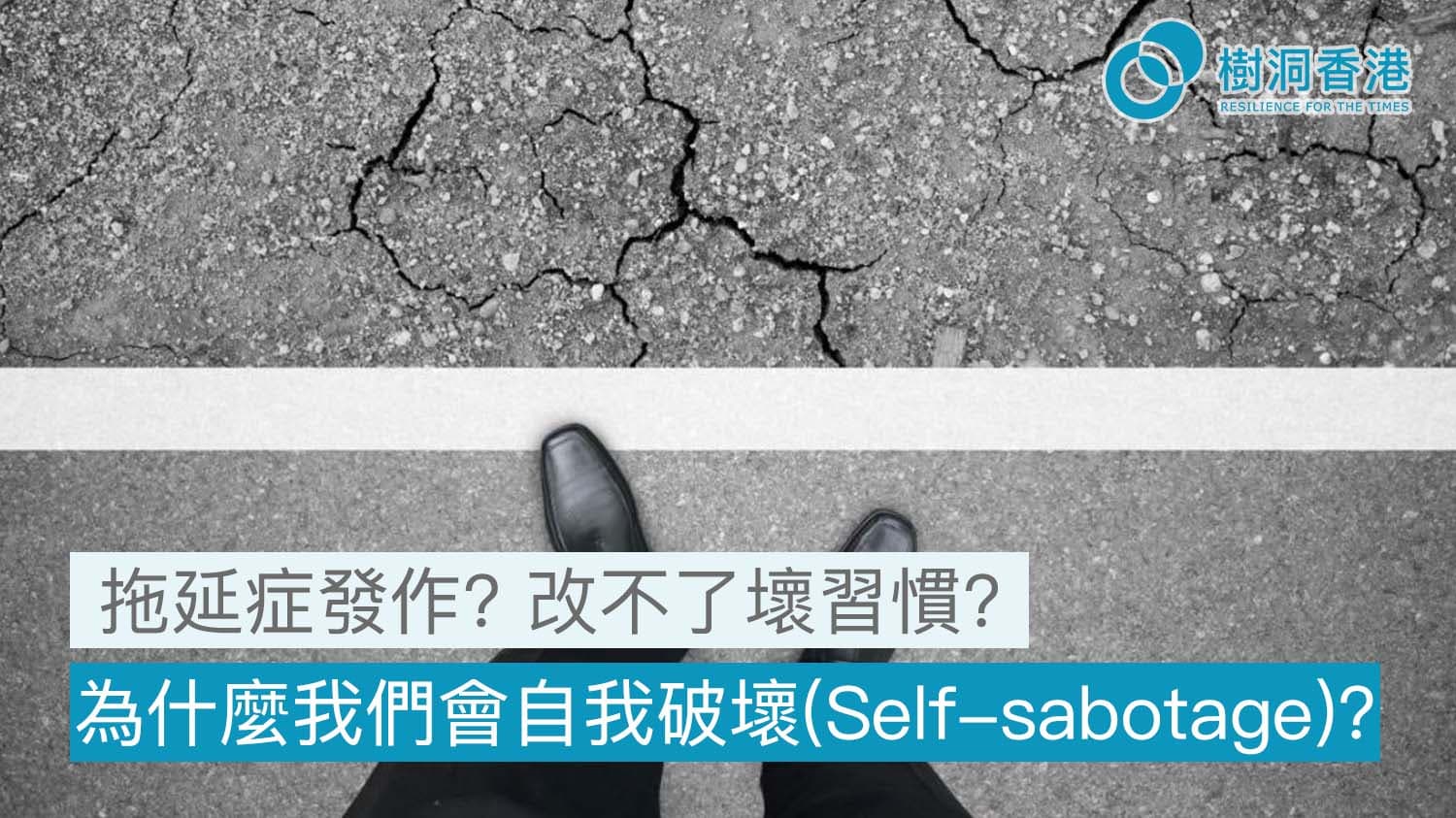

You're on a diet, yet you raid the fridge every night; the promotion is right there, and you hesitate, then turn it down. If you keep giving up the moment you set a goal, you may already be caught in…
On a diet, but you can't resist a midnight snack every single night? The promotion was right in front of you, yet you hesitated and turned it down? If you give up soon after every goal you set, or if you often talk yourself down, there's a good chance you're already caught in the whirlpool of self-sabotage.
Self-sabotage is behaviour that creates problems in everyday life and interferes with long-term goals (Psychology Today, 2022). It comes in two forms: the conscious kind and the unconscious kind.
Conscious self-sabotage is when you know certain behaviours will stop you from reaching your goal, yet you choose to do them anyway. For example, you know you're on a diet but you still decide to eat the cake. Unconscious self-sabotage is when values or goals you never acknowledged in the first place end up being undermined; for example, you really want to get to know someone, but the moment a small friction arises between you, you immediately walk away (Wignall, 2021).

Self-sabotage stems, to a large extent, from fear. Say you're afraid of failing an exam, and every time you study you worry that poor marks will disappoint your parents. At that point, we trigger an unconscious self-defence mechanism to protect the ego — that is, we avoid studying so as not to bring on anxiety and fear. Or perhaps you've failed too many exams already and have decided you're just not cut out for study; yet you're about to sit the next exam. Because your thoughts and your behaviour contradict each other, cognitive dissonance sets in and produces negative emotions such as psychological stress and anxiety. At this point, the self-defence mechanism wants to shield us from the pain of inner conflict, which motivates us to change either our behaviour or our beliefs so that the two line up again (Festinger, 1957). When it comes to choosing whether to change a belief or a behaviour, we tend to steer clear of facing risk and uncertainty (White, 2009), hoping to reach that cognitive alignment with the least possible effort and without the stress and anxiety.
So you might give up studying in order to bring your behaviour into line with your beliefs, rather than stepping out of your comfort zone to change the beliefs you already hold. That leads to the self-sabotaging behaviour of not studying — even though you're worried your parents will be disappointed by poor results.
On top of that, we look for reasons to explain our own words and actions. These attributions affect our emotions, and even more so the expectations and motivations behind our future actions (Weiner, 1985). Suppose you study hard but always fail the exam. Some external, uncontrollable factors are shaping your results — perhaps the marking criteria are vague, making it hard for candidates to score highly on ability alone. Faced with uncontrollable external factors, when we feel hopeless, we tend to attribute negative events to internal, stable factors (Abramson et al., 1989).
You might give up studying so you can tell yourself that you failed the exam because you didn't prepare properly this time — meaning you'd pass next time as long as you study. Once you have this internal, controllable and stable factor (the decision of whether or not to study hard), you start to feel you have the power to control when you "fail" and when you "succeed". That perhaps feels more hopeful and predictable than never being able to control success at all. And so the next time round you attribute your achievements using a similar pattern, leading to self-sabotaging behaviours like procrastination and giving up on studying.
In fact, not all procrastination and self-deprecating behaviour counts as self-sabotage, because the occasional bout of laziness, self-doubt or fear is perfectly common. But if our behaviour runs against our long-term goals over an extended period, then there's a good chance it is self-sabotage. For example, one of the most common forms of self-sabotage is perfectionism. Perfectionists set themselves impossibly high standards, and end up feeling deeply frustrated when they fall short (Field, 2022).
Self-sabotage can be traced to certain convictions that belong to a fixed mindset; for instance, believing that effort is just a waste of energy, fearing other people's criticism, or being unwilling to accept setbacks. Cultivating a growth mindset can therefore help us step out of our comfort zone; when we hit a setback we try to learn from it, rather than looking for ways to avoid our fears.
Casting off the beliefs of a fixed mindset can't be done overnight, so we can try to change maladaptive behavioural habits little by little.
For example, if we want to get rid of the self-sabotaging behaviour of putting off studying, and we're preparing for an exam, we can try revising ten pages a day instead of demanding that we cover the entire syllabus, and we can reward ourselves whenever our results improve. Starting from small, realistic goals, we can gradually raise the bar once we've succeeded; this process lets us slowly explore the world beyond our comfort zone, learning to accept that growth always comes with setbacks and unease, while small wins along the way build our self-confidence. After this stretch of perseverance and effort, we can go a step further in establishing our own sense of worth, hooking healthy behaviours in to replace the self-sabotaging ones.
Self-sabotage quietly blurs a person's goals, pulling the ideal self further and further out of reach. Stepping out of the comfort zone is never easy, but we also have to take responsibility for ourselves; is it really worth burying our own future for the sake of self-sabotage? The journey to leaving self-sabotage behind may be a long one, but here's hoping that when we one day look back on the past, we'll all be able to thank our earlier selves for summoning the courage, setting out on the road to self-realisation, and making us who we are today.
Abramson, L.Y., Metalsky, G.I., & Alloy, L.B. (1989). Hopelessness depression: A theory-based subtype of depression. Psychological Review, 96, 358-372. doi: http://dx.doi.org/10.1037/0033-295X. 96.2.358
Festinger, L. (1957). A theory of cognitive dissonance (Vol. 2). Stanford university press.
Field, B. (2022, January 28). Why We Self-Sabotage and How To Stop the Cycle. Verywell Mind. Retrieved July 4, 2022, from https://www.verywellmind.com/why-people-self-sabotage-and-how-to-stop-it-5207635
Jungmann, S. M., Vollmer, N., Selby, E. A., & Witthöft, M. (2016). Understanding dysregulated behaviors and compulsions: An extension of the emotional cascade model and the mediating role of intrusive thoughts. Frontiers in psychology, 7, 994.
Self-Sabotage. (2022). Psychology Today. Retrieved July 4, 2022, from https://www.psychologytoday.com/us/basics/self-sabotage
Weiner, B. (1985). An attributional theory of achievement motivation and emotion. Psychological review, 92(4), 548.
White, A. (2009). From comfort zone to performance management.
Wignall, N. (2021, November 8). Self-Sabotage: Why You Do It and How to Stop for Good. Nick Wignall. Retrieved July 4, 2022, from https://nickwignall.com/self-sabotage/.



Comments
No comments yet — share your thoughts.