


Does this sound familiar? You've finally got time off, yet you feel anything but happy. There's plenty of time to spare, but you've no idea what to do with it. You've scrolled through your phone a dozen times and still feel empty, can't summon the energy for anything, and end up sighing at the ceiling: "I'm so bored."
But have you ever considered that boredom isn't really a feeling at all — it's a signal? It may be reminding you that something small has gone awry in your life: what you're missing isn't entertainment, but meaning.
This article takes a psychological lens to help you see "boredom" in a new light — and explores how to build a more meaningful life and find your direction again.
Why do we feel bored? A shortage of meaning
Boredom isn't simply "having nothing to do". It's more like a sense of inner emptiness, of having no outlet.
The psychologist Eastwood and colleagues (2012) argue that boredom is a mental state of "wanting to engage with something, but being unable to". In other words, deep down you long to do something meaningful, yet right now you can't find a goal or activity that genuinely draws you in.
That's also why you can still feel bored even when you clearly have free time, have choices, and have Netflix and social media to keep you company. Because what makes a person feel truly fulfilled isn't simply "receiving stimulation", but being able to "actively engage" — and to feel meaning and connection through doing so.
Boredom isn't laziness — it's a sign of low inner drive
You may also have thought something like this: "I've clearly got a pile of things to do, but I just have no motivation at all — am I just being lazy?" In truth, boredom doesn't mean you're lazy. It's more like an inner signal — telling you that your life right now lacks direction and meaning.
Research suggests that boredom is often linked to "a lack of control and a lack of purpose" (Van Tilburg & Igou, 2012). When life becomes the same thing day after day, devoid of novelty, or when you feel lost about the future, the brain easily slips into a kind of "directionless" state.
At times like these, we often reach for brief stimulation to numb ourselves — frantically scrolling on our phones, binge-eating, bingeing on box sets, and so on. But these tactics tend only to distract us for a moment, without truly filling the void inside; if anything, they make the boredom feel deeper still.
Why do I feel bored, yet still can't be bothered to change anything?
You might ask: "If I'm bored, then why do I still do nothing at all?" It sounds like a contradiction, but it's actually very common.
This is because when you're bored, your brain is in a low-stimulation, low-energy state, and that state makes it hard to muster the drive to act (Malkovsky et al., 2012). Even when you know that doing something would make you feel better, your body and emotions feel as though they're tied down, locked into a kind of "low-energy, negative loop".
On top of that, modern society's information overload and excess of choice also make it easier for us to fall into a state of "choice paralysis" or "meaning blankness". You can do anything at all, yet you've no idea what's actually worth doing.
How can you make good use of the time when you feel bored? An opportunity for self-reflection
As uncomfortable as boredom is, it actually holds hidden value too.
Research has found that boredom can help spark creativity and self-reflection (Gasper & Middlewood, 2014). When the brain isn't flooded with a barrage of stimulation, it automatically turns inward, reflecting on deeper questions like "Where am I? What do I want?"
So when you feel bored, try not to reach straight for your phone to escape. Instead, leave yourself a little space and ask yourself:
- Why have I been feeling so empty lately?
- What kind of life do I want to live?
- Is there some small thing I've always wanted to do but never started?
These questions may not bring answers right away, but they'll slowly help you come round from the numbness and reconnect with your true longings and direction.
Practical ways to face boredom: making life feel meaningful again
When you're bored, why not try a few of the simple methods below to fill your days with energy once more:
✅ Practise "single-tasking": just focus on one small thing
Each day, pick one small thing and do it wholeheartedly — mindfully brewing a cup of coffee, quietly reading five pages of a book, tidying one corner. As ordinary as these little acts seem, they can bring a grounded sense of "I'm in control of my life".
✅ Set aside time for an "aimless walk"
A walk doesn't have to have a destination or a goal. Sometimes simply stepping outside for a wander, feeling the breeze and looking at the flowers and grass along the way, is enough to help your mind briefly "reset" and step out of the flood of information.
✅ Build a habit of "asking yourself questions every day"
Every night before bed, ask yourself three little questions: "What moment today made me feel happy?" "Was there anywhere I felt stuck?" "What is there about myself I'd still like to understand better?" These questions are like a conversation with your inner self, slowly helping you find the rhythm of your life.
✅ Try creating something
Write a few lines in a journal, take a photo, doodle on a whim, cook a new dish… As long as it's something you've made with your own hands, it can help you feel that sense of being — "I have energy, I can express myself".
In closing: boredom is "a reminder of an inner longing"
Boredom isn't a waste of life — it's a reminder that the way you're living may no longer meet your inner needs. Rather than dismissing or fleeing from boredom, it's better to see it as a "signal" telling you it's time to reorder your rhythm, listen inward, and rediscover your passion.
You don't have to make a big change straight away. Simply start with one small action each day, and let yourself be a little more observant, a little more curious — and boredom will slowly recede, replaced by a clearer sense of yourself and your direction in life.
? Rediscover the feeling of life — start with MindForest
Feeling bored doesn't mean you're lazy — it may be your inner self reminding you: it's time to slow your pace and listen to your own voice again.
MindForest is a journalling practice app built specifically for emotional awareness and self-exploration. We believe that real change doesn't have to be loud and dramatic — it only takes a little each day, quietly in conversation with yourself.
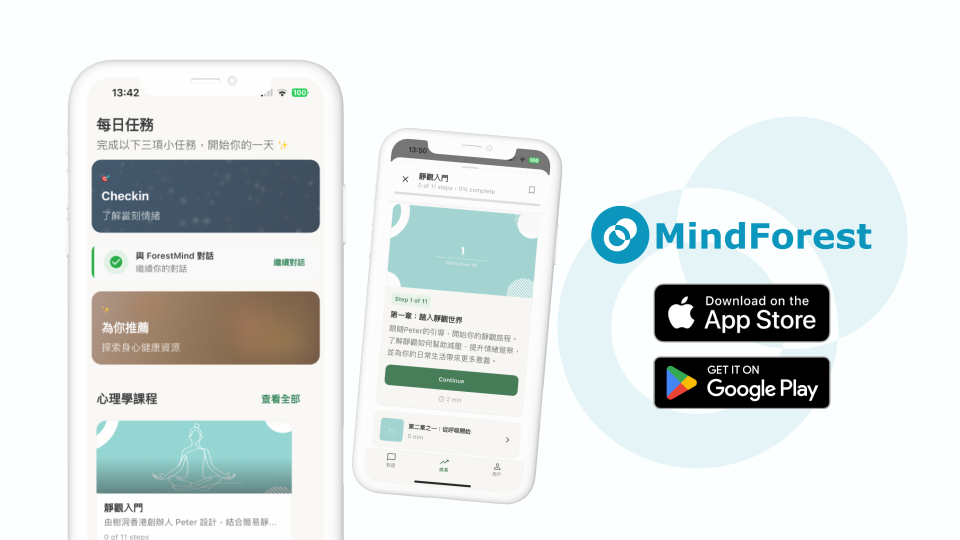
Here, you can:
- Sharpen your inner awareness and your ability to understand your emotions
- Practise writing and self-expression, and clarify hazy thoughts
- Through creating, questioning and quiet reflection, find your way back to a state where "life feels meaningful"
Whatever you're facing, MindForest will be a gentle companion, walking with you through the chaos and towards clarity.

? Start your free trial of MindForest now, and begin your inner healing journey
References
Eastwood, J. D., Frischen, A., Fenske, M. J., & Smilek, D. (2012). The unengaged mind: Defining boredom in terms of attention. Perspectives on Psychological Science, 7(5), 482–495. https://doi.org/10.1177/1745691612456044
Van Tilburg, W. A. P., & Igou, E. R. (2012). On boredom: Lack of challenge and meaning as distinct boredom experiences. Motivation and Emotion, 36(2), 181–194. https://doi.org/10.1007/s11031-011-9234-9
Malkovsky, E., Merrifield, C., Goldberg, Y., & Danckert, J. (2012). Exploring the relationship between boredom and sustained attention. Experimental brain research, 221(1), 59–67. https://doi.org/10.1007/s00221-012-3147-z
Gasper, K., & Middlewood, B. L. (2014). Approaching novel thoughts: Understanding why elation and boredom promote associative thought more than distress and relaxation. Journal of Experimental Social Psychology, 52, 50–57. https://doi.org/10.1016/j.jesp.2013.12.007



Comments
No comments yet — share your thoughts.