


Have you ever seen a particular colour the moment you looked at certain letters or numbers? Or sensed a flavour in a melody when you heard certain music? It sounds like a superpower — but did you know that people like this really do exist? Let's step into the world of the "synaesthetes" together!
What is synaesthesia?
Synaesthesia is a non-pathological phenomenon — a rare ability in which the senses blend together: when one of your senses receives a triggering stimulus (the inducer), it simultaneously evokes an immediate response in one or more other senses (the concurrent) (Neufeld et al., 2013). For example, a "synaesthete" might perceive a song as red — meaning that an auditory stimulus produces a visual response in them. This kind of synaesthesia also varies from person to person: you might perceive that same song as a different colour, a different taste or a different touch, which is why there are more than 80 different types of synaesthesia in the world!
So why do some people have synaesthesia? Early researchers believed it was a hereditary trait that ran in families; they noted that the gene for synaesthesia is more widespread in women than in men, and so proposed that synaesthesia is an X-linked dominant trait (Hubbard & Ramachandran, 2005). Later, other researchers suggested that some people develop acquired synaesthesia or temporary synaesthesia. Acquired synaesthesia describes how some people develop synaesthetic experiences after brain damage, or after losing their sight or hearing later in life; temporary synaesthesia refers to the brief synaesthetic experiences some people have under the influence of drugs (Rogowska, 2011).
The types of synaesthesia
As mentioned above, because the human senses can be combined in different ways, there are as many as 80-plus types of synaesthesia in the world. Here are some of the more intriguing ones:
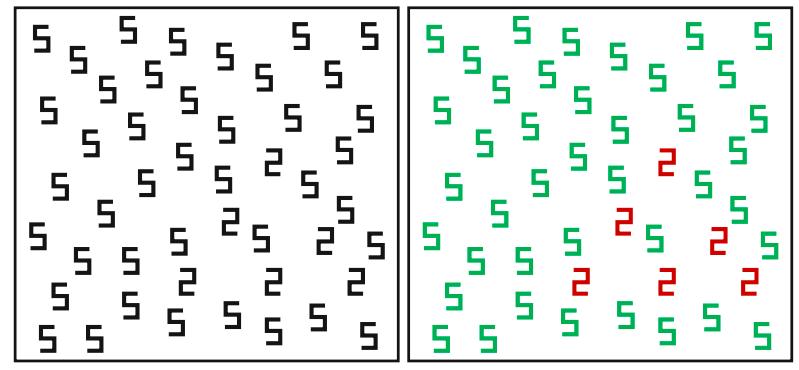
- Grapheme-colour synaesthesia: when people see a particular number or letter, they simultaneously see a particular colour. For instance, if the number "2" is placed among a cluster of "5"s, an ordinary person needs a few seconds to find the "2" (left image); but a synaesthete sees the "5"s and the "2"s as different colours, so they can spot the difference instantly (right image).
- Chromesthesia: this is a form of synaesthesia between sound and colour. It refers to how some people see different colours when they hear the various sounds of everyday life or music, and some can even see the colours of different musical notes.
- Lexical-gustatory synaesthesia: this is one of the rarer forms of synaesthesia, affecting roughly 0.2% of the population. It refers to how a synaesthete perceives certain specific smells or tastes when they hear certain words (Simner & Ward, 2006). For example, when they hear the word "football", they might perceive the taste of "chocolate".
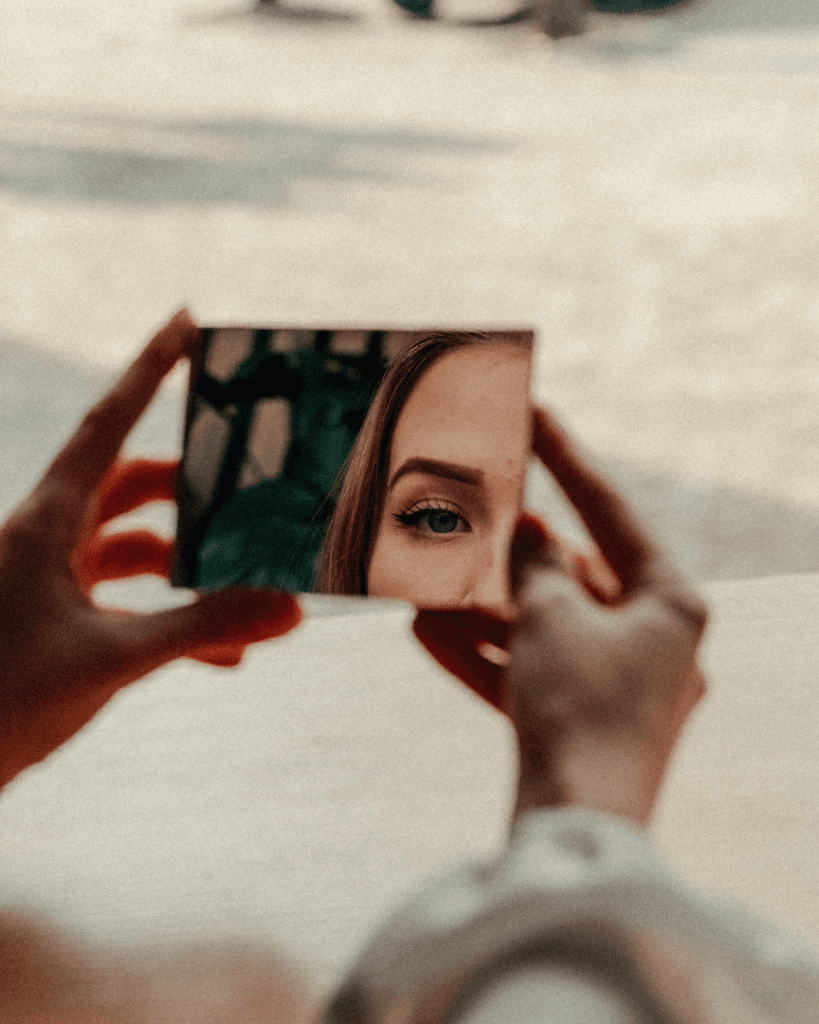
- Mirror-touch synaesthesia: this is a form of synaesthesia that makes people "feel what others feel". When a synaesthete watches someone else being touched, it simultaneously evokes their own sense of touch, making them feel as though they too are being touched. Earlier researchers also pointed out that mirror-touch synaesthesia is related to empathy, because the shared-emotion neural system that influences empathy is activated during passive observation (Banissy & Jamie, 2007), so these synaesthetes may be more empathetic and find it easier to understand how others feel.
The "synaesthete" test: how do you know whether you have synaesthesia?
The researcher Colizoli et al. (2014) pointed out that "synaesthetes" usually meet certain specific conditions — so not every instance of synaesthesia makes someone a "synaesthete"!
- Consistent: a synaesthetic stimulus to one sense must always produce the same response.
- Automatic: the synaesthetic sensation cannot be controlled — you cannot control when you produce a synaesthetic response, and these sensations arise automatically
- Conscious: synaesthesia can be experienced consciously even without an external stimulus. For example, a synaesthete can see that the letter A is yellow without any coloured stimulus or prompt
- Perceptual: the synaesthetic experience can be measured through psychophysical visual tasks or neuroimaging.
- Perceptual presence: the synaesthetic response genuinely exists, rather than being merely imagined in the mind, and synaesthetes can also clearly tell the difference between a synaesthetic experience and a hallucination.
Conclusion
In recent years, synaesthesia has drawn a great deal of public attention — some researchers have even suggested that everyone may have synaesthesia, differing only in how strong or weak it is. Some researchers further suggest that synaesthesia may help improve memory: because in different synaesthetic experiences, certain sensory stimuli help us connect different things, making our memories more deeply embedded. But the synaesthetic experiences that seem so intriguing to us also make these "synaesthetes" highly sensitive, so we may not fully understand the difficulties they face. This article has introduced you to the psychological phenomenon of synaesthesia; if you're interested, why not go on to explore the world of the "synaesthetes" for yourself?
References
Banissy, M. J., & Ward, J. (2007). Mirror-touch synesthesia is linked with empathy. Nature neuroscience, 10(7), 815-816.
Brogaard, B. (2015). Color Synesthesia. Encyclopedia of Color Science and Technology, 1–8. doi:10.1007/978-3-642-27851-8_112-7
Colizoli, O., Murre, J. M., & Rouw, R. (2014). Defining (trained) grapheme-color synesthesia. Frontiers in human neuroscience, 8, 368.
Hubbard, E. M., & Ramachandran, V. S. (2005). Neurocognitive mechanisms of synesthesia. Neuron, 48(3), 509-520.
Neufeld, J., Roy, M., Zapf, A., Sinke, C., Emrich, H. M., Prox-Vagedes, V., … & Zedler, M. (2013). Is synesthesia more common in patients with Asperger syndrome?. Frontiers in human neuroscience, 7, 847.
Rogowska, A. (2011). Categorization of synaesthesia. Review of General Psychology, 15(3), 213-227.
Simner, J., & Ward, J. (2006). The taste of words on the tip of the tongue. Nature, 444(7118), 438-438.
Synesthesia. Psychology Today. (n.d.). https://www.psychologytoday.com/intl/basics/synesthesia.


Comments
No comments yet — share your thoughts.