
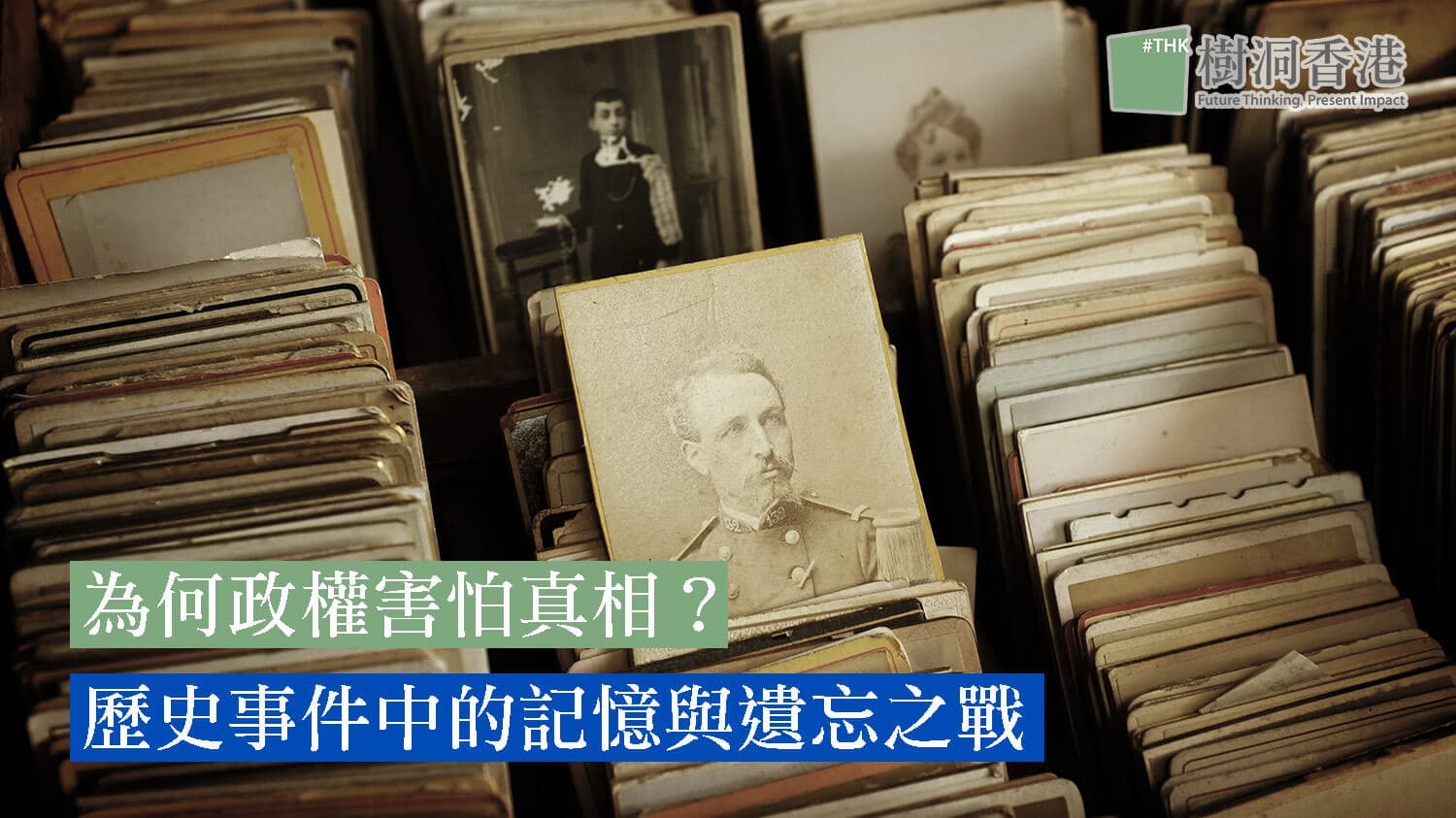
"It is 1971, and Mirek says it: the struggle of people against power is the struggle of memory against forgetting."
– The Book of Laughter and Forgetting, Milan Kundera
History and Identity
What difference does it make to us whether history is true or false? What does the truth actually mean to us?
On the importance of history to a community, Liu & Hilton (2005) put it this way: "History tells us who we are, where we came from, and where we should be going. It also defines the trajectory along which a group's collective identity is constructed." ("history provides us with narratives that tell us who we are, where we came from, and where we should be going. It defines a trajectory which helps construct the essence of a group's identity", p. 537).
From a psychological standpoint, collective identity is a key element in how we build the self. Different historical events and forms of collective memory, including things that happened long before you were born, construct a group's identity. This is, of course, well-established theory, yet collective memory does not exist solely to build identity. Through social comparison (that is, establishing one's own position by comparing oneself with other groups) and historical revisionism, collective memory also sustains a group's positive image and sense of worth (Tajfel and Turner, 1979; Vignoles et al., 2006). Collective trauma is itself a kind of collective memory, but it can threaten a group's identity and shake its core beliefs. For example, accounts in Holocaust survivors' memoirs recall that, in the concentration camps, people would often ask, "Where is God?" (Wiesel & Wiesel, 2006). This raises a very real question: stay or go? For the "victim" group, this identity may invite mortal danger, and so lowers the sense of belonging. Within some "perpetrator" groups, certain members may not identify with these acts and so distance themselves from the group. That said, collective trauma can also work the other way and strengthen a group's cohesion: people may, for instance, construct a shared conviction along the lines of "we are a people who can come through any hardship", thereby heightening their sense of identity (Bar-Tal et al., 2009).
Collective Trauma and Self-Worth
Hirschberger (2018) approaches the effects of collective trauma from two angles. For victims, because the memory of collective trauma can be transmitted across generations, this cross-generational identity helps to unite a group and strengthen members' sense of belonging. According to anthropologist Ernest Becker's (1973) terror management theory, people understand that they cannot escape death, yet feel anxious about it all the same. For in purely biological terms, the death of a person is no different from the death of a microbe; the existence of "I" as an individual makes no difference to the planet, and so we fall into the anxiety of whether life has any meaning. And so, over the course of evolution, people learned that they needed to give their lives some meaning in order to resolve this anxiety, for instance by tending towards symbolic immortality: blending oneself into society and culture and, through carriers such as culture and history, connecting with those who came before and those who come after, thereby attaining a spiritual eternity. This turns a death that would otherwise be entirely without meaning into a force capable of shaping the identity of later generations: "I did the things my forebears entrusted to me", "I made for better lives for those who follow". This collective meaning helps people build their own values, sense of efficacy, purpose and self-worth (Vignoles et al., 2006).
Controlling the Truth = Controlling the Public?
When history is read through social representations theory, each person's view of any given collective historical event differs, and this leads to differing interpretations, differing effects, and even differently constructed identities (Hirschberger, 2018). Some people, for example, feel proud because of their people's historical events; but at the same time others feel shame over the very same event. As a result, in the post-trauma period a group's internal factions stage "memory wars", aimed at controlling the discourse, manipulating how people view the event, and even how the event goes on to affect them. After a natural disaster, for instance, some regimes lean towards not releasing detailed casualty figures, instead playing up how well the government responded; yet at the same time there are people who go to great lengths to record and broadcast the actual situation on the ground. The "outcome" of this "memory war" will determine whether people emerge from the trauma more united and prouder of their country, or whether the event breeds distrust of the regime and of social institutions.
Why Do Regimes So Often Deny the Truth and Falsify History?
Examining memory and history further from the angle of power, the reason a regime prefers to deny that certain things ever happened (Lykes et al., 2007) is precisely that doing so can eliminate the social instability that historical trauma brings (Evans-Campbell, 2008), while also being able to reverse the roles of "perpetrator" and "victim" — for example by inducing criticism along the lines of "the government tried very hard to provide relief; it was you who failed to help, and who became even more of a burden on the government." Turning the victim into the perpetrator not only averts the social instability such events bring, it can also cement the collective identity the regime has built (Hirschberger, 2018).
In past history, memory wars across nations are not uncommon, though sometimes they are not necessarily triggered by a regime, and are sometimes more a shared view held by the public. Poland as a victim of the Second World War, for instance: this trauma was successfully converted into something that united the entire nation. But as Second World War documents were declassified, people discovered that, back during the war, a portion of the killing was in fact carried out by Polish hands rather than by the Nazi regime (Gross, 2001). This fact ought to have severely shaken the identity of present-day Poles, but the reality is that, in order to preserve this identity, group cohesion, and even cognitive consistency, the result was to take the easy way out and once again give a definitive cast to the whole stretch of history, emphasising that Poland was the victim. In 2018 the Polish parliament even passed a controversial law: forbidding people from suing their fellow Poles over allegations of complicity in the Second World War (John, 2018). This shows that memory wars do not necessarily arise between regime and public; a group may also unite itself by rewriting history.
Conclusion
Drawing on social psychology and evolutionary psychology, this piece has given a preliminary account of how a group constructs the meaning that a historical event or trauma holds for it. It has gone on to unpack the origins and effects of "memory wars", and explained the motives behind a regime's control of history and how that control is used to manipulate the public. That said, a government is not necessarily the perpetrator, and the people are not necessarily the victims; when the public of one nation are the perpetrators against another group, they will often, subconsciously, reconstruct their view of the event in order to preserve their own identity. For this reason, in understanding collective trauma and collective consciousness, we need to carefully distinguish the standing of each party, while also bearing in mind that the meaning of history is not singular, and that it is, at the same time, open to manipulation.
References
Bar-Tal, D., and Salomon, G. (2006). "Israeli-Jewish narratives of the Israeli-Palestinian conflict: evolvement, contents, functions and consequences," in Israeli and Palestinian narratives of conflict: History's Double Helix, ed. R. I. Rotberg (Bloomington: Indiana University Press).
Becker, E. (1973). The Denial of Death. New York, NY: Simon and Schuster.
Evans-Campbell, T. (2008). Historical trauma in American Indian/Native Alaska communities: A multilevel framework for exploring impacts on individuals, families, and communities. Journal of interpersonal violence, 23(3), 316-338.
Gross, J. T. (2001). Neighbors: The Destruction of the Jewish Community in Jedwabne, Poland. Princeton, NJ: Princeton University Press. doi: 10.1515/9781400843251
Hirschberger, G. (2018). Collective trauma and the social construction of meaning. Frontiers in psychology, 9, 1441.
John, T. (2018). Poland Just Passed a Holocaust Bill that is Creating Outrage. Here's What You Need to Know. Time Magazine. Available at: http://time.com/5128341/poland-holocaust-law/
Liu, J. H., and Hilton, D. J. (2005). How the past weighs on the present: social representations of history and their role in identity politics. Br. J. Soc. Psychol. 44, 537–556. doi: 10.1348/014466605X27162
Lykes, M. B., Beristain, C. M., & Pérez‐Armiñán, M. L. C. (2007). Political violence, impunity, and emotional climate in Maya communities. Journal of Social Issues, 63(2), 369-385.
Tajfel, H., and Turner, J. C. (1979). "An integrative theory of intergroup conflict," in The Social Psychology of Intergroup Relations, eds W. G. Austin and S. Worchel, (Monterey, CA: Brooks/Cole), 33–47.
Vignoles, V. L., Regalia, C., Manzi, C., Golledge, J., and Scabini, E. (2006). Beyond self-esteem: influence of multiple motives on identity construction. J. Pers. Soc. Psychol. 90, 308–333. doi: 10.1037/0022-3514.90.2.308
Wiesel, E., & Wiesel, M. (2006). Night. New York, NY: Hill and Wang, a division of Farrar, Straus and Giroux.


Comments
No comments yet — share your thoughts.