Do Colours Have a Personality? (Part 1)
What is your favourite colour, and could it say something about your personality? In psychology, colours carry their own characters, shaping how we feel and behave — beginning with red, yellow and bl…
What is your favourite colour, and could it say something about your personality? In psychology, colours carry their own characters, shaping how we feel and behave — beginning with red, yellow and bl…
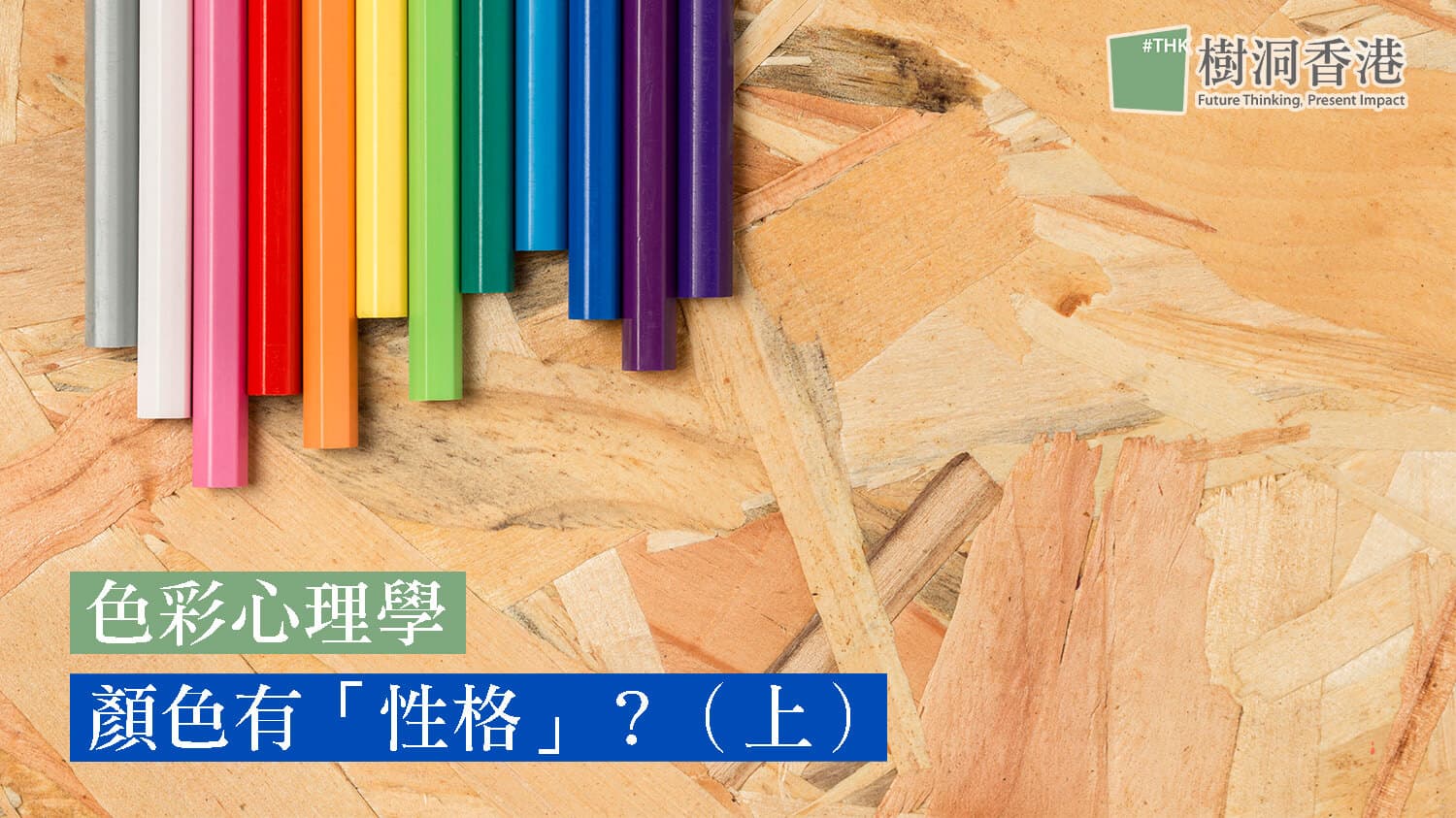
What is your favourite colour? And could that colour say something about your personality? As Picasso once put it: "We give to form and colour all the meaning we are able to see in them." In psychology, colours have their own characters and qualities; they can shape our emotions and behaviour, and they touch every layer of daily life. We choose what we wear and how we coordinate our colours to suit different occasions, presenting ourselves to others in a fresh light. Today, let us explore the psychology of colour — and see how the "personality" of different colours influences how people feel and think!
Neuroscientists point out that red is generally linked with passion, strength, anger and aggression (Kuniecki et al., 2015). Red can stir the emotions and raise the body's heart rate, blood pressure and breathing rate (AL Ayash et al., 2015). One psychological study found that men generally judged a woman wearing red on a date to look more attractive — perhaps tied to the association of red with passion (Elliot & Niesta, 2008). What is more, women in another study saw red as a symbol of power and wealth, and likewise found men dressed in red more appealing (Elliot et al., 2010). Think of the politicians we routinely see wearing red ties, or the film stars walking the red carpet; these too seem to lead us to associate red with power and status. Beyond the everyday context of dating, red clothing may also lift athletes' performance in competition. Researchers observing the 2004 Olympic Games noted that competitors in red won more often than those in blue, suggesting that colour influences athletes' psychology (Hill & Barton, 2005). Psychologists later argued that wearing red, rather than blue, more readily heightens an athlete's perceived aggression and dominance, giving them stronger motivation in contest (Little & Hill, 2007). As the colour with the longest wavelength in the visible spectrum, red does indeed make a powerful impression. On your next date, would you dare to don a full set of red "battle dress"?
From a psychological perspective, colour experts hold that yellow is generally linked with happiness, friendliness and fun, and that it can serve as a symbol of hope and optimism (Eiseman, 2006). Think of the laughing yellow smileys we so often see in posters, on television and across social media. Van Gogh, too, once said: "How beautiful yellow is! It stands for the sun." (No wonder his Sunflowers feels so vivid and alive.) Recent research has also found that regions with different amounts of daily sunshine show, psychologically, differing degrees of association between "yellow" and "happiness": the Finns, who get less sun, showed the strongest association, while Egyptians, who get more sun, showed the lowest (Azer, 2020). The study also noted that Egyptians held a more negative impression of yellow than people in other regions — perhaps tied to the way lemons symbolise death in local literature (Azer, 2020). Clearly, the stories told in different places shape how we feel about different things. And indeed, our impressions of colour are shaped by society and culture; a colour can become the symbol of a particular set of human ideas. The character of a colour influences how people feel, and our emotions, in turn, also shape what a colour means.
Psychologists generally hold that blue makes people think of peace, calm and stability (Gerend & Sias, 2009). At the mention of "blue curtains", everyone may form their own associations. But colour-psychology experts widely agree that blue has a soothing effect on the emotions (Xia et al., 2016). Research has found that blue lighting helps ease stress and relax the mood (Minguillon et al., 2017). When some railway stations in Japan switched to blue LED lights, for instance, the suicide rate at those locations fell sharply by 84% (Matsubayashi et al., 2013). And when parts of New York City switched to blue streetlights, the outdoor crime rate also dropped by 39% (Chalfin et al., 2021). Other research points out that blue light makes for clearer thinking, helping us handle tasks that demand a high level of concentration (Cajochen et al., 2011; Talliard et al., 2012). In marketing and brand design, blue logos mostly give an impression of being trustworthy, steady and loyal (Labrecque & Milne, 2012), and are often used by commercial or financial firms — IBM, PayPal and American Express among them. Of course, from an artistic point of view, blue generally represents melancholy or a sense of loss: Picasso's "Blue Period", for one, was filled with paintings of every kind of depression and sorrow. So it seems that each field will define a single colour differently.
Everyone's sense of colour is deeply subjective, and the research above still awaits more thorough evaluation. If a colour can bring you joy, confidence or comfort, then even if the people around you are not so keen on it, you may as well use it and see. Of course, some formal occasions will set rules for the colours you wear. But when you can stroll down the street at leisure on a holiday, why not show a little of your personal style? When you plan to redesign your room, or post a new photo on IG, try adding a colour that can represent you. The meaning of a colour is what we give it, and to express it is itself an art.
In this article, we have looked at the academic research on the three primary colours. In Part 2, let us explore some other colours!
References
AL‐Ayash, A., Kane, R. T., Smith, D., & Green‐Armytage, P. (2016). The influence of color on student emotion, heart rate, and performance in learning environments. Color Research & Application, 41(2), 196-205.
Azer, S. A. (2020). The sun and how do we feel about the color yellow? Methodological concerns. Journal of Environmental Psychology, 67, 101380.
Chalfin, A., Hansen, B., Lerner, J., & Parker, L. (2021). Reducing crime through environmental design: Evidence from a randomized experiment of street lighting in New York City. Journal of Quantitative Criminology, 1-31.
Eiseman, L. (2006). Color: Messages and meanings—A Pantone color resource. Gloucester, MA: Hand Books Press Distributed by North Light Books
Elliot, A. J., Maier, M. A., Moller, A. C., Friedman, R., & Meinhardt, J. (2007). Color and psychological functioning: the effect of red on performance attainment. Journal of experimental psychology: General, 136(1), 154.
Elliot, A. J., & Niesta, D. (2008). Romantic red: red enhances men’s attraction to women. Journal of personality and social psychology, 95(5), 1150.
Elliot, A. J., Niesta Kayser, D., Greitemeyer, T., Lichtenfeld, S., Gramzow, R. H., Maier, M. A., & Liu, H. (2010). Red, rank, and romance in women viewing men. Journal of Experimental Psychology: General, 139(3), 399.
Gerend, M. A., and Sias, T. (2009). Message framing and color priming: how subtle threat cues affect persuasion. J. Exp. Soc. Psychol. 45, 999–1002. doi: 10.1016/j.jesp.2009.04.002
Hill, R. A., & Barton, R. A. (2005). Red enhances human performance in contests. Nature, 435(7040), 293-293.
Kuniecki, M., Pilarczyk, J., & Wichary, S. (2015). The color red attracts attention in an emotional context. An ERP study. Frontiers in human neuroscience, 9, 212.
Matsubayashi, T., Sawada, Y., & Ueda, M. (2013). Does the installation of blue lights on train platforms prevent suicide? A before-and-after observational study from Japan. Journal of affective disorders, 147(1-3), 385-388.
Minguillon, J., Lopez-Gordo, M. A., Renedo-Criado, D. A., Sanchez-Carrion, M. J., & Pelayo, F. (2017). Blue lighting accelerates post-stress relaxation: Results of a preliminary study. PloS one, 12(10), e0186399.
Xia, T., Song, L., Wang, T. T., Tan, L., & Mo, L. (2016). Exploring the effect of red and blue on cognitive task performances. Frontiers in psychology, 7, 784.

Comments
No comments yet — share your thoughts.