


After the previous instalment introduced "O", Openness to experience, in the Big Five, I received quite a few questions from readers. Most of them circled around the theoretical foundations of the Big Five — how on earth did psychologists decide that the personalities of all the billions of people on the planet could be captured by the five dimensions of the Big Five? And why is the Big Five considered more scientific than the usual personality theories? So, as we arrive at the second instalment of the Big Five series — Conscientiousness — I felt I owed readers a little popular-science groundwork too: a brief account of how Big Five theory developed, so that nobody is left completely at sea about where the theory came from.
A short history of the Big Five
When it comes to the origins of the Big Five, it would be remiss not to mention Gordon Allport, a giant of modern psychology. Allport, who spent the better part of his life on academic research and teaching at Harvard University, pioneered evidence-based human personality research. He believed that to describe human personality accurately, you cannot rely on the judgements of individual scientists drawn from observing people in specific settings. So where, then, should psychologists begin?
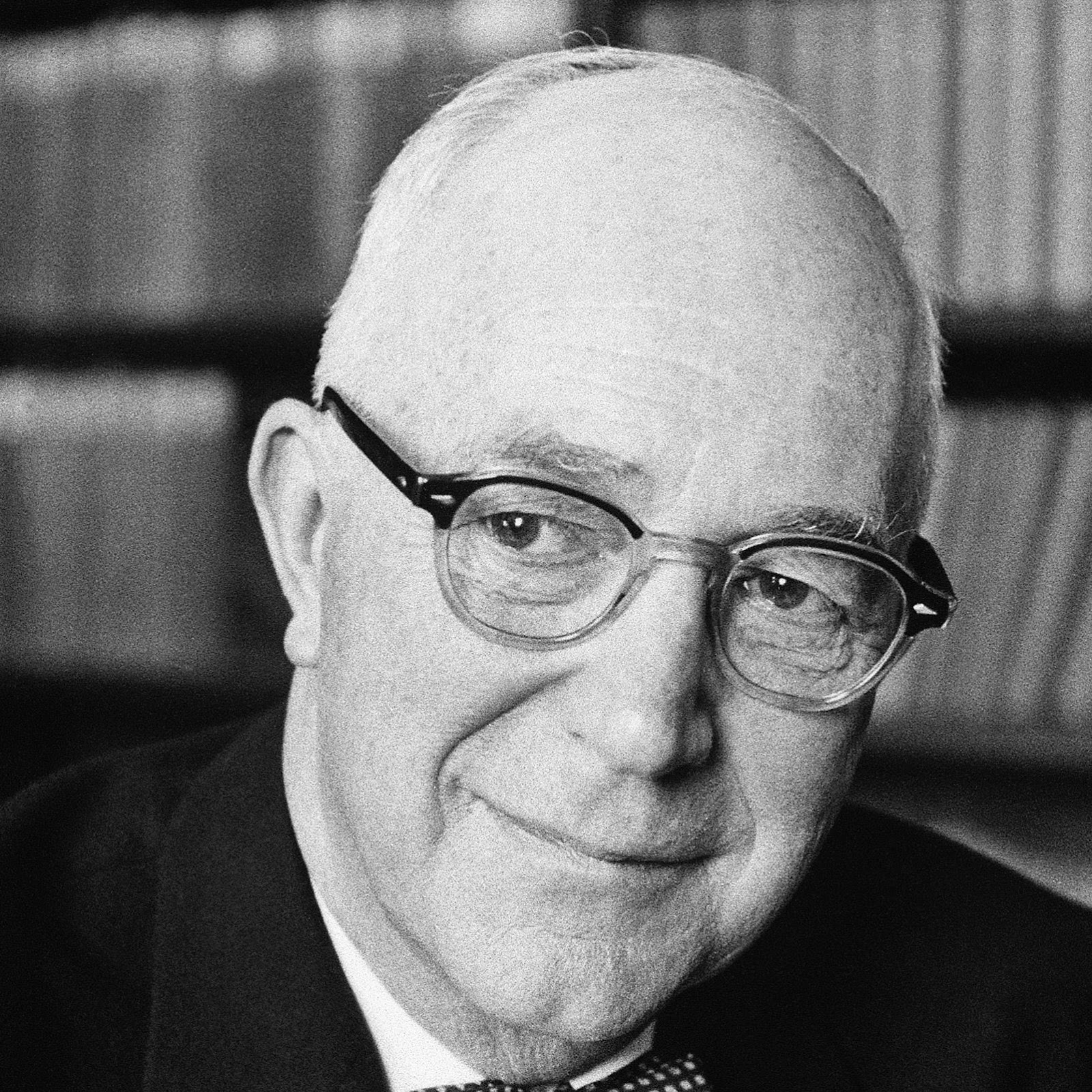
As far back as the late nineteenth century, a fair number of scholars had argued that natural languages (that is, languages such as English and Cantonese that arise "naturally", as distinct from artificial languages like Python and C++) were well worth studying scientifically and in depth. In the same spirit, Allport and his colleague Odebert directed their personality research towards human language. They believed that the words a human language uses to describe personality reveal something important about the underlying personality traits people actually have. The assumption behind this is that we tend to "invent" new words in order to describe other people more precisely; after all, the first person to call someone an "extravert" must surely have noticed certain behaviours that lined up with extraversion. Perhaps an analogy makes it clearer. In the old days, sailors exploring the oceans would draw maps based on the coastlines their own eyes could see. Now picture Allport and Odebert standing on the shore holding those maps (the words within a language), inferring the geography of those regions (people's actual personality traits). On that premise, Allport and Odebert reasoned that if we studied the words in human language carefully enough, we could uncover the most fundamental traits of human personality.
Remarkably, from a dictionary of as many as 400,000 words they selected close to 18,000 words that describe human personality and behaviour, subjected them to rigorous statistical Factor Analysis, and ultimately distilled them down to four broad clusters. With the contributions and refinements of countless psychologists who followed (for example R. Cattell and D. Fiske in the 1940s, and later L. Goldberg, along with Costa and McCrae mentioned in the previous instalment), this eventually grew into the Big Five — the theory of human personality accepted by the field of psychology today.
Of course, this assumption about human language is not without controversy. Returning to our sailors: never mind a sailor navigating thousands of miles of ocean — not even GPS can perfectly capture the shape of every inch of coastline, so how can we expect those maps to reflect the terrain with flawless precision? The relationship between language and personality is much the same. The experimental results of Trofimova (2014), for instance, suggest that the analytical methods Allport and Odebert adopted at the time would lead the Big Five to lean towards personality traits to do with social interaction, while overlooking some traits connected to the inner emotional world [1]. I will set the detailed controversy aside here and not labour the point; readers who are interested can consult the academic discussion of the Lexical Hypothesis. Even so, the Big Five remains a relatively systematic theory, backed by a large body of scientific evidence, and it compares favourably with the personality theories of popular psychology.
In closing
Through this article, I hope to have presented the Big Five more fully, so that readers can grasp its theoretical foundations as well as recognise its weaknesses. With the history covered up to this point, in the next instalment I will introduce "Conscientiousness" and the related research findings — so interested readers, do keep a close eye out.
If, having finished this article, you still find yourself full of curiosity about people, I expect you will be interested in TreeholeHK's Know Yourself, Explore the Self: A Psychology Essentials Course. The course draws on psychology to boost motivation and set goals, helping you become someone who understands yourself better and stays true to who you are.
References
[1] Trofimova, I. (2014). Observer Bias: An Interaction of Temperament Traits with Biases in the Semantic Perception of Lexical Material. PLoS ONE, 9(1). https://doi.org/10.1371/journal.pone.0085677



Comments
No comments yet — share your thoughts.