The Affair That Never Gets Physical
In intimate relationships, "infidelity" usually brings physical betrayal to mind. But there is another, more common kind — one that involves no physical contact at all, yet can be every bit as devast…


In intimate relationships, "infidelity" usually brings physical betrayal to mind. But there is another, more common kind — one that involves no physical contact at all, yet can be every bit as devast…
In intimate relationships, the word "infidelity" tends to conjure up physical betrayal. Yet in the modern emotional landscape, there is a far more common kind of betrayal — one that involves no physical contact at all, but breaks hearts just the same. This is "emotional infidelity". It is not as obvious as traditional infidelity — sometimes the people involved are not even aware of it — yet it can be even more destructive than physical betrayal. So what exactly is emotional infidelity? How does it happen? And how should we respond to it? Let us take a closer, psychological look at this complex and delicate matter of the heart.
Put simply, emotional infidelity refers to redirecting the feelings, attention and emotional connection that should belong to your partner onto someone else, within an otherwise stable intimate relationship. This connection might show up as long conversations, sharing your innermost secrets with each other, romantic fantasies, or even hoping the relationship with that person will go further.
Unlike physical infidelity, emotional infidelity does not necessarily involve any physical contact — some people even rationalise the relationship by telling themselves "we're just friends". Psychological research, however, indicates that betrayal on an emotional level can be no less damaging to a couple's relationship than physical infidelity, and in some cases even harder to repair (Cann, 2017).
? Quick self-check: If there is someone you would rather confide in than your partner, whose moods you find yourself caring about, and about whom you even fantasise about the future — this could be a warning sign of emotional infidelity.
Emotional infidelity is no accident; it is the product of several psychological and relational factors woven together. Below are three common psychological drivers (Guitar et al., 2001; Kruger et al., 2015):
Psychologists note that when emotional exchange between partners dwindles and the relationship enters a plateau, people become more inclined to seek emotional support elsewhere. This is not because they no longer love their partner, but because human beings have an innate longing to be understood, to be listened to, to be valued. Once those needs go unmet within the relationship, attention may turn towards someone else.
Psychoanalysis holds that emotional infidelity is often a "projection of an idealised self". We may see in another person the version of ourselves we long to become, or someone who makes us feel a passion and romance we have not felt in a long time. This projection misleads us into thinking "they are the right one", when in reality we are using that other person to fill an inner void.
Sometimes emotional infidelity is not about love at all, but about the feeling of "being desired". So when the existing relationship can no longer offer that particular psychological satisfaction, attention from outside becomes especially tempting.
Emotional infidelity is hard to detect precisely because it usually begins as something "harmless". Even so, the following psychological and behavioural signs can serve as warning flags (Guitar et al., 2001):
1) ? Frequent contact: always wanting to chat with that person and share the details of your day — even more often than with your partner.
2) ? Emotional reliance: when a problem arises, the first person you think of is them, not your partner.
3) ? Romantic fantasies: finding yourself daydreaming about a future or intimate moments with that person.
4) ? Deliberate concealment: not wanting your partner to know the details of your interactions with that person.
5) ? Comparing: starting to compare that person with your partner, even feeling that "they understand me better".
Though these behaviours never cross a physical line, they have already created a powerful sense of intimacy on a psychological level. Once this emotional connection gradually takes over the place your partner held in your heart, it means you may already be caught up in emotional infidelity.
Emotional infidelity is not always the end of a relationship. On the contrary, it can become an opportunity to take a fresh look and rebuild intimacy. Here are a few directions psychologists suggest:
Denial and suppression will only make the problem worse. If you realise you have developed feelings for someone else, the most important thing is to face your own feelings honestly and talk them through with your partner. Open dialogue helps you identify the gaps in the relationship, and so begin to mend them.
Intimacy does not arise on its own; it has to be cultivated. Trying to set aside time together again, having deeper conversations, and creating new shared experiences can all help partners rebuild their emotional connection.
Emotional infidelity often reflects unmet emotional needs within yourself. Exploring what you are really searching for — through self-reflection or counselling — can help you prevent yourself from falling into a similar situation again, at its very root.
Emotional infidelity is not simply a "moral problem"; deeper psychological drivers and needs lie behind it. Rather than viewing it as the end of a relationship, it is better to treat it as a mirror — one that reflects our longing for intimacy, our search for self-worth, and our need for emotional connection.
Love is not a fixed, unchanging state, but a journey that calls for ongoing attention and adjustment. When we are willing to face our inner selves honestly and to communicate bravely with our partner, emotional infidelity need not be a poison that destroys the relationship — it can also be the opportunity for love to bloom anew.
?
"Emotional infidelity" has never been just a betrayal within a relationship; it is also a deeper conversation about emotional needs, psychological projection and self-awareness. MindForest is a digital space built for those who long to understand the truth of their feelings and to rebuild intimate connection, walking with you step by step as you see clearly the truth of your emotions and the psychological drivers behind your choices.
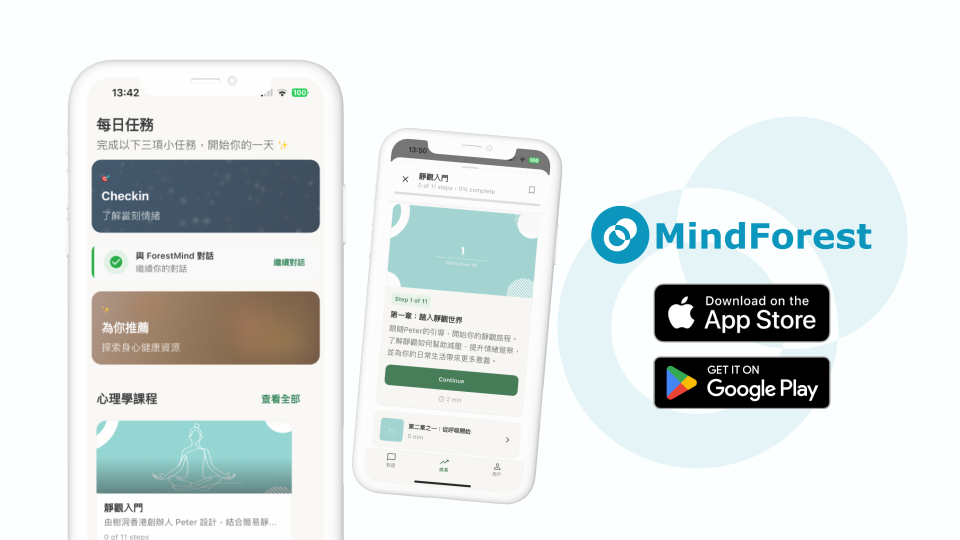
An AI coach built by psychology experts, taking you deep into the reasons behind emotional infidelity:
Why, when there has clearly been no physical contact, do you still feel a sense of "betrayal"?
Why do we form emotional attachments to other people?
And how can you understand and work through this emotional connection, so that love can find its way back on track?

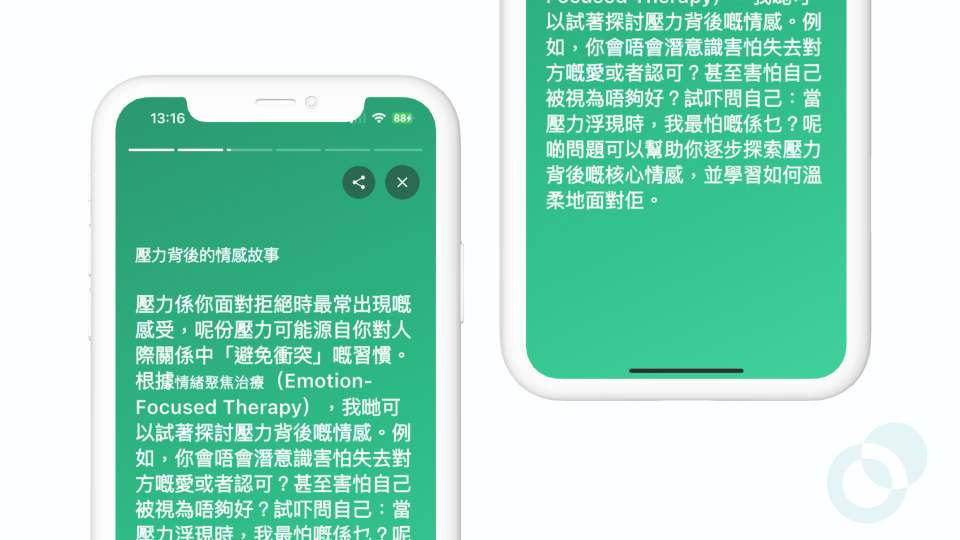
Emotional infidelity often reflects emotional longings that have yet to be met within us. With the "Insight Journal" feature, you can record emotional interactions and reflect on your own emotional responses, gaining a deeper understanding of your needs and boundaries within a relationship, and uncovering the true source of straying in love.
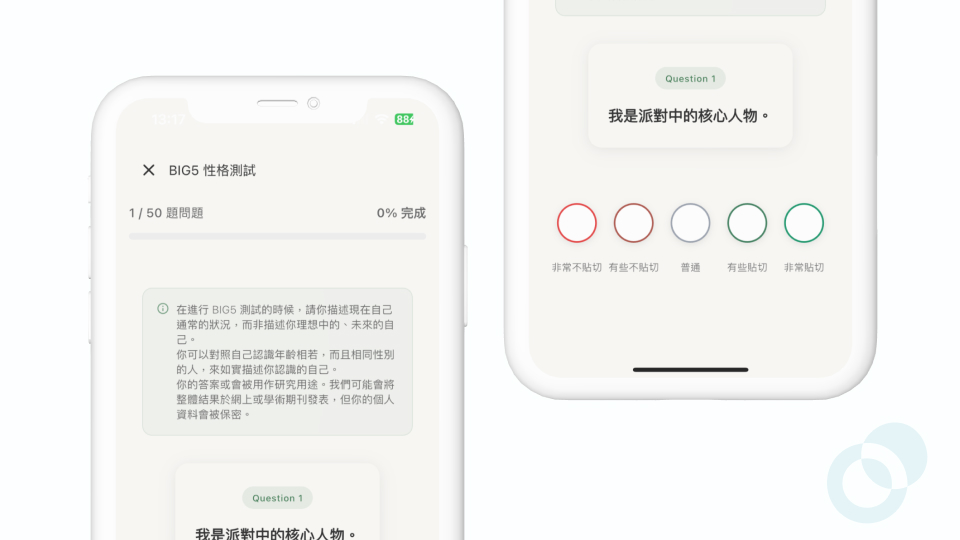
Through psychological assessments, you will come to understand your attachment style in intimate relationships, and so learn to prevent emotional infidelity from happening — or, if it has already happened, to handle and repair the relationship more wisely.
If you are struggling with emotional distress, TreeholeHK's professional team is here to help — we offer psychotherapy and counselling services led by clinical psychologists, counselling psychologists and counsellors.
"Emotional infidelity" need not be the end of love — it may be an opportunity to get to know yourself and your relationship afresh. Let MindForest accompany you as you explore the deeper meaning of these feelings, learn to read the psychology at work within love, and rebuild an intimate connection that is healthy, sincere and safe.
References
Cann, A., Mangum, J. L., & Wells, M. (2001). Distress in response to relationship infidelity: The roles of gender and attitudes about relationships. Journal of Sex Research, 38(3), 185–190. https://doi.org/10.1080/00224490109552087
Guitar, A. E., Geher, G., Kruger, D. J., Garcia, J. R., Fisher, M. L., & Fitzgerald, C. J. (2017). Defining and distinguishing sexual and emotional infidelity. Current Psychology: A Journal for Diverse Perspectives on Diverse Psychological Issues, 36(3), 434–446. https://doi.org/10.1007/s12144-016-9432-4
Kruger, D. J., Fisher, M. L., Fitzgerald, C. J., Garcia, J. R., Geher, G., & Guitar, A. E. (2015). Sexual and emotional aspects are distinct components of infidelity and unique predictors of anticipated distress. Evolutionary Psychological Science,1(1), 44-51.https://doi-org.pallas2.tcl.sc.edu/10.1007/s40806-015-0010-z




Comments
No comments yet — share your thoughts.