The Decoy That Steers Your Choices
Imagine signing up for a newspaper, with three plans to choose from. Pick the wrong one and you've just walked straight into the Decoy Effect — here's how that third "obvious" option gets engineered.

Imagine signing up for a newspaper, with three plans to choose from. Pick the wrong one and you've just walked straight into the Decoy Effect — here's how that third "obvious" option gets engineered.
Picture this: you're signing up for a newspaper subscription — say, the Apple Daily — and the website offers you three plans
1. $100 a month — online access only
2. $300 a month — a print copy delivered to your door every day
3. $300 a month — online access plus a print copy delivered to your door
Which one would you go for? If you picked option 3, you may have just fallen into the trap of the Decoy Effect. The moment you laid eyes on those three plans, you should have spotted that option 2 is pointless — because option 3 includes everything option 2 offers, and throws in online access for free!
So if option 2 is useless, why on earth would the seller bother putting it there? The Economist discovered exactly this in its own subscription sales: once it added an option resembling option 2, a full 50% of the people who would have chosen option 1 switched to option 3. Yes, option 3 costs a little more to provide, but the seller charges you $200 more for it, so the margin is higher than on option 1. That's the whole point: the seller wants to nudge you towards option 3.
The seller's motive is obvious enough — but why does slipping in option 2 make option 3 so much more appealing?
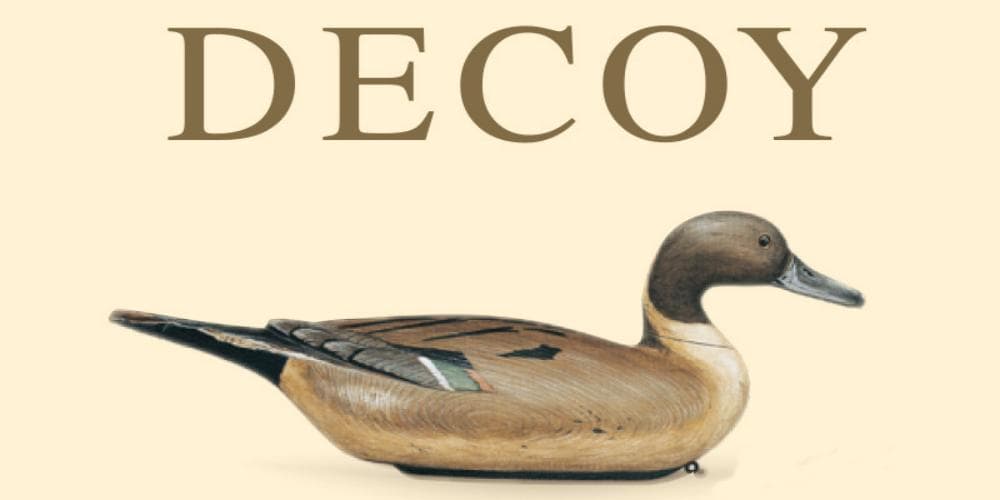
The reason is that option 2 plays the part of a decoy. And a decoy works because human beings instinctively dislike anything too complicated to think through. Any decision that can be reached with cognitive ease feels like a good decision.
Here, picture this: if we strip out option 2, you're left with:
1. $100 a month — online access only
3. $300 a month — online access plus a print copy delivered to your door
And comparing those two options is actually relatively hard. Is it really worth paying an extra $200 to have the paper printed and delivered? That question hinges on all sorts of factors — how much you fancy the feel of newsprint in your hands, whether $200 means much to you, even the fact that, since you're out and about all over Hong Kong all day, having a paper waiting at home isn't much use to you. In short, unless you have a strong preference for one option already, weighing it up is a real hassle, and it piles a lot of pressure on your brain.
But once you add option 2, comparing options 1 and 3 is still hard, whereas comparing options 2 and 3 is dead easy — because option 3 is plainly better than option 2. And precisely because options 2 and 3 are so easy to compare, your brain, which can't be bothered with stress, ends up letting that easy comparison drive the final outcome. To your brain, the gulf between options 2 and 3 is obvious, but options 1 and 3 are hard to tell apart — and since the brain can't be bothered to weigh up the murky pair, it tilts towards option 3. When a clearly inferior option sways your judgement of the other options like this, we call it the Decoy Effect.
This phenomenon turns up in all sorts of settings — politics, for instance. Say there's a voter who, fed up with it all, decides to back a more politically neutral candidate — let's call her Lee Wai-king, who's warm and likeable through and through. Now the powers that be are desperate to win, and they hatch a plan to give Lee Wai-king a leg up. So they field a candidate who is every bit as warm and likeable, but rather muddled whenever she speaks — a decoy — for you to choose between. And there it is: the choice is now obvious at a glance, and that vote goes to Lee Wai-king instead.
Even if you now know what the Decoy Effect is, that doesn't mean you won't be swayed by it down the line. Our decisions have always been shaped by how we feel in the moment. Still, recognising and understanding that irrational factors can sway your choices is precisely the first step towards making them on your own terms. At the very least, the next time you meet a similar set of options, you can remind yourself to think carefully about which one genuinely suits you best. There seem to be plenty more phenomena like this one — but how to cultivate a clear-eyed, self-directed mind is a more involved story for another day.



Comments
No comments yet — share your thoughts.