
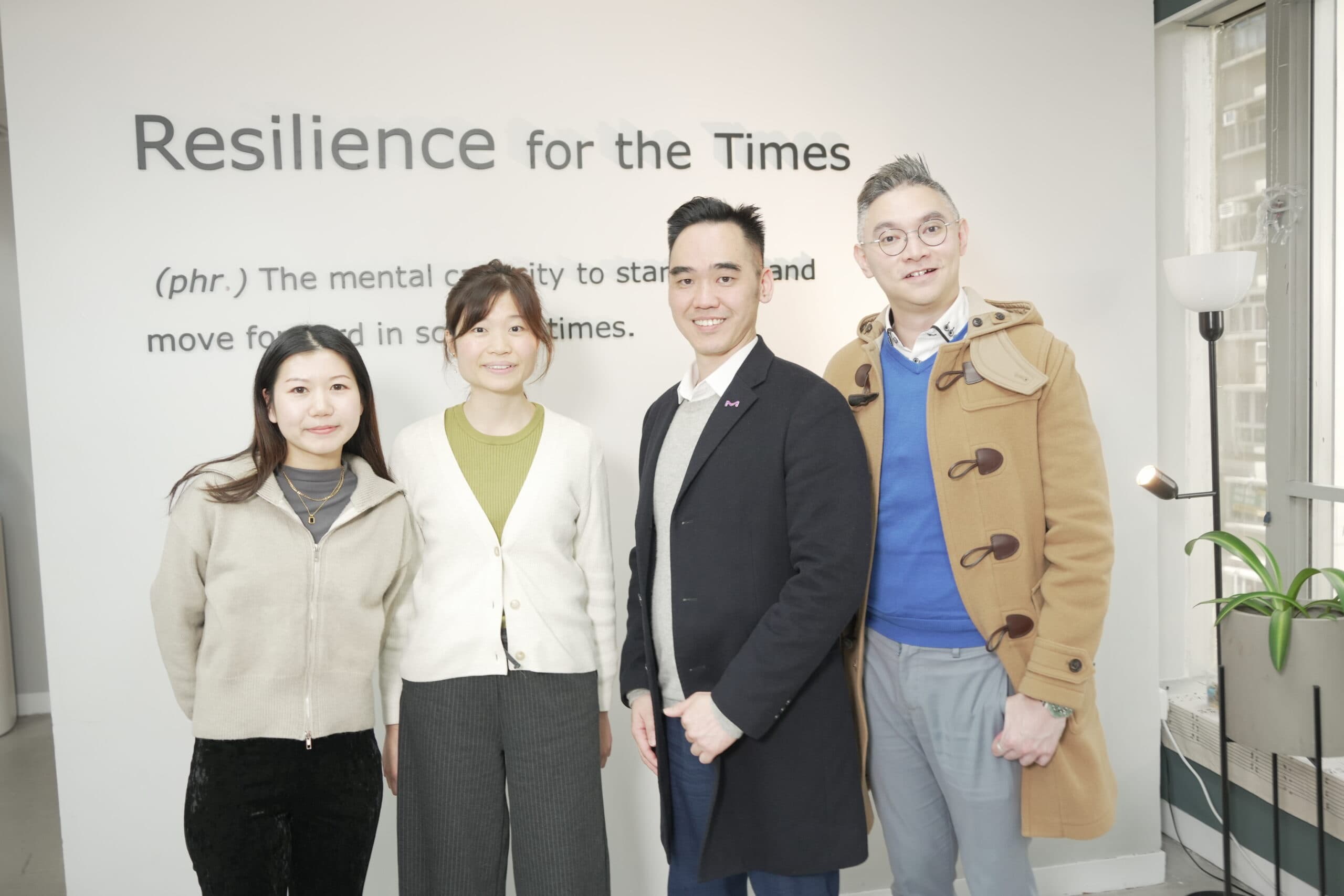
In Conversation with Tony Cheng, Managing Director of Merck HK & Macau
About the “Building Resilience for the Times with__” series
TreeholeHK is committed to making psychology accessible, so that you can draw strength from knowledge and live with resilience through demanding times. We sit down with business leaders to learn how seasoned figures in capital-intensive industries actively meet the challenges of our era in their everyday work. Through their hands-on insights, we help teams across every sector build resilience. In a world that changes in an instant, let us bring psychology together with business wisdom to drive the sustainable growth of enterprises.
No one is an island. We live our lives within communities, and when we look out for one another, value our shared goals and commit ourselves to them, resilience takes root.
We were delighted to invite Tony Cheng, Managing Director of Merck HK and Macau, to share his vision for a sustainable future, and how he sets out to realise it through care.
As the leader of a pharmaceutical firm, Tony might be assumed by outsiders to be driven purely by the pursuit of profit. Yet he holds firmly to his core conviction: “Do the right thing, and the results will follow.”
For him, running a company is not a fight to the death. Even when a business is profit-driven, the long-term vision — building a healthier society — remains clear and unchanging.
As for how to build a healthier society, he singled out two important dimensions: whole-person community engagement, and the meaning that work itself carries.
Considering Employees and the Community in Full — Care Beyond Commercial Calculation
For Tony, each person’s sense of belonging to the community is the bedrock of success, both now and in the future. He is committed to empowering every member within and beyond Merck, and to offering continuous support.
In today’s workplace, simply supporting people’s day-to-day tasks is no longer enough to meet what employees need — they are looking for more holistic support that spans career development, physical and mental wellbeing, and work-life balance. Take, for instance, Merck Hong Kong’s advocacy for “Family Matters”, a family-friendly initiative. Granted, low birth rates are shaped by a host of social and environmental factors, and the peak of a career often overlaps with the years for raising children, leaving many in the workplace caught between parenting and professional progression. “Women are often faced with this kind of choice, but it shouldn’t be that way, and it doesn’t have to be.”
Tony explains that launching family-friendly measures is about helping employees break out of the bind of being torn between career and family. Even if it cannot change everything overnight, it can nudge society forward and respond to people’s concerns about balancing parenting and work.
Externally, Merck also invests actively in community workshops, such as diabetes-prevention education. On the surface, promoting disease prevention might seem to work against a pharmaceutical firm’s interests — even self-defeating.
But Tony is consistently candid:
“Do the right thing, and the results will follow.”
While identifying high-risk individuals early may shrink the pool of potential customers, it can also surface as-yet-undiagnosed cases, opening up new opportunities. Both align with the long-term goal of building a healthier society.
Cultivating a Culture of Resilience — Caring for Employees, and Helping Employees Learn to Care for Others
Living through an age of profound uncertainty, the challenges are considerable. As a leader, Tony emphasises two things: the purpose of the work, and the room to acknowledge mistakes. Together, these form the heart of Merck’s vision — to spark innovation and advance humanity, “Sparking Discovery, Elevating Humanity”.
If a business is to keep moving forward with resolve in the face of challenge, the first task is to let work carry meaning, rather than offering financial reward alone. Meaning at work is a key factor determining employee satisfaction and engagement (Rothausen & Henderson, 2018), and this sense of meaning needs to be passed down, layer by layer, from the top.
“Not everyone understands it from the start — I didn’t fully grasp it at first either,” Tony says. “But as a leader, you have to keep repeating it — and gradually, others will catch on.”
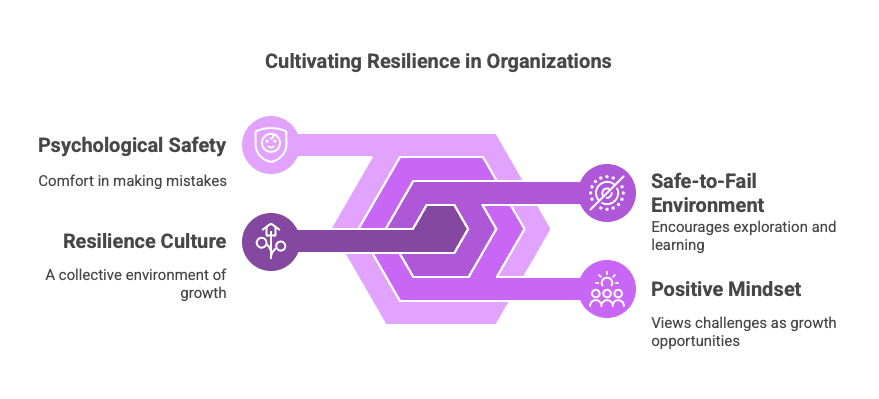
Tony also stresses the importance of psychological safety, so that employees dare to take risks. “I value resilience more than results,” he adds. “If you can keep a positive mindset and see challenges as opportunities to grow, then your perseverance will carry others forward with you.” A safe environment for trial and error lets creativity take root and gives new projects the chance to be born; every setback holds valuable reflection and experience that benefits skills, seasoning and mindset alike, helping to build a culture of organisational resilience.
In fact, psychological safety is an important predictor of high performance, and it is closely tied to how a business copes when conditions turn against it and to how invested employees are (Frazier et al., 2016). The reason is straightforward: in an environment that lacks a sense of safety, people focus on “survival”; and once survival becomes the most important goal, playing it safe feels safer than attempting something new. The failures that are especially likely to arise when innovating then come at a heavier cost.
In sum, the core philosophy of Tony’s leadership is care — and this is precisely what balances out the data-driven, coldly clinical atmosphere so common in the medical industry. In a field led by science, we can easily overlook the importance of human care; but in Tony’s eyes, building a healthy society is inseparable from collective strength and resilience at the psychological level. And we wholeheartedly agree — even as we press towards our commercial goals with all our might, it is a group of employees who find meaning and purpose within the organisation who form the very foundation of a healthily functioning enterprise, and who ensure that the business advances steadily through the turbulence.
Reporter’s Notes — Suggestions for Building a Culture of Care
Open dialogue: actively involve employees in the decision-making process — consult them for their views, and hold honest conversations about decisions, so that they feel a genuine sense of participation. Holistic support: care about employees’ lives beyond work — offer appropriate support both inside and outside the workplace, helping them meet challenges of every kind. Face failure head-on: failure happens at every level — as a leader, anticipate it and think about how to put things right, rather than rushing to assign blame.
(Eng)
About “Building Resilience for the Times with ___”
This is a series showcasing veteran business leaders who are supportive and joining day-to-day at work building resilience for the times, with their passion and experience, active in their industries.
To build resilience is to care – as a society and a collective, the way we build resilience is to care for each other and care for the end goal of what we are doing.
In this episode of “Building resilience of the times with __”, we are pleased to have invited Tony Cheng, the Managing Director of Merck HK and Macau, to share his vision on building a more sustainable future, and how he intends to do it with care.
As the leader of a pharmaceutical firm, it is easy to believe that his sole focus would be profit-making. But to Tony, he believes in one core principle: “Do the right thing, business will follow.” To him, business is never a do or die warfare – and even as a profit-seeking pharmaceutical firm, the long term vision is still clear: to build a healthier society.
On that front, he has pinpointed two important aspects: community engagement, and meaning at work.
Community engagement – caring beyond business
For Tony, community is the backbone of current and future success, and he aims to empower everyone from within and outside of Merck with constant support.
Internally, support in work is not enough – employees are looking for holistic support in life. Perhaps the best example of it is the Family Matters Initiative – an initiative tackling the low fertility. While the greater environment has contributed to low birth rate, the initiative targets things that are controllable – the fact that career prime and time when birth happens often show heavy overlapping, and providing support in managing raising a child and maintaining work progression, with the aim to break through the dilemma of having to choose one between work and parenting. “Women are often faced with such a dilemma – but it shouldn’t, and doesn’t have to be the case,” Tony claims. “That’s why we started the initiative – not to immediately change everything, but to provide a little nudge and address the concerns of balancing between work and child birth.”
Externally, Merck engages in community workshops in preventing diabetes. While it may sound counterintuitive that a pharmaceutical firm would be cutting into their own flesh by raising awareness in prevention of disease, to Tony the it is again simple: “Do the right thing, business will follow.” While identifying high-risk individuals for diabetes prevention may impact their immediate customer base, discovering potentially undiagnosed cases opens up new opportunities. Both approaches align with the long-term goal of fostering a healthier society.
A resilience culture – caring for employees and making employees care
We are facing a challenging, but that does not mean everything must be falling apart. Two things that Tony emphasizes as the leader are the purpose of their work, and the capacity to be wrong; they combine to the corner stone of Merck’s vision – “Sparking Discovery, Elevating Humanity”.
To a resilience culture that faces challenges with a sound and firm stance, giving employees a meaning at work beyond simply money reward and financial package is the first step. Meaning at work are things that determine employee satisfaction and engagement (Rothausen & Henderson, 2018), and this sense of purpose needs to be cascaded form top to bottom. “Not everyone will get it immediately – I didn’t get it in the beginning either” says Tony. “But as leaders you have to repeat yourself – and slow people will catch on.”
“Not everyone will get it immediately – I didn’t get it in the beginning either” says Tony. “But as leaders you have to repeat yourself – and slow people will catch on.”
Another cornerstone to resilience Tony emphasizes is the psychological safety to make mistakes. “I view resilience more as the outcome,” adds Tony. “If you can keep a positive mindset and view challenges as growth opportunities, you will be resilient, and your resilience will lead others to follow you.” A safe to fail environment allows for room to explore and for new projects to take place, and every setback brings valuable insights and lessons, both in skills, experiences and mindsets, resulting in a resilience culture.
Indeed, psychological safety are a consistent predictor to high performance, and is closely related to how business cope with hardships and the amount of effort employees put in (Frazier et al, 2016). The reason behind is simple: in an unsafe environment, people focus on survival; and when survival is the utmost priority, sticking to the tried and true is simply a better strategy than trying new things, and the consequence of failing (which is especially likely when trying new initiatives) are severe.
All in all, Tony’s approach has been with care in mind – something that, as he put it, balances out an otherwise data-driven industry. It is easy to overlook the role of human-touch in hard sciences like the medical field – but for Tony, the future of a health society is something that must be done from a community, and involves the psychological aspect of being resilient. And we agree on this perspective – while we are working hard at achieving our business goals, a group of employees who has a meaning and purpose in the organization ensures the health of the organization itself and ensures that it remains steady towards its destination in waves of uncertainty.
Reporter Observation
Open Dialogue: Actively involve your employees in decision making – consult them on their thoughts, and have candid conversations about decisions to give them a sense of participation.Holistic support: Care about your employee as a person beyond work – give them appropriate support when needed in and outside of work contexts.Take failures to the face: failures happen all the time at all levels – as leaders, be braced for failures and think of how to recover before putting blames on different individuals.
Reference
Frazier, M. L., Fainshmidt, S., Klinger, R. L., Pezeshkan, A., & Vracheva, V. (2016). Psychological safety: A Meta‐analytic review and extension. Personnel Psychology, 70(1), 113–165. https://doi.org/10.1111/peps.12183
Rothausen, T. J., & Henderson, K. E. (2018). Meaning-based job-related well-being: Exploring a meaningful work conceptualization of job satisfaction. Journal of Business and Psychology, 34(3), 357–376. https://doi.org/10.1007/s10869-018-9545-x

MindForest EAP
MindForest combines AI technology with psychology to create a mental-wellbeing programme employees love to use. It enables management to recognise and manage crises early, and goes a step further in supporting staff’s holistic development and workplace performance — a one-stop way to address and resolve employees’ mental wellbeing and personal growth.
Growth Mindset and Psychological Resilience
Different ways of thinking can determine whether, after a setback, we are knocked flat or rise to meet adversity head-on. Through games and exercises, we share with participants the growth mindset proposed by psychologist Carol Dweck, helping them learn to stay resilient in the face of adversity and to build a more positive atmosphere in life and at work.
Management Psychology in the Round
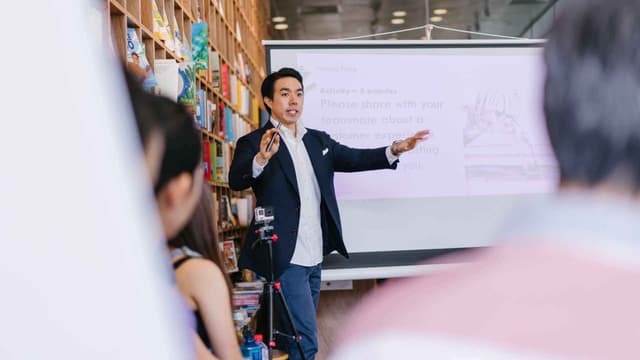
This training programme offers comprehensive knowledge of management psychology, helping participants build outstanding leadership capabilities. Participants will come to understand how to cultivate psychological safety within a team, situational leadership models, and a range of leadership feedback techniques, so that they can flexibly apply different leadership styles and communication approaches to manage those who report to them.


Comments
No comments yet — share your thoughts.