
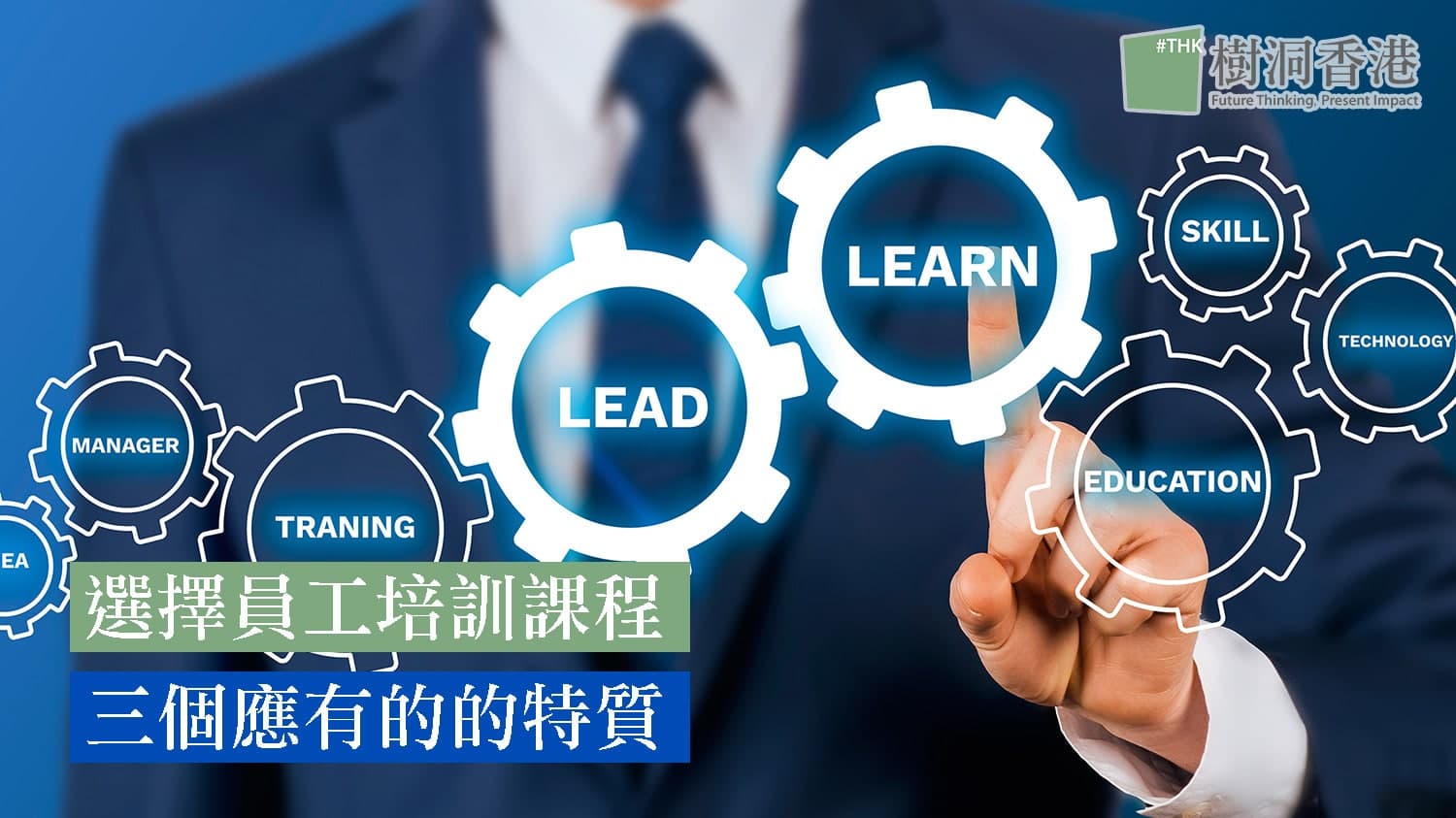
At TreeholeHK we see countless forms and methods of employee training, so which one is the best fit for your own team? Although every team differs in its make-up, culture and the nature of its work, an effective training programme should deliver lasting personal and team growth for everyone it reaches, and bring tangible benefits to the business by lifting team spirit and morale. Below are the three key qualities this kind of employee training should possess, taking apart, one by one, three common blind spots of training programmes:
Employee training delivers personalised learning and career development
First, do away with one-size-fits-all training programmes. Hong Kong's education system is often criticised as a "force-feeding" model, meaning teaching that pays no regard to individual qualities, or that relies on a single fixed framework to cram the same body of knowledge, values or skills into every student, which in turn stifles students' personal growth and potential. Apply that mindset to a training programme and, whatever today's target audience may be — frontline staff, middle managers or senior leadership — you end up using the same training method for all of them, as though you were operating a machine. Convenient and quick as this approach is, it overlooks how greatly the skills and abilities required can differ from one level or role to another. For instance, the biggest challenge facing a young manager stepping into a middle-management role for the first time is the shift from individual contributor to team leader; that change in identity and responsibility may call for leadership training, whereas some frontline service staff are better suited to training related to customer interaction. Even the same skill can mean entirely different things to different audiences. Take training on effective communication, for example: training for supervisors or managers leans more towards reporting upwards and getting along with subordinates (managing up and down), whereas frontline staff focus more on understanding customers' real needs, helping to resolve problems while communicating with them, and conveying specific information simply and precisely. A good training programme needs to understand its target audience's characteristics accurately, drawing on relevant scientific knowledge and theory from psychology to understand employees' psychology and behaviour, and improving employee performance from the root.
Opportunities to apply psychological knowledge at work are everywhere. Take, for example, companies with very strict reward-and-punishment systems: employees naturally dare not make innovative changes for fear of being penalised, and that walking-on-eggshells atmosphere also leaves morale low. Psychology tells us that the most cost-effective way to improve this is to let employees know the company will not punish them for minor mistakes, but will instead encourage them to step out of their comfort zone and embrace ideas for innovation and change. This freedom to try and to err is a working environment with psychological safety, where recognising and praising employees' work performance and results boosts morale and the drive to work (Delizonna, 2017). Designing content based on psychology that genuinely helps the audience grow and develop personally (rather than simply pouring old wine into new bottles with the same old course) makes training more personalised, benefiting employees' personal careers while also allowing the business to gain from it. From another angle, because employees can personally feel how the training content relates to their own careers, they engage more eagerly when attending, become especially invested in learning, and apply it to their actual work, achieving better cost-effectiveness.
Stronger employee training lifts overall effectiveness and efficiency at work
Second, put people first and lift the team's effectiveness at work through personal development. The previous quality noted that personal growth should be one of the key aims of a training programme. Beyond individual work performance, a good training programme can deepen employees' insights into themselves and uncover hidden strengths. When employees gain a deeper understanding of the scope of their own work abilities and talents, they naturally develop a sense of self-efficacy at work. Self-efficacy allows them to better understand the value and contribution of their role towards the collective goal, and from there to build a self-identity and a sense of belonging. That sense of belonging naturally influences the role they play within the team and the job satisfaction they derive from their work. When everyone on the team shares this feeling of being accepted and appreciated, it quietly and steadily reinforces their team spirit and builds psychological safety. When we talk about team spirit we often focus on the word "team", but behind every team are individuals of flesh and blood, so appropriately praising and drawing out employees' individual value is all to the good for the team and, in turn, for the business's development. Starting from this entry point, when a team's effectiveness and efficiency at work rise, greater profit naturally follows.
Sustainable progress brings tangible benefits
Finally, training should deliver sustainable personal development for employees and tangible benefits for the business. Many current training programmes add plenty of game elements to make the course experience more enjoyable, but the balance between games and actual teaching is easily lost, and neglecting the true purpose of the training means the results will not necessarily produce an immediate, visible improvement in knowledge or skills. On this point, the soft skills relating to personal development mentioned above — such as effective communication and leadership — can bring sustained progress. Employees can keep applying what they learn, turning the personal qualities they uncover into distinctive advantages at work, and through continued application keep improving, building higher self-efficacy and a stronger sense of belonging, so that both employees and the business reach a win-win outcome.
If you would like to read more articles about management efficiency and employee management, you can refer to other TreeholeHK articles related to business: http://treehole.hk/category/business/
TreeholeHK's training services are dedicated to blending psychology with practical management skills, providing professional training for businesses of all sizes, driving innovation, and improving employees' professional capabilities, psychological qualities and the business's real profits. If you would like to know how to use psychology for corporate training, you are welcome to contact TreeholeHK at treehole.hk/corp/.
References
Delizonna, L. (2017). “High-Performing Teams Need Psychological Safety. Here’s How to Create It”. Harvard Business Review. Retrieved from: https://hbr.org/2017/08/high-performing-teams-need-psychological-safety-heres-how-to-create-it


Comments
No comments yet — share your thoughts.