

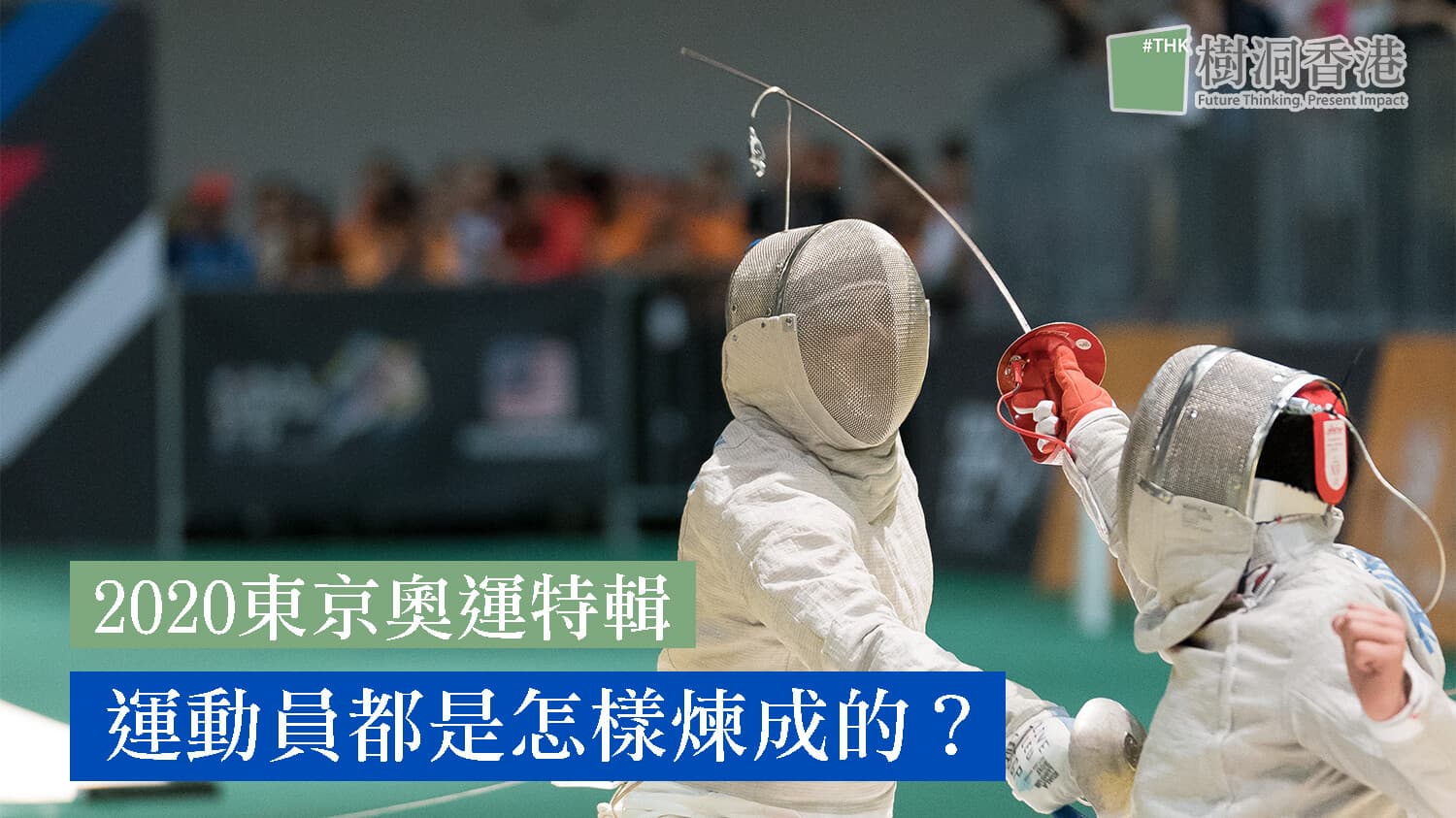
The recent Olympics played out at a feverish pitch, and Hong Kong's athletes did not let us down. By now, "Sword God" Cheung Ka-long and "Flying Fish" Siobhan Haughey have each won Hong Kong a gold and a silver respectively. Beyond these standout results, another 44 elite athletes competing for Hong Kong across 13 events also did the city proud. But as the saying goes, "one minute on stage takes ten years of work off it" — just what kind of gruelling training must these athletes endure before they can stand on the Olympic stage?
Maintaining strong mental qualities
An athlete's mental qualities are sometimes even more important than individual ability. Numerous psychological studies point to confidence being crucial to an athlete's performance — in certain sports, as much as 46% of performance comes down to an athlete's confidence [1] [2]. Concentration is just as indispensable. Athletes need to knuckle down to refine their technique in training, prepare with single-minded focus before a competition, and concentrate on performing at their best during it; a single lapse can undo years of effort, and by the time it happens it is already too late for regret. That is why many athletes log out of all their social media before a competition, to avoid distraction.
A punishing training regime
Every athlete who makes it onto the world stage has been through extraordinarily arduous training. Professional athletes train, at the very least, six days a week and six hours a day, with a range of methods that includes weight training, oxygen-supplemented exercise, team training and more. And that is just the start: many athletes take on extra sessions to keep improving, with "gold medal" coach Gregory praising Cheung Ka-long for the formidable grit and perseverance he shows, often losing sleep over his practice. We have also heard that it is not unusual for athletes to "go for a little jog" of ten kilometres on their rest days. For each Olympics they take part in, an athlete must put in at least 7,500 hours of high-intensity, pure training. We do not know how it strikes you, but for us even managing one hour of exercise a week is a struggle… so you can only imagine just how much sweat athletes pour out for a chance to earn their ticket to the Olympics.
Conquering the inner demons — athletes and performance anxiety
We have all surely felt it before: the racing heart, the cold sweat in our palms, even the churning stomach just before going on stage to give a speech. In psychology, this is performance anxiety. When we are affected by performance anxiety and do not know how to manage our emotions well, our subsequent performance can fall far short. On the sporting field, even battle-hardened athletes are affected by performance anxiety: besides causing them to perform worse in practice and competition, it also raises their likelihood of injury, and the recovery that follows takes longer [3]. This is not hard to understand — professional athletes are not only staking their youth; they also have to shoulder the expectations of family, friends and country, and I imagine no heart, however big, could hold all that anxiety.
In closing
Having read this far, we wonder whether you might have a little more respect for our local athletes now. Victory and defeat may be the matter of a moment, but we hope that when we all chant "We are Hong Kong", we also remember how much, quietly, these athletes have given for the city.
References
[1] Post, Phillip & Wrisberg, Craig. (2012). A Phenomenological Investigation of Gymnasts’ Lived Experience of Imagery. Sport Psychologist. 26. 98-121. 10.1123/tsp.26.1.98.
[2] Skinner, B. R., (2013) “The Relationship Between Confidence and Performance Throughout a Competitive. All Graduate Plan B and other Reports. 285.
[3] Ford, J. L., Ildefonso, K., Jones, M. L., & Arvinen-Barrow, M. (2017). Sport-related anxiety: current insights. Open access journal of sports medicine, 8, 205–212. https://doi.org/10.2147/OAJSM.S125845



Comments
No comments yet — share your thoughts.