
Have you ever noticed how, the moment a certain creator's name comes up on social media, their style, their values, even their whole way of life springs to mind? That is the power of personal branding.
Whether you're a founder, a freelancer, a digital nomad, or just starting out in your first job, knowing how to cultivate a personal brand is no longer merely a nice-to-have at work — it's a basic requirement of our times. Because in today's world of information overload and fierce competition, who you are often matters more than what you do.
So let's talk it through: what exactly is a personal brand? Why is everyone talking about it now? And how do you go about building a style and positioning that are truly your own?
What exactly is personal branding? Not a layer of packaging, but the "real you"
Personal branding, put simply, is the impression and perception others have of you — the imprint you leave in people's minds. It isn't a carefully crafted CV, a polished website, or a good-looking Instagram feed; it's the values you convey, your professional ability, your distinctive style, and the way you carry yourself (Montoya & Vandehey, 2002).
Brand consultant Dan Schawbel once put it this way: "Your personal brand is what people say about you when you're not in the room" (Schawbel, 2013). That single line gets to the heart of it — a personal brand isn't about manufacturing a persona; it's about conveying your true self in a strategic way, so that others recognise and remember you.
Why do you need to cultivate a personal brand? Especially in these shifting times
In the past, perhaps all it took was a stable job and a degree from a prestigious school to map out your career with peace of mind. But the world is no longer like that. We're living through an era of rapid change, fierce competition, and information overload. Freelancers, slashers, content creators — everyone is looking for ways to be "seen". And that is precisely the moment a personal brand comes into its own.
Research suggests that people with a clear personal brand tend to earn trust and attention more quickly when job-hunting, starting a business, or building working relationships (Labrecque et al., 2011). This is especially true now that most professional exchanges and portfolio displays have moved online: your voice and image in the digital world often carry more influence than a paper CV.
Building a personal brand isn't just about getting noticed — it's about creating choices for yourself in this era. When people know who you are and trust what you do, it naturally becomes far easier to stand out across all kinds of opportunities.
What personal branding is for: not to sell, but to convey your values and beliefs
You might be thinking: "I'm not a founder, and I'm not selling anything — why would I bother with a personal brand?" That's a common thought, but in truth, a personal brand was never about "selling". It's about helping others understand "who you are", "what you believe in", and "what value you bring".
Whether you're a designer, a writer, a fashion consultant, a teacher, or an engineer, you need others to see at a glance:
- What are you good at?
- What kinds of problems have you solved before?
- What are your style, values, and beliefs?
These clear, well-defined messages don't just help you establish your positioning at work or in the market — they also attract the collaborators and opportunities that share your ideals and are genuinely right for you.
Research has found that people with a clear personal brand not only earn trust more readily but also tend to report higher job satisfaction and a greater sense of self-efficacy (Khedher, 2014). To put it plainly, a personal brand doesn't just get you recognised — it gets you trusted.
How do you start building a personal brand? 4 steps to take you from zero without losing your way
✅ Step 1: Identify your core values and professional positioning
What values do you care about most? How do you want others to remember you? In which areas do you have the most passion and experience? These are the roots of your brand. Try writing down three keywords to describe yourself, for example: "sincerity", "cross-cultural communication", "creative strategy". These will become the through-line of the story you tell in future.
✅ Step 2: Choose the platform that suits you
Not everyone has to shoot videos or run a YouTube channel. You can choose the most natural, most comfortable way to share yourself — LinkedIn, Instagram, Medium, a podcast, or your own website. Pick just one or two platforms you feel genuinely motivated to maintain; the key is to create consistently.
✅ Step 3: Steadily share value and true stories
Building a personal brand isn't a one-off, dazzling presentation; it's a long-term accumulation of content. You can share what you've learned, projects you've worked on, trends you've observed — even your failures. Being genuine, substantial, and thoughtful is what leaves an impression.
✅ Step 4: Establish a consistent style and voice
From your tone of writing and the look of your images to your way of communicating, keeping your style consistent helps you build recognisability. Over time, the moment people see your content, they'll know it's you. That is a strong and powerful personal brand (Shepherd, 2005).
A personal brand isn't self-packaging — it's living out who you truly are
Many people, when they hear "cultivating a personal brand", worry it means pretending to be more impressive than you are, or over-selling yourself. But a truly powerful personal brand was never built on packaging — it springs from sincerity.
You don't need to become someone else; you only need to convey clearly "who I am". When you have the courage to share your own stories, beliefs, experiences, and learning journey, that authenticity will naturally draw the right people to you, and slowly, in their minds, build up trust and goodwill.
And this brand doesn't only help you find opportunities — it also helps you understand yourself better and clarify the direction you want to take.
✅ A small exercise: the starting point of your personal brand
Why not begin with these three questions to spark some reflection and open up your brand-discovery journey:
1) When others bring you up, how would you like them to describe you?
2) If you had to tell one story about yourself that captures your values, what would it be?
3) What content, themes, or formats are you willing to share over the long term?
In closing: a personal brand is a long-distance run towards "becoming yourself"
Building a personal brand was never about showing off; it's about honestly telling the world who you are and what you care about. It lets you stop passively waiting for opportunities and instead speak up, drawing the right people and the right opportunities to you.
You don't need everything to be clear and everything to be ready from the very start. The point was never "starting perfectly", but "being willing to start". Clarifying your values, practising how to express your perspective, building your style — step by step. This road may not be short, but it's very much worth it.
As you grow clearer about the kind of person you want to become, you'll also be better able to live out the choices and freedom that are truly your own.
Explore the MindForest App: build a solid inner core and shape a one-of-a-kind personal brand
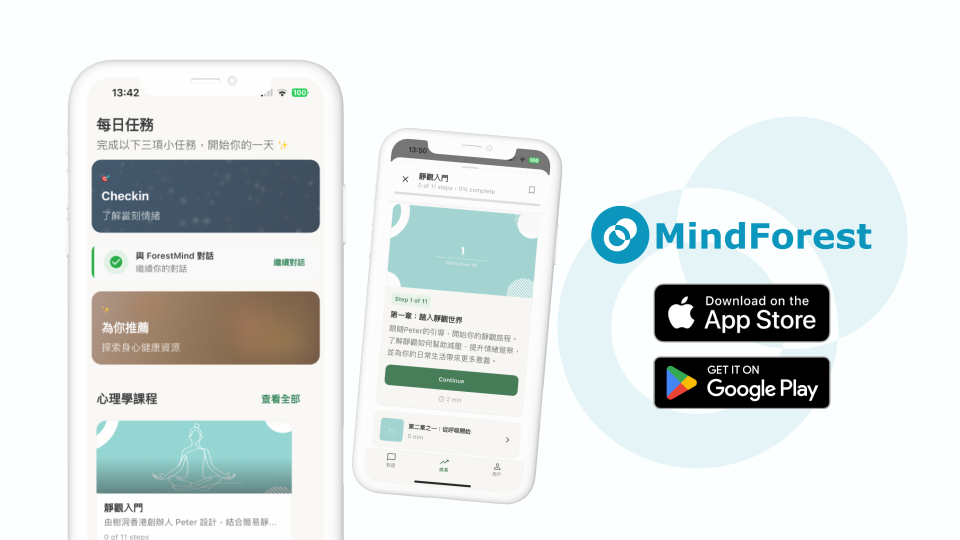
In this era that places such a premium on self-expression, building a personal brand is not only about cultivating an outer image — it's also about accumulating inner strength. Through the MindForest App, you can observe your own values and emotional responses more deeply, helping you stay sincere on the path of building your personal brand.
? ForestMind AI: your mental coach and brand navigator
Whether you're facing anxiety, confusion, or self-doubt, ForestMind AI responds to your mood and your thinking, offering tailored reflections and suggestions for adjustment. It helps you understand yourself more clearly and find your brand positioning.

? Inspiration journal: a record of every honest conversation with yourself
Nurturing a personal brand is an ongoing journey of self-exploration. Through the inspiration journal, you can record each day's feelings and growth, and watch yourself progress and change bit by bit.
? Psychometric assessments: get to know your own values and beliefs
Using psychometric assessment tools, you can dig into your core values and behavioural patterns, helping you discover the brand style and mode of expression that suit you best, and shape a distinctive personal image from the inside out.
Try MindForest free right now and let us join you in practising:
Start from within and build a personal brand that is genuine and powerful — live out the unique light that is yours alone!
References
Khedher, M. (2014). Personal branding phenomenon. International Journal of Information, Business and Management, 6(2), 29-40.
Labrecque, L. I., Markos, E., & Milne, G. R. (2011). Online personal branding: Processes, challenges, and implications. Journal of Interactive Marketing, 25(1), 37–50. https://doi.org/10.1016/j.intmar.2010.09.002
Montoya, P., & Vandehey, T. (2002). The brand called you: Make your business stand out in a crowded marketplace. McGraw-Hill.
Schawbel, D. (2013). Promote yourself: The new rules for career success. St. Martin’s Press.
Shepherd, I. D. H. (2005). From cattle and coke to Charlie: Meeting the challenge of self marketing and personal branding. Journal of Marketing Management, 21(5-6), 589–606.



Comments
No comments yet — share your thoughts.