What Tangled Knows About Overprotective Parents
Warning: spoilers ahead. Most of us have seen Disney's Tangled — but have you ever considered what its story can tell us about parenting styles and the psychology of motivation?

Warning: spoilers ahead. Most of us have seen Disney's Tangled — but have you ever considered what its story can tell us about parenting styles and the psychology of motivation?
Warning: spoilers ahead — please read with that in mind.
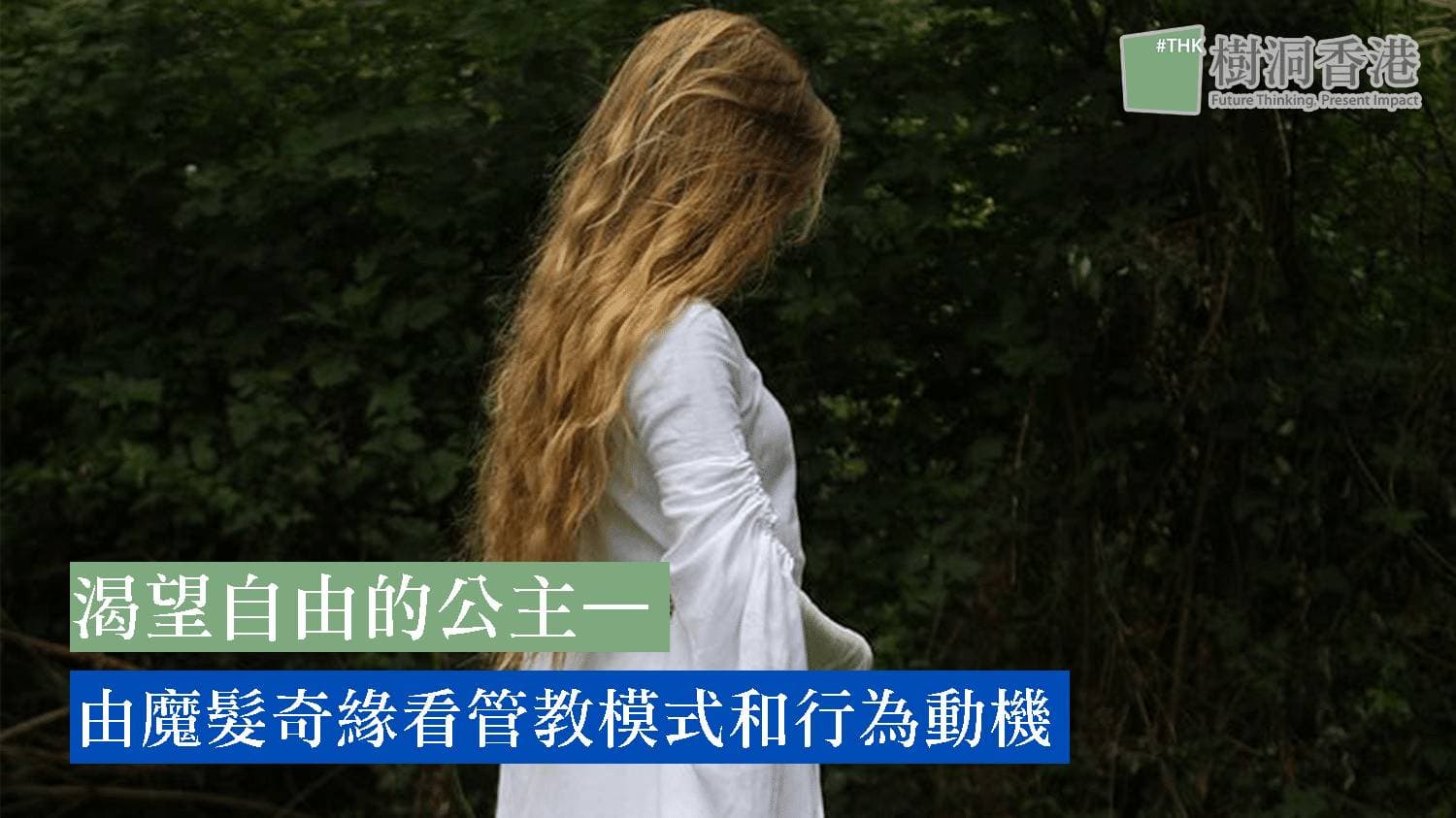
In Disney's 2010 film Tangled, the heroine Rapunzel has golden hair that holds a mysterious, ever-youthful healing magic. To preserve her own youthful looks, an old woman named Gothel thinks nothing of stealing Rapunzel from the palace while she is still a baby and raising her in an isolated tower, cut off from the world. Rapunzel longs to break free from the unchanging life that has been laid out for her — to leave the tower and chase her own dream. She hopes Gothel will let her go on her eighteenth birthday, but Gothel refuses her request, painting the outside world as full of villains who covet Rapunzel's magic. Many of us may have seen this film, but have you ever thought about how its story can prompt a discussion of parenting style and motivation?
In German, the name "Gothel" carries the sense of a parent who is overprotective of their child — which brings to mind today's "helicopter parents" and "tiger parents". From a psychological standpoint, a child's social anxiety is closely tied to their parents' parenting style. Spokas and Heimberg (2009) point out that this kind of overprotective parenting hinders children from learning some of the social skills they need, leaving them at a loss in their interactions with others and, as a result, prone to social anxiety. Other studies likewise stress that overprotecting children affects their self-determination as well as their physical and mental health. In 2014, Schiffrin et al. conducted a study of 297 American university students aged 18 to 23, asking them to describe their mother's parenting style and to rate themselves across six dimensions, including their sense of autonomy and competence and their levels of anxiety and depression. The results showed that mothers who overprotected their children were rather like helicopters hovering overhead. Students who were on the receiving end of this "helicopter parenting" reported higher levels of anxiety and depression, lower life satisfaction, and a weaker sense of autonomy and competence. Hui, Molden and Finkel (2013) stress further that autonomy and self-direction play an indispensable role in maintaining the health of a relationship (relationship well-being). Psychologically, when parents give their children too much protection and control, self-esteem tends to fall. Conversely, a parenting style that emphasises and encourages autonomy and independence gives children a stronger sense of self-worth (Herz & Gullone, 1999). All of this shows that overprotecting children can affect their mental health.
So which parenting style is most suitable? In developmental psychology, parenting styles are broadly divided into four types: the authoritative type, the authoritarian type, the permissive type, and the uninvolved type. The authoritative type sets high expectations while also offering an appropriate amount of warmth; the authoritarian type sets high expectations and exercises a high degree of control but offers little warmth; the permissive type sets low expectations and offers excessive warmth; and finally, the uninvolved type describes a parenting style that ignores the child entirely. Among these, children raised in the authoritative style show higher self-esteem and self-confidence, are more inclined to follow their parents' wishes and expectations, and tend to perform better academically. By contrast, children raised in the authoritarian style tend to have weaker academic results and lower self-esteem (Boyd & Bee, 2015, p.214-215). In truth, every family has its own suitable parenting style; even so, in psychological terms, children who receive authoritative parenting develop better — and parents may try to offer more warmth and more communication while still holding appropriate expectations of their children.
| High responsiveness | Low responsiveness | |
| High expectations | Authoritative type | Authoritarian type |
| Low expectations | Permissive type | Uninvolved type |
Midway through the story, Rapunzel manages — with the help of the male lead, Flynn Rider — to slip away from Gothel and escape the tower, only to run into ruffians at a tavern who plan to capture Flynn, a wanted thief who has stolen the crown, in order to claim the reward money. Rapunzel pleads desperately with them, telling them about her dream, and in the end the ruffians, reminded of their own dreams, are moved to let Flynn go. Rapunzel presses forward with her dream throughout; in real life, we too keep advancing towards our own dreams, and what sustains us all along is motivation. The research of psychologists Deci and Ryan (2001) describes two kinds of motivation: extrinsic motivation and intrinsic motivation. Extrinsic motivation is not an interest in the activity itself, but in the other things the activity brings — for example, raising one's status, gaining fame and fortune, or material rewards. Intrinsic motivation, by contrast, is an interest in the activity itself, not material satisfaction; it arises because the activity brings a person meaning and happiness, so that the person genuinely enjoys taking part. Research shows that, compared with extrinsic motivation, intrinsic motivation is better at boosting creativity, cognitive flexibility, and physical and mental health. Psychologists Sheldon and Kasser (2001) note that, according to self-determination theory, everyone has three innate psychological needs: autonomy, the need to be able to decide freely; relatedness, the need to connect with others; and competence, the need to complete activities effectively. When we satisfy these three needs, intrinsic motivation arises. Extrinsic motivation is only fleeting; it is intrinsic motivation that is the lasting, vital link sustaining us as we work towards our dreams. Rapunzel is finally able to fulfil her dream of seeing the floating lanterns — and we believe that we, too, can achieve our dreams just as we wish!
Reproduced from the Psychology Society, Social Sciences Students' Society, HKUSU. The content and/or title may have been edited; original link: https://www.facebook.com/PsySocSSSHKUSU/posts/2539280532774907?__tn__=K-R
References
Boyd, D., & Bee, H. (2015). Lifespan development. Pearson Education Limited.
Deci, E. L., & Ryan, R. M. (2010). Intrinsic motivation. The corsini encyclopedia of psychology, 1-2.
Herz, L., & Gullone, E. (1999). The relationship between self-esteem and parenting style: A cross-cultural comparison of Australian and Vietnamese Australian adolescents. Journal of cross-cultural psychology, 30(6), 742-761.
Hui, C. M., Molden, D. C., & Finkel, E. J. (2013). Loving freedom: Concerns with promotion or prevention and the role of autonomy in relationship well-being. Journal of Personality and Social Psychology, 105(1), 61.
Schiffrin, H. H., Liss, M., Miles-McLean, H., Geary, K. A., Erchull, M. J., & Tashner, T. (2014). Helping or hovering? The effects of helicopter parenting on college students’ well-being. Journal of Child and Family Studies, 23(3), 548-557.
Sheldon, K. M., & Kasser, T. (2001). Goals, congruence, and positive well-being: New empirical support for humanistic theories. Journal of humanistic psychology, 41(1), 30-50.
Spokas, M., & Heimberg, R. G. (2009). Overprotective parenting, social anxiety, and external locus of control: Cross-sectional and longitudinal relationships. Cognitive therapy and research, 33(6), 543.
Keep reading
Love & Relationships
Personal Growth
Personal Growth




Comments
No comments yet — share your thoughts.