

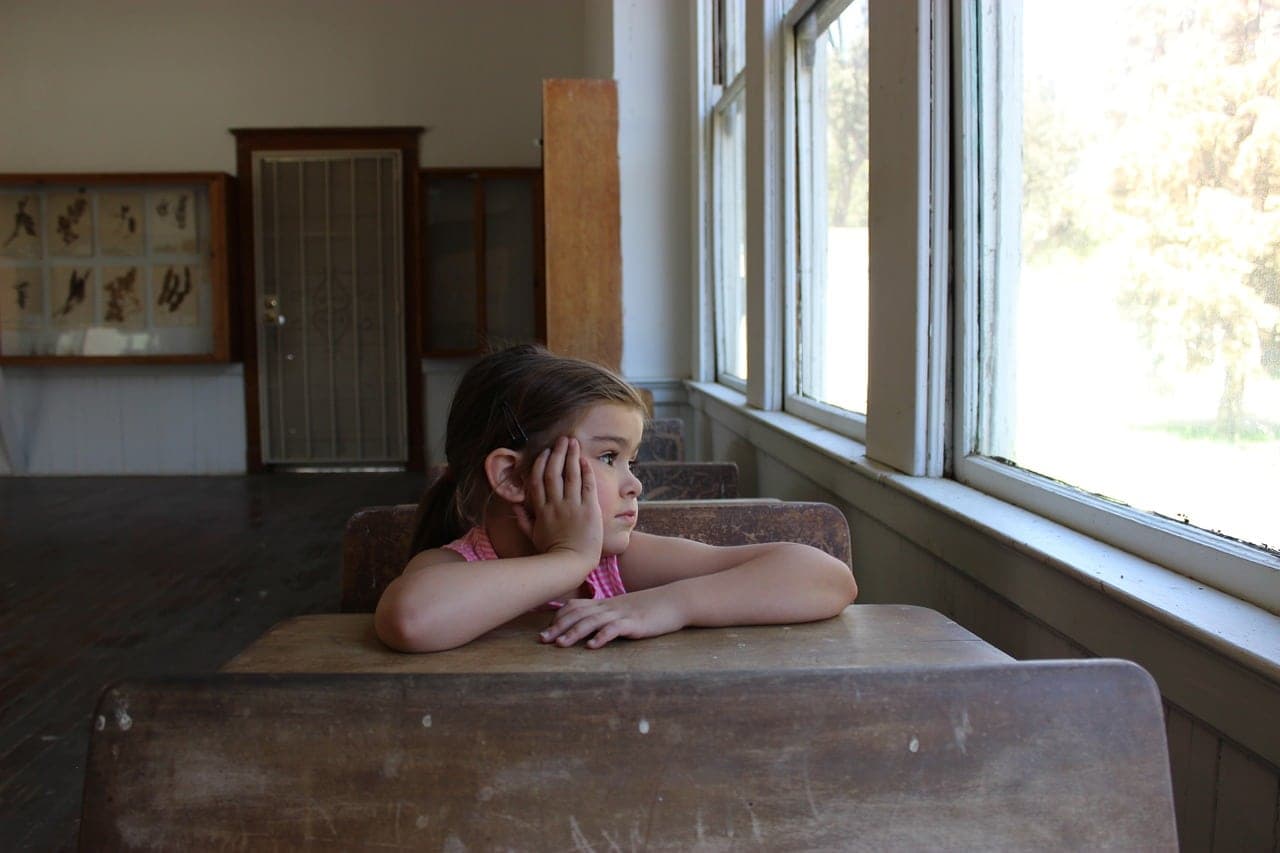
It's hard to miss these days: an approach to raising children that has tipped into something close to an obsession, with "don't fall behind at the starting line" becoming an article of faith among parents. Children are exposed to all sorts of knowledge and skills at an ever younger age — learning multiplication in kindergarten, or picking up a string of foreign languages while they're still very small. What does psychology have to say about this phenomenon?
Lev Vygotsky (1896-1934), in his sociocultural approach to cognitive development, argued that a child's cognitive abilities develop through interaction with more skilled partners. These more skilled partners — older siblings, parents, teachers and so on — help children learn through collaboration, opening up new cognitive capacities in them. This process of supporting a child's development is what the theory calls scaffolding.
More importantly, this scaffolding is most effective when it takes place within the Zone of Proximal Development (ZPD). Put simply, the ZPD is the zone that lies between "what a child can already master alone, with no help" and "what a child cannot master even with help". Take an 18-year-old student: the cognitive ability they "can easily master with no help at all" might be addition and subtraction, while the cognitive ability they "cannot master even with help" might be rocket science. The ZPD sits in between, so it might take in things like basic physics and engineering mathematics. So if you want to support an 18-year-old student in developing their cognitive abilities, what you teach them is not addition and subtraction, and not how to build a rocket, but basic physics and engineering.
The same logic applies: for a child's cognitive abilities to develop more effectively, what you should be supporting is the knowledge and skills that suit their stage of development. Not too easy, but never beyond what their brain can take on. You can help the seedling grow, but you must never pull at it.
The appeal of psychological knowledge is that it lets us see human nature more clearly — and, applied well, it can be a tremendous help to us, and even to the next generation.
–
Author – Lo’s Psychology Reproduced under special authorisation; content may be slightly edited
Ph.D in Psychology, The University of Hong Kong
Ph.D in Psychology, HKU



Comments
No comments yet — share your thoughts.