Why Clusters of Tiny Holes Disgust Us
Over the past decade, "trypophobia" has become a household word for the unease we feel at densely clustered patterns. But is it really a phobia — and why do perfectly healthy minds react to those tin…

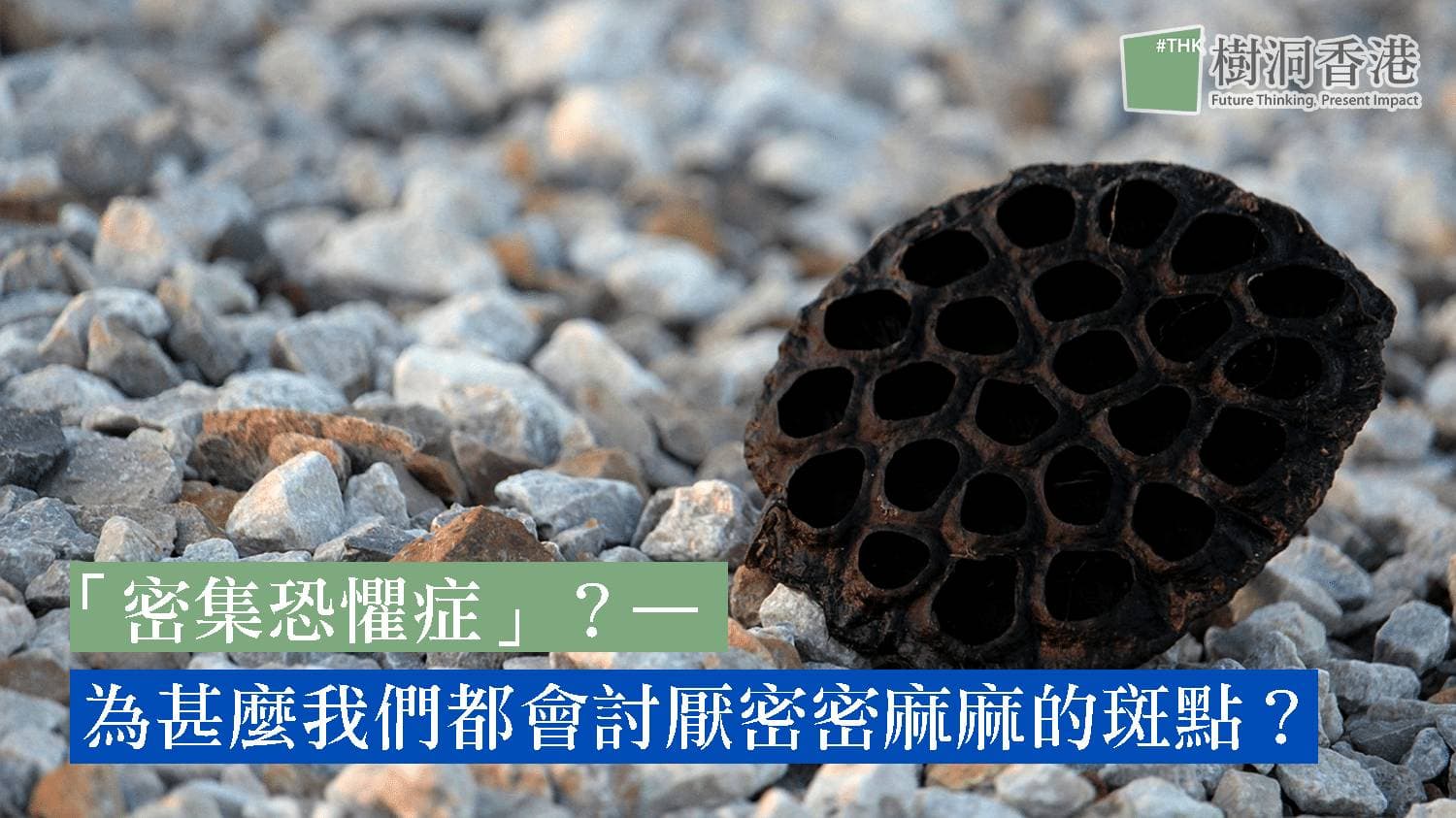

Over the past decade, "trypophobia" has become a household word for the unease we feel at densely clustered patterns. But is it really a phobia — and why do perfectly healthy minds react to those tin…
Over the past decade or so, the word "trypophobia" has come into fashion. Have you ever wondered whether you might have it? When we talk about "trypophobia" in everyday speech, we tend to mean a broad aversion to densely packed patterns. In casual conversation, "trypophobia" doesn't refer to a clinically recognised psychiatric condition — it's simply the revulsion we feel towards these patterns. As the author is not a clinical psychologist or psychiatry professional, this article will only discuss "trypophobia" in the everyday sense the general public uses. So why is it that even those of us in good mental and physical health still feel this kind of "dread"?
When we look at densely clustered patterns — a wound full of botfly larvae, a lotus seed head, the bubbles in a bar of soap — many of us experience a queasy feeling that seems to come from nowhere. What's interesting is that this psychological response isn't limited to a small minority; almost anyone can experience this hard-to-describe sensation. Although the phenomenon is popularly called "trypophobia," our reaction when faced with dense patterns is usually disgust rather than fear. Disgust and fear are both basic human emotions. If we study disgust and fear from a functionalist perspective — exploring how these feelings have helped human beings survive — we find that the two are actually very different. When we face something frightening, fear can briefly seize control of the body, and in an instant we may launch into a fight-or-flight response, primed to react to the danger. Disgust works differently. We find certain smells, certain people, certain sounds off-putting, but this emotion only makes us feel uneasy; at most, when we can no longer bear it, we choose to walk away and avoid whatever disgusts us — it rarely triggers a strong, urgent reaction. From this we can see that what we go through when looking at dense patterns is not fear or panic, so calling the phenomenon "cluster disgust" seems the more fitting description.
When psychologists discover a psychological phenomenon, they go a step further and try to work out why it arises. Emphasising the function of a psychological phenomenon and how it might, through evolution, have helped humans survive is a common interpretive approach for psychology.
One of the most frequently cited explanations in academic circles is that cluster disgust stems from a human aversion to parasites and skin-borne infectious diseases. Picture, for a moment, the kinds of environments in nature where such exaggeratedly dense patterns appear: insect burrows, rotting flesh or plants riddled with swarms of parasites, skin infected with bacteria and covered in pustules. In ancient times, such things were teeming with pathogens deadly enough to kill. If human beings were naturally inclined to avoid these patterns, they could reduce their chances of coming into contact with parasites or disease-causing bacteria, greatly improving their odds of survival. One psychological study took people with trypophobia as its subjects; part of it asked them to report their symptoms, and the most commonly reported ones were nausea (33%), feeling unwell (27%) and skin itching (20%). The skin itching may reflect a link between trypophobia and the skin, indirectly supporting this hypothesis about skin disease (Kupfer & Le, 2018).
Another explanation is that venomous animals such as poisonous snakes and poison dart frogs often have dense, mottled markings on their bodies, so cluster disgust may have emerged because humans needed to avoid these toxic creatures. However, a study with preschool children as its subjects found no relationship between hole patterns and venomous animals, suggesting that cluster disgust has nothing to do with an innate tendency to avoid poisonous animals (Can et al., 2017). Although the research team's conclusion shows that trypophobia is unrelated to innate predisposition, they did not rule out the possibility that people learn to associate dense patterns with venomous animals as they grow up, and so develop cluster disgust.
Reading this far, you might be wondering: why would a reaction originally aimed at infectious disease or animals expand into disgust at all dense patterns? One possibility has to do with the way humans learn. When we analyse the relationships between things, we may commit the error of overgeneralisation. In the course of learning, we have to do a certain amount of generalisation — for example, having eaten a green, unripe banana just once, we know that all bananas that are still green are unripe. Feeling disgust at every densely textured organism could be a quick, convenient survival strategy. And after overgeneralising, we may come to find all dense patterns off-putting, mistaking every cluster of tiny spots for something we ought to avoid, and forming the cluster disgust we feel towards such images.
"Trypophobia" is different from the "cluster disgust" this article has been discussing: those with the former may experience intense distress and panic in their daily lives. If you feel that dense patterns are getting in the way of your life and seriously harming your quality of life, I would encourage you to seek professional help as soon as possible. If you simply dislike such patterns and would rather not look at them, but they cause you no great trouble, then there's no need to worry too much — because rest assured, plenty of other people feel exactly the same way you do. This is the charm of psychology: getting to know ourselves through the lens of science. "Trypophobia," it turns out, was this sort of thing all along.
Kupfer, T. R., & Le., A. T. D. (2018). Disgusting clusters: trypophobia as an overgeneralised disease avoidance response. Cognition and Emotion, 32(4), 729-741. https://doi.org/10.1080/02699931.2017.1345721
Can, W., Zhuoran., Z., & Zheng. J. (2017). Is trypophobia a phobia? Psychological Reports, 120(2), 206-218. https://doi.org/10.1177/0033294116687298



Comments
No comments yet — share your thoughts.