

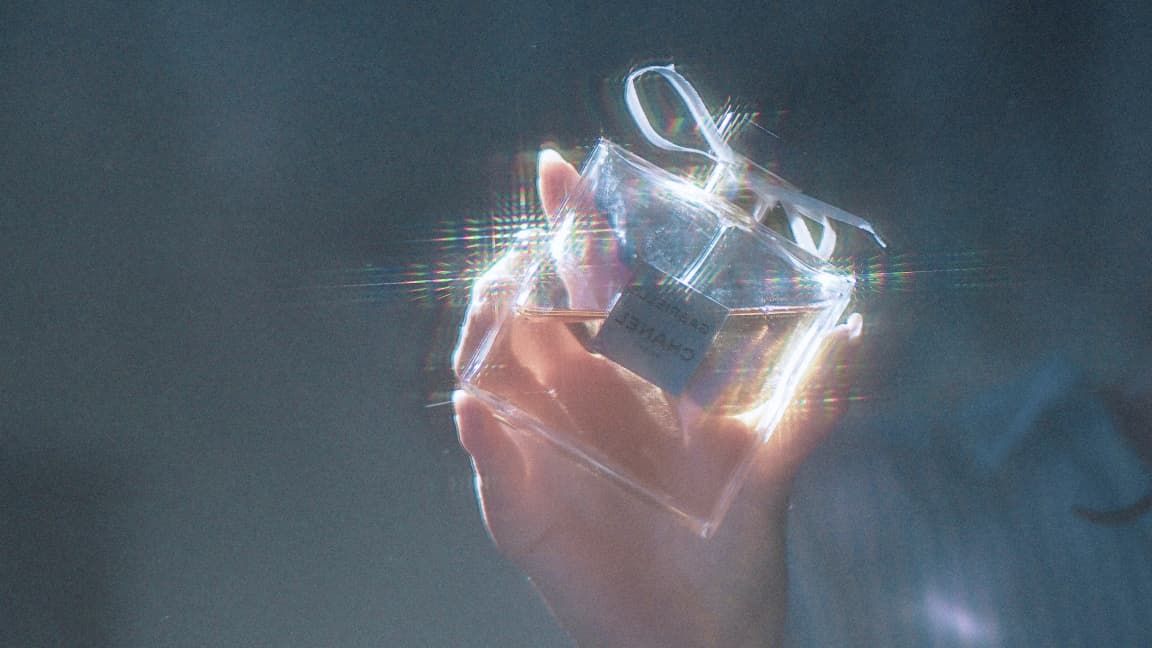
Picture your favourite scent for a moment — perhaps the smell of earth after a sudden downpour, the sandalwood of a temple, or the warmth of someone you hold dear. Perfume has a strange power: without a word, without appealing to reason, it can reach straight into the deepest layers of feeling. That is what makes perfume so captivating: it is not merely something that "smells nice", but something that can shape how we feel about ourselves, our attractiveness, and even our connections with other people.
Welcome to the world of the psychology of perfume. This is a journey through smell, memory and emotion — and you will discover that fragrance is far more "persuasive" than we tend to imagine.
Why do we wear perfume? It is not just because it smells good
The use of perfume goes back thousands of years. From ancient Egypt to Rome, the scents of spices and plants were used to make offerings, to signal status, or to attract a desired partner. Today, perfume has long since become part of everyday life — whether on a date, at work, or as a small act of self-care, a single bottle can seem to transform the mood of a room in an instant.
Most people assume we wear perfume in order to "mask" our body odour, but that is not quite the case — research has found that the magic of perfume lies in the way it blends with our own body odour, producing a scent that is unique and deeply personal (Gottfried, 2011). This fragrance is not the work of you alone, nor of the perfume alone, but the result of the two meeting.
Everyone has a "signature scent": even the way you choose perfume is a science
A 2012 study revealed that when people choose their own perfume, that choice produces the most harmonious match with their body odour. In the study, participants wore both a fragrance they had chosen themselves and one assigned at random. The results showed that the body-odour mixture created by the former was rated more highly by others, and judged more appealing (Lenochová et al., 2012).
In other words, we intuitively know how to choose a perfume that "suits us" — the kind that merges with our own body odour and lifts our entire presence. This may also explain why certain perfumes smell wonderful on other people, yet are completely wrong on us.
Can scent determine attraction? The answer is: yes
Have you ever been deeply drawn to someone's scent, unable even to put your finger on what made it so alluring? This is, in fact, evolutionary biology quietly at work. The human body carries a set of immune genes known as the major histocompatibility complex (MHC), which influences our preferences for different scents.
Experiments show that women are more readily attracted to the scent of men whose MHC genes are markedly different from their own — a genetic difference that may mean stronger immunity in the next generation (Psychology Today, 2025). This is also why perfume preference is, in truth, bound up with a deep-seated biological compatibility.
In one experiment, men slept in the same T-shirt for two consecutive nights, after which female participants smelled the scent of these garments. It turned out that the scents they liked best tended to be those left by men whose genetic background differed most from their own (Psychology Today, 2025). This kind of attraction is not only a feeling — it is genes speaking.
Perfume does not only make you more alluring — it also makes you more confident
Perfume is not only a social tool; it can also change how we feel about ourselves. Did you know that wearing perfume can raise your self-evaluation, and even make your body language come across as more natural and self-assured?
In one study, participants were asked to record a short self-introduction video. It turned out that those wearing a fragrance product were not only rated as more attractive — even their non-verbal expression (such as posture and smile) came across as more appealing (Lenochová et al., 2012). This means: when you smell good to yourself, you also carry yourself with more confidence, and in turn appear more attractive in the eyes of others.
Smell is a direct route to emotion
Perfume has such a powerful influence because it acts directly on the limbic system of the brain — the seat of emotion and memory. Unlike sight or hearing, smell does not need to pass through layers of processing; it touches the rawest core of feeling directly.
This also explains why the link between scent and memory is so profound. Sometimes a single thread of a familiar fragrance is enough to summon an afternoon from years ago, a particular romance, a particular loved one.
And the influence of perfume sometimes works at a level we are not even aware of. For instance, certain sweet scents can make people more able to tolerate pain, raise their sense of trust, or alter how they judge others (Lenochová et al., 2012). It is a quiet yet powerful form of psychological suggestion.
The perfume you choose actually reveals what kind of person you are
Perfume is a wordless language; it carries your style, your emotional state, even the message you want to convey in the moment. For some people, perfume is a sense of safety; for others, it is a form of seduction, of attraction, or of self-definition.
The perfume that suits you best is not necessarily the most fashionable or the most expensive — it is the bottle that strikes a chemical chord with you. When it merges with your body odour, what others sense is not a particular scent, but "you" yourself.
In closing: a bottle of perfume, a wordless emotional dialogue
Perfume is an intensely intimate message. It needs no words to stir a response; it needs no touch to create connection. From ancient rites to modern routines, from the flutter of falling in love to a personal sense of ceremony, perfume has always been one of the ways we communicate with ourselves and with others.
So the next time you spritz on a little perfume, take a moment to wonder: what message do you hope this scent will carry? Confidence, tenderness, mystery? Whatever the answer, that breath of fragrance is the first thing you say to the world.
Explore the MindForest App: discover your perfume personality and become a more charismatic you
Perfume is not just a scent; it is a psychological language. Through the MindForest App, you can gain a deeper understanding of your scent preferences, your style and personality traits, and your interpersonal appeal — choosing the one bottle of perfume that truly belongs to you, and revealing a charisma that is one of a kind.

? ForestMind AI: your personal style analyst
ForestMind tailors perfume suggestions that resonate with your inner self, based on your emotional state and personality traits. Whether you want to convey confidence, mystery or tenderness, ForestMind can help you find the scent that represents you.
? Inspiration Journal: record your mood, sketch your daily log
Use the Inspiration Journal to note the perfume you choose each day, your mood in the moment and how your interactions feel, observing how scent shapes your connection with others and uncovering which fragrances make you feel more at ease and more charismatic.
? Psychometric assessment: see yourself through your preferences and shape your signature persona
Through a psychometric assessment, understand your personality leanings, helping you explore the types of perfume that suit you and turn your scent into the most natural, most powerful self-introduction.
Download MindForest now and begin your journey into the psychology of scent — discover a more confident, more captivating you!
References
Gottfried, J. A. (Ed.). (2011). Neurobiology of Sensation and Reward. CRC Press/Taylor & Francis.
Lenochová, P., Vohnoutová, P., Roberts, S. C., Oberzaucher, E., Grammer, K., & Havlíček, J. (2012). Psychology of fragrance use: perception of individual odor and perfume blends reveals a mechanism for idiosyncratic effects on fragrance choice. PloS one, 7(3), e33810. https://doi.org/10.1371/journal.pone.0033810
Psychology Today. (2025). Scent. Psychology Today. https://www.psychologytoday.com/ca/basics/scent







Comments
No comments yet — share your thoughts.