Why We Chase the Burn of Spicy Food
Why do some people chase ever-spicier noodles while others stop at the mild bowl? Spice isn't even a taste — it's a kind of pain. Here's the sensation-seeking psychology that explains the craving, an…
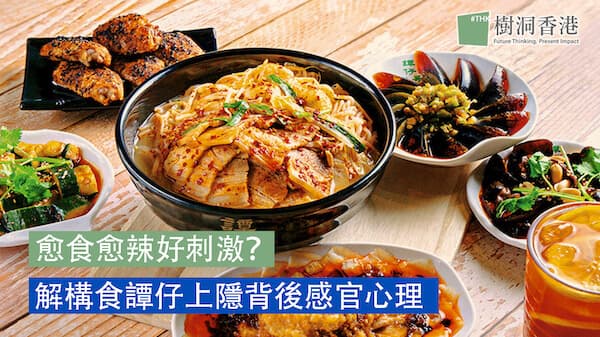

Why do some people chase ever-spicier noodles while others stop at the mild bowl? Spice isn't even a taste — it's a kind of pain. Here's the sensation-seeking psychology that explains the craving, an…
"Make mine a bowl — hold the parsley and spring onion, double the chilli and Sichuan pepper." When you hear someone ordering the extra-spicy noodles, do you ever feel a quiet flicker of awe, even admiration? There's probably not a single Hong Konger who hasn't tried Tan Tsai's Yunnan rice noodles or Sam Gor. Plenty of us like to size one another up by how much spice we can handle: the hotter you eat, the more praise and respect you seem to earn, and some people even get teased for ordering the non-spicy bowl — so they keep training up their tolerance for heat.
This phenomenon exists the world over — there are even chilli-eating contests, in places such as Japan, the United Kingdom, China, the United States and Germany. Winners take home prizes and cash, and some people will gladly buy a plane ticket just for the chance to compete, even when the champion's prize money doesn't come close to covering the airfare. And yet we never hear of contests for eating other tastes — sweet, sour, bitter, salty, or umami.

Taste is the sensation produced when the taste-receptor cells on the tongue and in the mouth undergo a chemical reaction with substances such as food (Chiras, 2005). The five basic tastes are sweet, sour, bitter and salty, plus umami (Kean, 2015). However, because there are no spicy taste receptors (spicy taste receptors), spiciness is not counted among the five basic tastes (Chandrashekar et al., 2006). Spice is a sensation that blends a burning feeling with other tastes (Richardson & Saliba, 2011). Put simply, spice is a kind of pain. So why do people love to compete at this very kind of ache?
Because there is a significant positive relationship between sensation seeking and a preference for spicy food. Sensation seeking refers to a person's need for physical, social and psychological stimulation, and the level of risk they are willing to take on in order to meet that need for stimulation (Zuckerman, 1994). High sensation-seekers are associated with certain risky behaviours, such as high-risk sports, drug use and dangerous driving (Jonah, 1997). They want to acquire novel, exciting and complex sensations and experiences. Physiological studies of monoamine oxidase levels report that, compared with low sensation-seekers, high sensation-seekers have lower monoamine oxidase levels and higher testosterone levels (Fowler, von Knorring, & Oreland, 1980).
In short, people who enjoy chasing spicy food are simply meeting their need for sensation seeking. So if you can only manage the mild bowl, or ten units of spice, it only means you don't use spice to satisfy your need for sensation seeking, or that you are a low sensation-seeker — it does not mean you are weak. That being so, never again feel embarrassed about ordering the non-spicy bowl!
In psychotherapy, counsellors/social workers encourage people with drug or gambling addictions to take up exercise, redirecting their need for sensation seeking away from drug use or gambling and meeting it through exercise instead. By the same logic — while eating spicy food can become a habit, it is a healthier behaviour than drug use, dangerous driving or gambling, and it does no harm to others — so could the act of eating spicy food be used to redirect the sensation-seeking needs of people with drug or gambling addictions? It might just be a handy, simple way to quit!
This article is a graduation project for the "Stillness-based Mental Health Supporter Certificate Course MBPsyS"; the content and/or title may have been edited. The original author is Tsui Wai Ying.
Chandrashekar, J., Hoon, M. A., Ryba, N., & Zuker, C. S. (2006). The receptors and cells for mammalian taste. Nature, 444, 288-294. http://doi.org/d96hd9
Chiras, D. D. (2005). Human biology. Jones & Bartlett Learning.
Fowler, C. J., von Knorring, L., & Oreland, L. (1980). Platelet monoamine
oxidase activity in sensation seekers. Psychiatric Research, 3, 273–279.
Kean, S (2015). The science of satisfaction. Distillations Magazine, 1(3), 5.
Richardson, P., & Saliba, A. (2011). Personality traits in the context of sensory
preference: A focus on sweetness. New York: Springer.
Zuckerman, M. (1994). Behavioral Expressions and Biosocial Bases of Sensation Seeking. Cambridge University Press. Cambridge: MA.




Comments
No comments yet — share your thoughts.