Why the Mind Prefers the Easy Decision
Faced with a hard choice, the mind reaches for the answer that feels easiest, not the one that is best. Drawing on Thinking, Fast and Slow, here is how that bias works and how to catch it.

Faced with a hard choice, the mind reaches for the answer that feels easiest, not the one that is best. Drawing on Thinking, Fast and Slow, here is how that bias works and how to catch it.
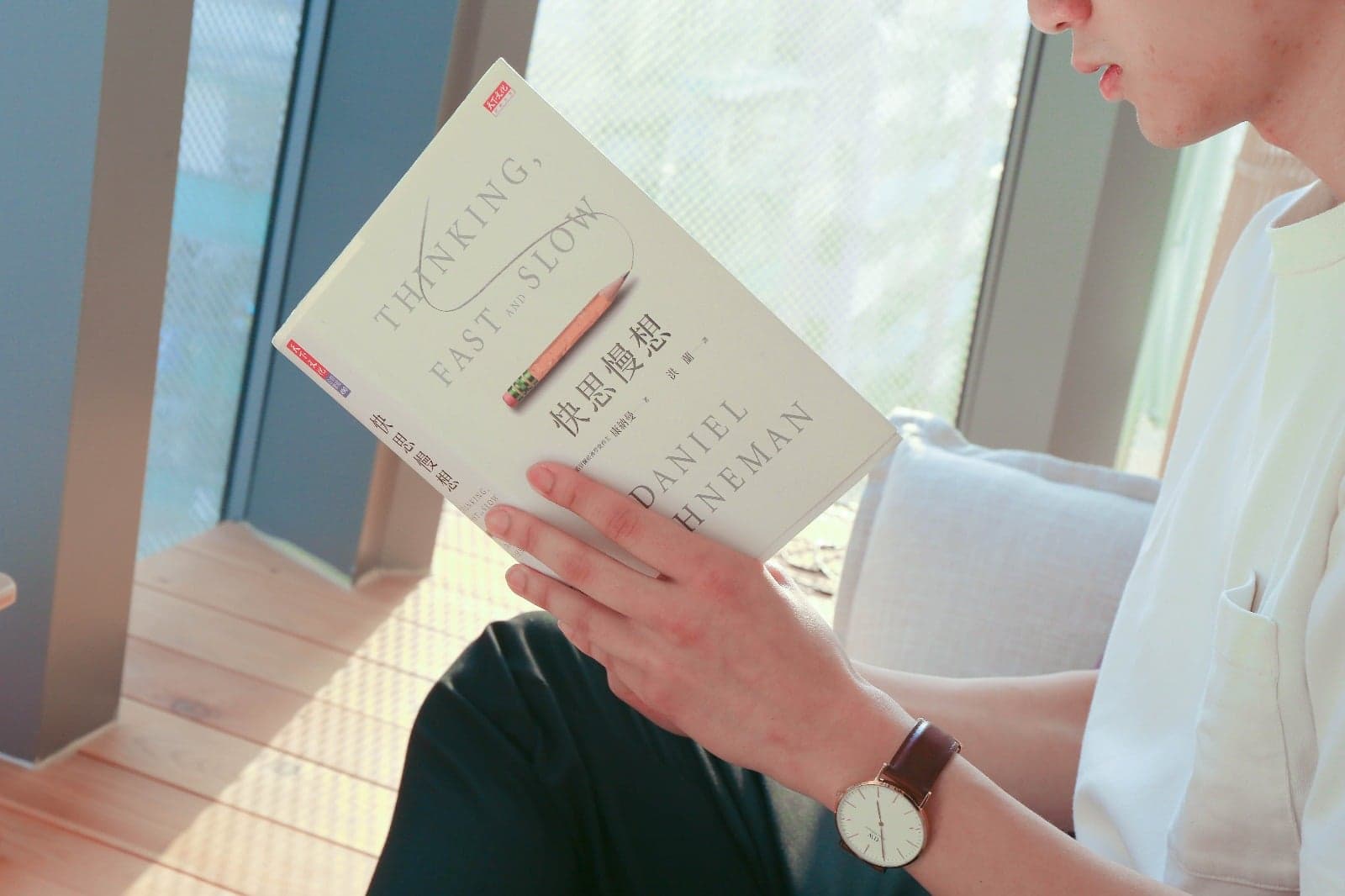
Thinking, Fast and Slow is a landmark of behavioural economics. The book has had a profound influence on investing, marketing and economics, and the research behind it earned its author the Nobel Prize in Economics. What follows introduces a few of the book's simpler psychological ideas, and shows how you can put them to use to make better decisions.
Thinking, Fast and Slow argues that when we make a decision we usually rely on one of two systems. The first is System 1, which works mainly from how things feel in the moment to reach fast judgements — in short, our intuition about things. System 1 takes no effort at all: tell someone "2 + 2" and they see at once that it equals four; see an angry expression on someone's face and you know they are furious without having to analyse it. System 2, by contrast, deliberately uses reason to analyse, weigh and calculate the relevant information. Working out "55 × 22", for instance, calls on System 2 — if you don't make yourself do the sum you simply won't know the answer. But with "2 + 2" you not only need no calculation to know it equals 4, you couldn't make yourself not know the answer even if you tried, because this is System 1's work — so System 1 is automatic, while System 2 has to be consciously engaged.
Does anyone enjoy doing sums? Even those who do can't pretend it isn't hard work. To conserve mental energy, people have a tendency not to fire up System 2 unless they have to, and even when it does fire up, the less it has to do the better. So when faced with a difficult decision, we readily settle on a choice that looks reasonable and give up on thinking through the other possibilities, in order to spare System 2 the effort. Take an example: suppose you want to subscribe to a newspaper and have three options:
1. $100 a month — online edition
2. $300 a month — print edition delivered to your door daily
3. $300 a month — online edition + print edition delivered to your door daily
Option 2 is utterly worthless (since option 3 is clearly better), yet compared with offering only options 1 and 3, more people will choose option 3 when option 2 is present. That is because comparing options 2 and 3 is extremely easy (Cognitive Ease), whereas comparing 1 and 3 means carefully weighing up whether it is worth paying $200 more for a physical paper copy — which depends on factors such as how much you like the print edition, and is a relatively difficult decision. So people take the easy way out and choose option 3. This phenomenon, in which an obviously inferior option sways how you weigh the other options, is what psychologists call the Decoy Effect.
A Euthanasia should be legalised
B Euthanasia should be legalised
If you hand sentences A and B to two separate groups of people and ask them to rate how much they agree with the statement — say on a scale of 1 to 5 — chances are you'll find the group given sentence A agrees more. Why? Sentences A and B are exactly the same. This is the very phenomenon described above at work. Because sentence B is in a smaller typeface, with its colour close to the background, it is harder to read than sentence A. As you read sentence B, there is a very slight effort and discomfort. That uncomfortable feeling leaves you with a faintly negative impression of sentence B, which in turn colours your rational judgement of its content; conversely, sentence A reads very comfortably, and that sense of cognitive ease makes you more inclined to agree with what it says. Of course this shift is tiny — adjusting the typeface won't make someone who has always opposed euthanasia change their position — but for someone who is undecided it can have a considerable effect.
The same phenomenon applies to sentences that trip readily off the tongue, the ones we hear over and over. For example: "What's yours is yours" and the like. The familiarity of these sentences and their clever sense of rhythm make them very comfortable to say aloud. Following the discussion above, this state of cognitive ease makes it all too easy for us to agree with what a sentence says without thinking it through.
Of course there is nothing wrong with using slogans to aid thinking, but it puts the cart before the horse to let a slogan stand in for thinking altogether. Next time you come across these sentences, try giving System 2 a nudge and thinking about what they actually mean.
When people make decisions, they analyse the relevant information. Yet in the process of deciding, people rarely factor in "their own decision-making process". We readily fall into a kind of "objectivity illusion", assuming that what we perceive is simply how things are. If there is one most important lesson Thinking, Fast and Slow has to offer us, it is that people are constantly influenced by irrational factors when making choices — and on this point, I'm sure neither you nor I is the exception. There is a bias called the Self-Serving Bias, which refers to people's general tendency to overestimate their own abilities — including overestimating our ability to escape the influence of the phenomena described above: most people assume these phenomena apply only to others and not to themselves.
Although understanding these cognitive biases won't eliminate them on the spot, it can at least make us aware that what our own eyes see is not necessarily true. Carrying this awareness, it's worth taking a moment to notice your own state when making a decision. How is your mood? What thoughts do you have? Are there other possibilities you haven't considered? Making it a habit to examine yourself as you decide will, I believe, be a real help to rational choice.



Comments
No comments yet — share your thoughts.